Learn Fishbone stitch and make a botanical bookmark
If you've ever wondered how to embroider leaves, then fishbone stitch is one you've just gotta learn! It's particularly suited to botanical embroidery, as you can not only fill in your leaves with colour but also give your stitches direction to help give your leaves a more 3D feel. In this tutorial, we'll show you the basics of fishbone stitch, then you can put it to use in the following 'how to make a fabric bookmark' tutorial!
Once you've made your bookmark, take a look at the rest of our free embroidery patterns and our Embroidery for beginners guide.
You will need
- Linen fabric: 25x15cm (6x10in), bookmark front
- Cotton fabric: 18x6.5cm (71/8x25/8in), bookmark back
- Stranded cotton: light green, dark green and grey
- Ribbon or selvedge: 1x8cm (3/8x3in)
- Matching thread
- Basic sewing kit
Notes
Use a 5mm (1/4in) seam allowance.
You will need to download and print the Free fishbone stitch botanical bookmark pattern template
How to embroider Fishbone Stitch
You will need:
- Linen fabric
- Cotton fabric
- DMC stranded cotton
- Ribbon
- Matching thread
- Basic sewing kit
Step 1
Working on one leaf shape at a time, make a short vertical straight stitch. Bring the needle up on the right side of the shape and go back down just to the left of the centre line.

Step 2
Bring the needle up on the left side of the shape and then go back down just to the right of the centre line.

Step 3
Repeat this process to fill in the shape. You can make the stitches close together for a solid look, or spread them apart a little for a more open design.
Free botanical embroidery bookmark pattern

Tracing the leaf design
Step 1
Download and print the Free fishbone stitch botanical bookmark pattern template
Step 2
Place the main fabric right side (RS) up on top of the template. The design should be positioned centrally beneath the fabric.
Step 3
Trace over the outlines lightly in pencil or with an erasable pen.
Working the leaf embroidery
Step 1
Use three strands of stranded cotton for all the stitching as this will fill the design area well. If you want to use a different thread then practise a few stitches first on spare fabric.
Step 2
Embroider each leaf in fishbone stitch using two shades of green. The leaves on the right are worked in dark green and the leaves on the left in light green.
Step 3
To stitch the top leaf with both shades, work with both colours at the same time using two needles, alternating between the two sides.
Step 4
Stitch the centre line in chain stitch using grey stranded cotton.
Making the bookmark
Step 1
Trim the embroidered linen to 18×6.5cm (71/8×25/8in), making sure that the design is placed centrally.

Step 2
Pin the front and back of the bookmark with RS together.
Step 3
Fold the ribbon in half and pin it at the centre of the top of the fabrics between the layers with the raw ends matching up with the fabric edge.

Step 4
Sew the fabrics together using a 5mm (1/4in) seam allowance, trapping the ribbon loop in place as you go, and leaving an opening in the centre of one long side for turning.
Step 5
Trim the corners to reduce bulk.

Step 6
Turn the bookmark RS out then fold the edges of the turning gap to the inside.
Finishing off
Step 1
Stitch around the edge of the bookmark with running stitch using three strands of grey stranded cotton.
Step 2
Keep your stitches close to the edge to decorate and hold the turning gap closed.
That's it – you're finished!

A beautiful stitch for personalised projects
Learning the Fishbone stitch is a simple way to add texture and detail to your embroidery. Once you’ve completed your botanical bookmark, keep it for yourself or gift it to a book lover.
Make more bookmarks
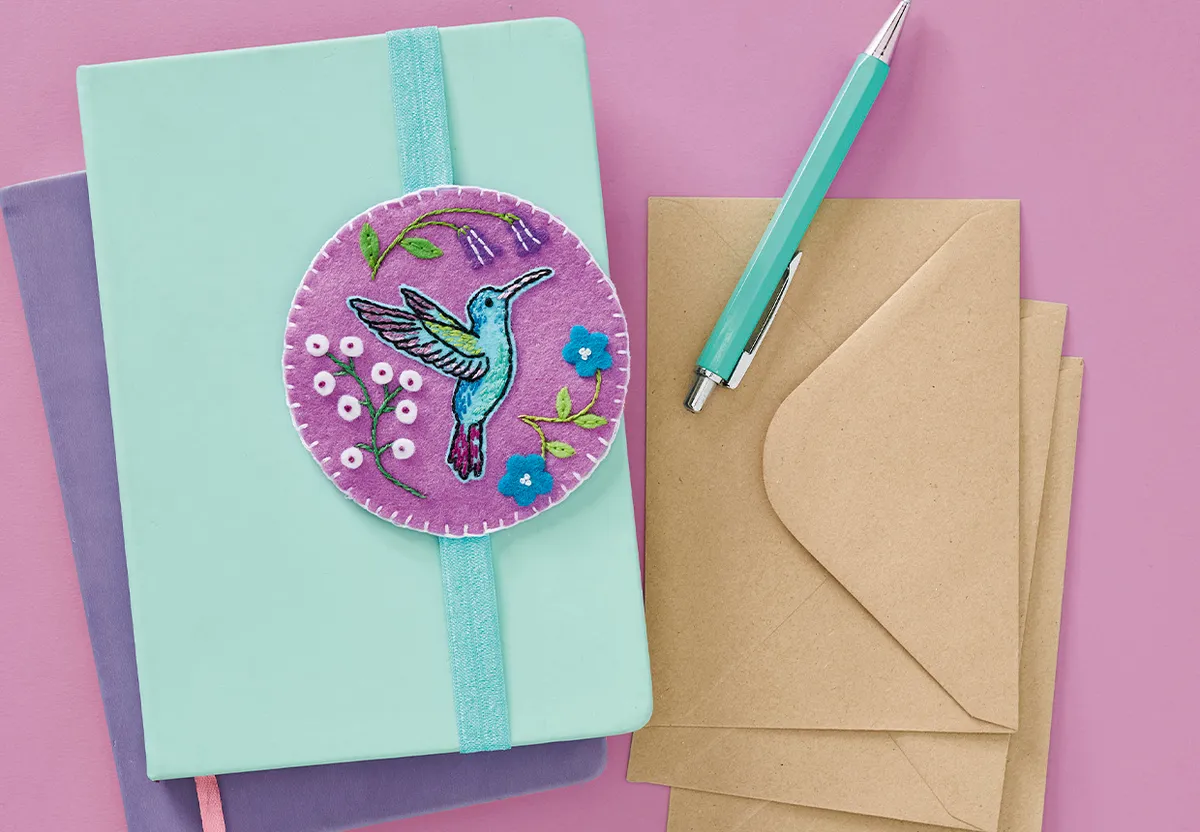
Enjoyed your first project? Create a hummingbird embroidery bookmark and continue practising stitches while crafting something practical and pretty.