
How to outsmart supermarkets and save money on your food shop
Three for two, buy one get one free, vouchers if you spend a certain amount – there are so many tempting offers from supermarkets today, it’s hard to keep track.
But while they might appear to be good offers, big business doesn’t do this out of the kindness of its heart – it’s to make you spend MORE, not less.
In fact, there are many ways supermarkets trick us into spending more than we’d intended to, ranging from where they place products, even down to the lighting and music in store.
- Expert shares 6 tips for feeling your best during menopause
- Here's why owning a dog could add years to your life
Dan Evans, consumer and savings expert at Hotukdeals says: ‘Firstly, there’s a saying that ‘eye level is buy level’, so they tend to put items that they want you to buy – i.e. high margin items – at eye level. You’ll often find cheaper versions of the same product (like supermarket own brands) on the lower or higher shelves.
‘Another thing you will probably have noticed is that larger supermarkets with a bakery section pump the smell of freshly baked goods to the entrance of the store. It can make you feel more hungry and can make a stop at the bakery section irresistible.
‘There’s also the layout of stores; essentials tend to be placed around the perimeter of the supermarket, which inevitably forces you to walk past all the other aisles and tempts you to buy more than you planned.
‘Increasingly, supermarkets also use member/loyalty pricing to make you think you’re getting a good deal. They show the price of an item for non-members (people not using the loyalty programme/card) as significantly more than the member price, when the member price may not actually be much cheaper than the standard price elsewhere. This isn’t always the case, but it is something to look out for. It can make some products appear like a great deal, although it’s only really an issue if it results in you making unplanned purchases due to FOMO.’
Designed to make you buy
Sarah-Jane Outten at MyVoucherCodes agrees, saying: ‘Supermarkets are carefully designed to encourage impulse buying and increase how much you spend.
'Essentials like milk and bread are placed at the back so you walk past the tempting products first.’
There are other ways, too. Sarah-Jane says to watch out for the following:
'End-of-aisle promotions: These often look like deals but aren't always the best value. Brands pay a premium for this prime spot.
Free samples: These encourage a sense of obligation and increase the likelihood of purchase.
‘Decoy’ pricing: A more expensive item is placed near a mid-range one to make the latter seem like a better deal.’

And it’s not just instore, either. It is also happening online.
Simon Wharton, founder of eCommerce agency PushON said: ‘Some online supermarkets have really mastered the art of getting people to spend more, without it feeling pushy. They use all the data they’ve got on you to make things feel personal. So, when you’re shopping, you’re not just seeing random products, you’re seeing things that fit your habits, what you’ve bought before, or what people like you tend to go for. A lot of that personalisation is now delivered by AI, which is easy to deploy. It means supermarkets can quickly tailor offers and recommendations in a way that feels natural and relevant to each individual shopper.’
He adds: ‘A lot is going on behind the scenes. Those ‘special offers’ you get in emails or the app? They’re carefully targeted. Same goes for loyalty programmes like the Tesco Clubcard. They make you feel like you’re getting a deal, and that keeps you coming back and often buying more than you planned. What’s clever is how they’ve brought in techniques from in-store retail, like putting tempting items near the checkout, and translated that into a digital format.
'Pop-ups at the end of your shop, ‘don’t forget’ messages and suggested add-ons all work together to grow that basket size. And because the experience is so easy, things like saved lists, easy reordering, even getting free samples, it all lowers the friction. You’re more likely to throw in that extra item or try something new without thinking too much about it.’
Dan agrees, adding: ‘When it comes to online, supermarkets try to apply the same psychological tricks as they do in-store with deals. So, they’ll heavily promote 3 for 2, BOGOF, 3 for £5 etc. deals on their site, again encouraging you (and specifically your brain) to offload the hard work of finding the true best deal to opting for whatever the supermarket positions as the best deal.
‘Like most online shops, they will also often try to upsell you with ‘customers also bought’ and ‘related items’ sections that tend to encourage impulse buys. Some supermarkets also offer ‘special’ deals at checkout, which is the online version of them placing sweets and chocolate at in-store checkouts to encourage last-minute impulse buys.
‘Finally, be aware of inconsistent unit pricing online. Supermarkets may display unit prices inconsistently or in confusing formats, making it harder to compare deals and spot the best value.’
Avoiding the hard sell
So how can we ever save any real money against all this genius targeting? Is it possible to beat the supermarkets at their own game?
Dan Evans says, yes, it is.
‘If it’s an offer on something you don’t need, don’t buy it. We all sometimes get caught in the FOMO trap and buy something just because it appears to be a good deal. And check the per-unit or per-gram price, depending on the item. Sometimes, you may find the 3 for 2 doesn’t work out much cheaper than the normal price, and you may also see that you can get cheaper non-branded goods at a lower price.’
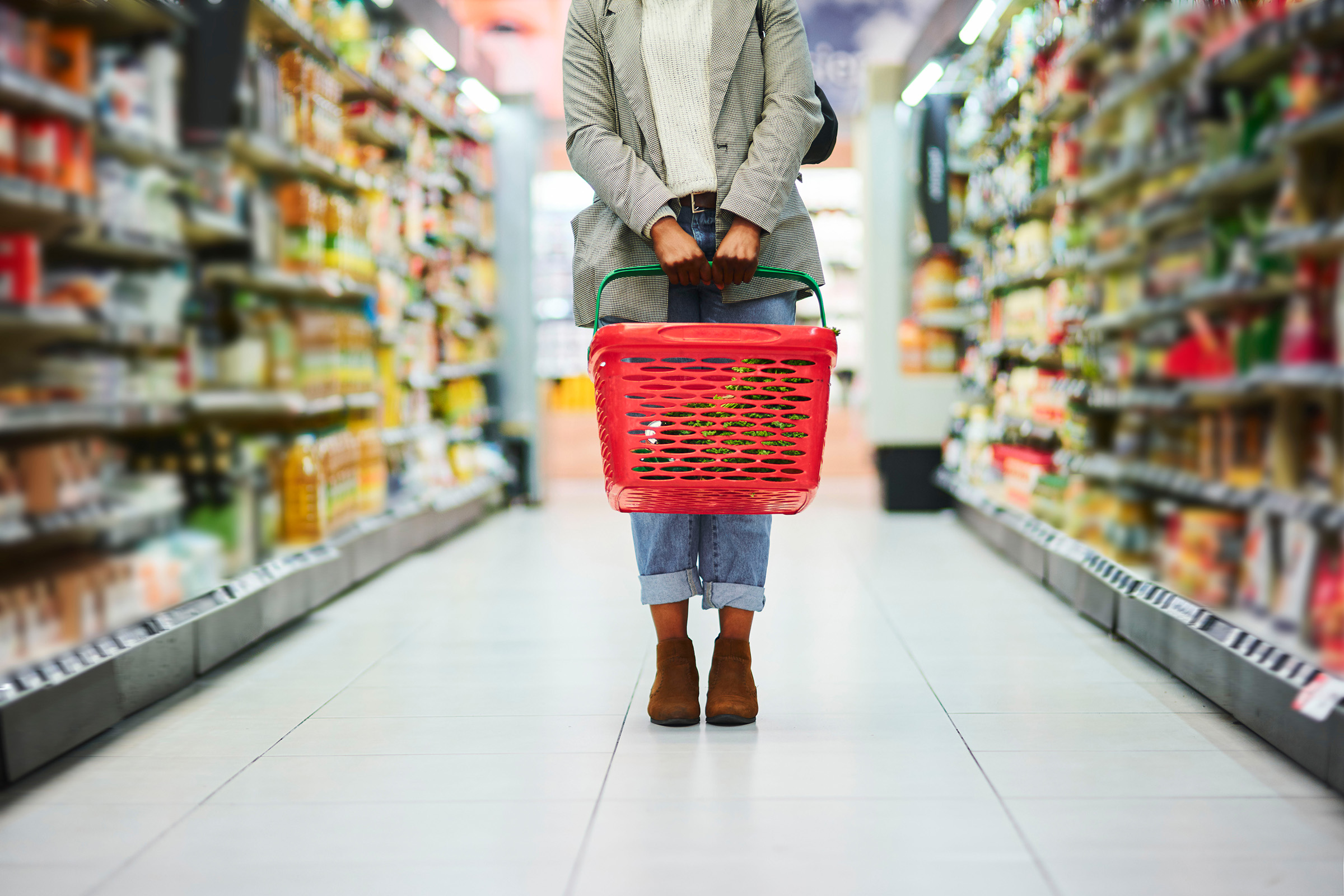
Sarah-Jane adds: ‘Always shop with a list and stick to it. Use a basket instead of a trolley for small shops as less space means less temptation. Avoid multi-buys if you don’t need the quantity. Plan meals before shopping to reduce waste and repeat trips. Check out apps like Trolley.co.uk which compares the prices of UK supermarkets so that you can find the cheapest prices.’
Sarah-Jane says: ‘Food waste apps, including Too Good to Go offer magic bags from several supermarkets including Morrisons, Waitrose, and Simply M&S. These bags are packed with foods close to the end date for a fraction of the full price.
It’s also worth signing up for the supermarket reward and loyalty programs. Not only do several of them allow you to collect points that you can spend later, but they also provide access to hundreds of reduced prices, Asda, Tesco Clubcard, Nectar and Lidl are all good examples. And remember, if you aren’t signed up, you will likely pay more.’
Dan adds that three for two offers are usually on branded items, meaning you pay more anyway: ‘You’ll often be able to find the same items from less premium brands at a cheaper price even after factoring in the 3 for 2 discount. Sometimes, supermarkets may also raise the price of the item in the weeks before the promotion so they can show a higher ‘normal’ price to make the discount appear bigger. Be careful, too, on 3 for 2 offers on perishable items – if you end up having to throw things out because they’ve gone bad, you’ve wiped out any savings you may have made from the offer.’
Sarah-Jane adds that we mustn’t forget the sneaky psychological tricks stores play on us too: ‘Don’t be fooled by the lighting: Warm lighting in fresh produce or bakery sections makes items appear more appealing and “fresher.”
‘Don’t shop when you are hungry: Hunger increases impulse purchases, especially of high-calorie or snack items.
‘Shop alone: People spend more when they shop with others, especially children.
‘Don’t let nice smells entice you to spend: Fresh smells like coffee and bread near entrances trigger hunger and comfort.
‘Be mindful of the time of day that you shop: There are fewer distractions in the morning which means you are likely to be more focused and more frugal.’
Best times for bargains!
Align your shop with times when supermarkets discount items, says Dan.
Tesco: Around 6–7pm – final reductions after 8pm. Discounts get deeper throughout the day; yellow stickers added mid-to-late afternoon.
Sainsbury’s: First reductions from 1pm; biggest discounts after 7–8pm. Final markdowns often up to 75% off before closing.
Morrisons: Reductions start early afternoon (12–2pm); biggest cuts around 6–7pm. Clearance shelves tend to appear near bakery and fresh produce.
Asda: Initial markdowns 9–11am; major discounts from 6–7pm, sometimes later. Yellow stickers commonly appear in meat/deli/chilled sections.
Aldi: Reductions throughout the day, no set time; best chances early morning or just before closing. "Red sticker" deals are more limited than larger chains.
Lidl: Final reductions usually first thing in the morning (especially on Sundays).
Waitrose: Reductions start after 3pm, best value found around 6–7pm. Waitrose tends to mark items down more conservatively, but final reductions can be steep.
Co-op: Late reductions often from 5–6pm.
Make your food go further
There are lots of things we can do to buy well and stretch our supermarket shops. Here are some winners:
Bulk meals out: Choose affordable dried or tinned foods like lentils and beans to make meals more hearty.
Go for a different cut: Chicken thighs are cheaper than breasts and some would say more delicious!
Choose seasonal veg: With less transporting costs, seasonal veg is often cheaper.
Try a different fish: Hake is cheaper than cod – and more sustainable.
Batch cook: You needn’t spend your whole Sunday cooking, simply double up an evening meal such as your Bolognese sauce or a veggie chilli and freeze the rest for days you aren’t in the mood to cook. It’s a win win!
Cook smart: Make your meals go further by using leftovers to make other dishes. If you’ve had a Sunday roast at the weekend, use the leftover greens and potatoes for bubble and squeak the next morning for brunch, or construct a gourmet sandwich.
Leftover gravy is excellent poured into stews, and creamy sauces make delicious jacket potato toppings. Add curry powder, fish and boiled eggs to leftover rice (cooked very hot) and you have kedgeree. Or add egg and soy sauce and optional extras like ham and peas to it and you have a moreish Chinese fried rice. So many options!
Read more:
