
Forget 10,000 steps a day – here's how far you should really walk, according to personal trainers
Walking is simple, free and one of the easiest ways to get more active, lose weight and become healthier. The best thing? You don’t have to walk for hours to see the benefits. Even a brisk 10-minute daily walk offers numerous health benefits and contributes to the 150 minutes of weekly exercise recommended in the NHS physical activity guidelines for adults.
We’ve spoken to personal trainers to find out why walking is so essential for your health, how many steps you should take each day, and how to maximise the benefits of your walks.
- Yoga vs Pilates: Expert reveals which is better for achieving a flat stomach
- This is how to burn fat and tone up fast without hours on the treadmill, says personal trainer
Why walking is so good for you
Sometimes overlooked as a form of exercise, walking can help you build stamina, burn excess calories and make your heart healthier.
As Penny Weston, founder of online wellness community MADE, says, ‘Walking helps ease muscle pain and stiffness, particularly in your lower back, hips and legs. It can also help your balance, which can prevent you from falling and injuring yourself.
‘Unlike cycling or swimming, walking is a weight-bearing exercise, which means your legs support your weight. This type of exercise is important for slowing bone loss as you age, which can reduce your risk of osteoporosis.’
Walking can also benefit your brain. When you walk, there’s an increased flow of blood, oxygen and nutrients to your brain. A protein called brain-derived neurotrophic factor (or BDNF) is also released, which stimulates the growth of new brain cells and connections. This can help your memory and brain to work better.
In a trial with 120 people aged 55 to 80, researchers at the University of Illinois compared the effects of walking for 40 minutes, three times a week, with stretching exercises. Over the course of a year, the part of the brain responsible for memory, called the hippocampus, decreased by 1% in the stretching group but increased by 2% in the walking group.
Walking can also release natural chemicals that make you feel happy and positive, such as serotonin, dopamine, and endorphins.
How many steps should I be walking every day?
We often hear 10,000 steps a day is the gold standard when it comes to walking, but Weston says the number of steps to aim for should reflect our lifestyle, energy levels, and what feels sustainable.
She explains, ‘In your 20s and 30s, 8,000-10,000 steps a day is a great goal. It becomes a habit that’s easier to maintain as you get older if you build it now.
‘In your 40s and 50s, we often encourage consistency over perfection. That might look like 6,000-8,000 steps a day, alongside resistance training or some mobility work.
‘From your 60s onwards, regular low-impact movement becomes the real priority. Even 4,000-6,000 steps a day has been shown to improve heart health and overall longevity. If energy or joints are an issue, it’s completely okay to break that up into shorter walks. At every age, walking is one of the most accessible and effective tools we’ve got, it doesn’t need to be perfect, it just needs to be regular.’
How often should you be walking to feel the benefits?
Personal trainer Kate Rowe-Ham says ideally, we should walk most days of the week. ‘You don’t need to go on long hikes every time; even 10 to 15 minutes after a meal can make a big difference to blood sugar levels and digestion, especially around menopause when our metabolism and insulin sensitivity start to shift.’
Rowe-Ham continues, ‘If you’re looking for additional benefits, such as weight loss, increased energy, or a deeper mental reset, walking for 45 to 60 minutes a few times a week can be beneficial.’
A good walk is one where your pace is high enough to raise your heart rate and breathing, but not so far as to be strained or uncomfortable. If you’re just starting with regular walking, begin with shorter, less demanding routes and gradually increase the length and pace as you go on.
How important is walking technique?
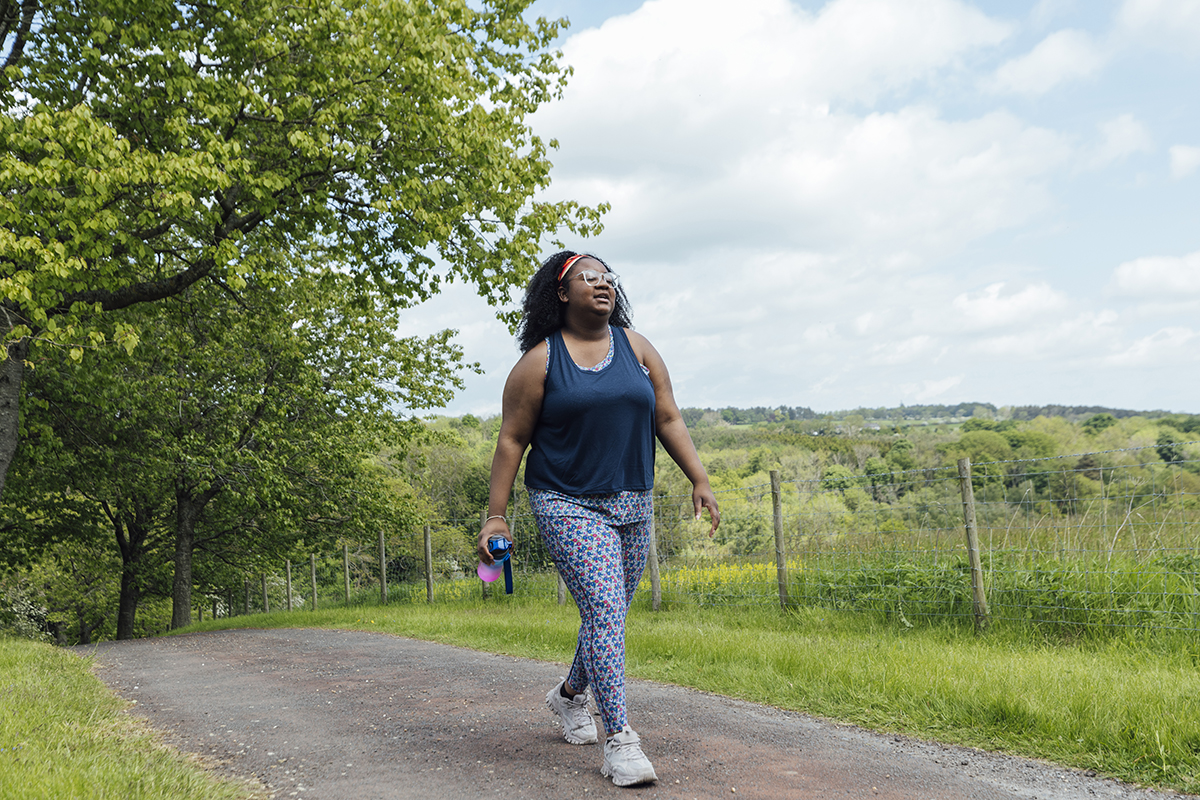
Rowe-Ham says minor tweaks in your walking technique can make a huge difference in how you feel during and after.
She explains, ‘Start by standing tall, shoulders relaxed, chest open, and head up. Engage your core muscles gently, not with tension but with awareness, as if you’re supporting yourself from the inside out. Land on your heel and roll through your foot to your toes with each step. Swing your arms naturally with bent elbows; this adds rhythm and even helps burn a bit more energy.’
How you breathe when you walk is also important, according to Rowe-Ham. ‘Deep, steady breathing helps keep your nervous system calm and your energy high, making walking feel like a moving meditation rather than just another task to complete.’
Should I try ‘Japanese walking’ or interval walking?
Initially developed by Dr Hiroshi Nose in Japan, there has been a recent trend for colloquially termed ‘Japanese walking,’ or interval walking, which is a form of high-intensity interval training (HIIT) that is low-impact and much more accessible.
The ‘Japanese walking’ protocol comes from a study published in 2007. It was designed to test whether high-intensity interval walking training (IWT) can offer greater benefits than moderate-intensity continuous walking training, in terms of improving thigh muscle strength, peak aerobic capacity (the maximum amount of oxygen you can take in and use during exercise) and blood pressure.
Participants who followed the Japanese walking approach experienced notable reductions in body weight. Blood pressure also dropped, more so than in those following the lower-intensity continuous walking routine.
Leg strength and physical fitness were also measured in this study. Both improved to a greater extent in those following the Japanese walking programme, compared to those completing moderate-intensity continuous walking.
Celebrity trainer and cancer rehabilitation coach Michael Baah says of Japanese walking, ‘It’s a time-efficient, joint-friendly method where you alternate brisk walking with slower recovery periods. A common structure is three minutes fast, two minutes slow, repeated for about 30 minutes.’ Interval walking has been proven to improve cardiovascular fitness, strength, blood pressure and energy levels.
Baah says it’s a great workout, particularly for older adults as:
- It is joint-safe but powerful and ideal for anyone avoiding high-impact workouts
- Scientifically backed: Studies show gains in aerobic capacity, blood pressure, insulin sensitivity and leg strength, even in over 65s
- It offers mental clarity: Clients often report better sleep, sharper thinking and improved mood
How do I increase the intensity of my regular walks?
Personal trainer Eloise Skinner says carrying extra weight while walking can increase the intensity of your workout. ‘Wearing a weighted vest or backpack forces your muscles to work harder, boosting strength and burning more calories.’
If you’re keen to give this a try, it’s important to start with a light weight to avoid strain or injury. Ideally, you should begin with a vest or backpack that’s about 5% of your body weight. So, someone who weighs around 80kg could start by adding just 4 kilograms of extra weight to their backpack.
Gradually increase the amount of weight you carry as you become more comfortable. Ensure the weight is evenly distributed and maintain good posture throughout your walk.
Should I be doing more uphill walking?
Skinner says, ‘Walking uphill can help to target different muscle groups, including the back of your legs, glutes and core – helping you to develop overall strength. It's also a great cardiovascular challenge, helping to protect heart health and developing fitness levels over the long term. Walking on an incline can also be lighter on the joints, since less impact is placed on joints when moving – so can be great for those wanting to reduce the risk of injury, or recovering from injury.’
Uphill walking can help build calf strength, which will give you more than shapely legs. A recent study found that strong calf muscles are associated with improved cognitive function and a potentially reduced risk of cognitive decline and dementia in older adults.
How can I stop myself from getting bored of walking?
Rowe-Ham says, ‘Our bodies and brains love variety. Some days, a long, steady walk might be precisely what you need to clear your head, process the day, or spend time outside. On other days, short, sharp bursts of brisk walking, can lift your heart rate and energise you. These faster-paced sessions don’t need to be long to be effective, and they’re brilliant for supporting heart health and metabolism. Even gentle recovery walks have their place, especially when you’re feeling low on energy or want to move without pushing too hard.’
If you’re struggling to get your steps in, Baah suggest making it more of a social occasion. ‘Next time someone wants to see you, suggest a walk instead, or as well as, your usual meal or drink together. Having a regular weekly or daily walk with someone will mean you’re more likely to stick with it. Or you could join a walking club and make some new friends.’
Another tip from Baah – make walking comfortable! ‘There’s no quicker way to lose motivation than to be caught out wearing the wrong thing. Avoid blisters and leg pain by choosing well-fitted, comfortable shoes. Wear light clothing and choose cooler times of day in the summer to walk, and have warm and waterproof layers in winter. Try to gently stretch after your walk, so you feel less achy later.’
Some people find ‘habit stacking’ helpful. Habit stacking means taking something you already do regularly and ‘pinning’ the new habit to it. For example, can you go for a 10-minute walk every day after lunch? Or, if you have a regular call with a friend or family member, can you make a habit of walking while you’re on the phone?
If you find yourself skipping your daily walks, don't give up. Remind yourself how good you feel when you include physical activity in your daily routine, and then get back on track.

Read more:

