
This overlooked nerve is your body's built-in "reset button" - here's how to use it
Your tenth cranial nerve, and the longest in your body – the vagus nerve – is the widely underappreciated superhighway for stress response, digestion (as the link in the “gut-brain axis”), heart rate, speech and swallowing functions, and so much more.
There’s barely a function in the body that this governor of the parasympathetic nervous system doesn’t have some role in, so why haven’t many of us heard about it?
Dr Deborah Lee at Dr Fox Online Pharmacy gives us the lowdown: ‘Most of us are unaware of the vagus nerve, which is one of the most important nerves in the body.
- 8 quick ways to boost your happiness hormones
- This common deficiency is sabotaging your sleep – here's how to fix it
It’s one of 12 cranial nerves, which originate in the brain and travel to the face, head and neck, torso and the digestive system.
The cranial nerves differ in that some have purely motor fibres and some only sensory fibres and some are mixed. The vagus nerve contains both motor and sensory fibres.
‘The vagus nerve is largely involuntary, meaning it exerts its functions automatically and these are not under a person’s control. However, it is possible via breathing and meditation to activate its motor functions.’
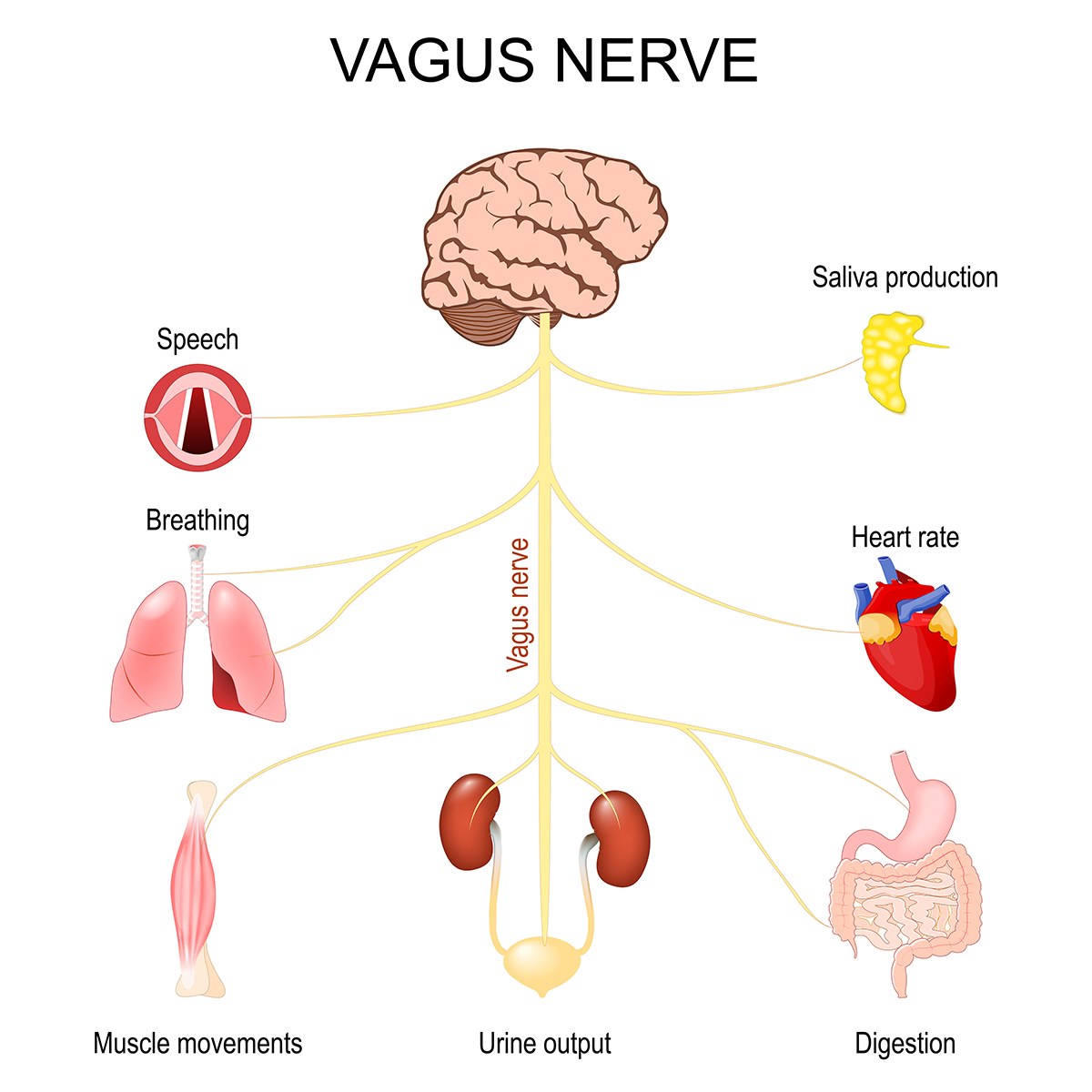
Jane Ollis, Medical Biochemist, Environmental Scientist and Founder of neurotech company MindSpire says, ‘The vagus nerve snakes from the medulla down through your neck, chest and abdomen, branching out like a fractal tree to influence pretty much every organ that matters.
‘It controls your parasympathetic nervous system (PSNS), which is your biological “rest and digest” mode, the brakes to your adrenaline-pumping fight-or-flight.
'If you’ve ever calmed yourself with a deep breath, sung badly in the shower or sighed in relief, you've felt the vagus in action. It's the bodily equivalent of switching from war mode to spa mode.’
Those of us who have heard of the vagus nerve probably have done so in a mental health or wellbeing context – whether that’s promoting good gut health, meditative exercise like yoga or deep breath work to manage stress.
And yes, the vagus nerve is central to physical and emotional health. Kathryn Danzey, founder of the British supplement brand, Rejuvenated, says, ‘The vagus nerve plays an essential role in several body functions by allowing communication between the gut and brain, including digestion, heart rate, immunity, and mental health.
'In fact, research suggests a connection between the vagus nerve and certain mood disorders, heart disease, metabolic syndrome, and autoimmune diseases.
The vagus nerve transfers neurotransmitters such as dopamine, serotonin, GABA (gamma-aminobutyric acid), and norepinephrine from the gut to the brain, impacting mood, memory, appetite, and pain response. It also helps to manage the immune response, which in turn reduces inflammation.’
So, quite important then! Let’s learn more about our vital vagus nerve and how we can support it through healthy lifestyle choices and some other surprising activities.
Built for resilience
Chloe Thomas is an online PT, Women’s Health and Mindset Coach at www.chloeinspires.co.uk. She says, ‘When your vagal tone is strong – which means the nerve is functioning well – the body is better able to manage stress, digest food well, and stay emotionally balanced.
However low vagal tone which is often caused by stress, trauma, or bad gut health, can lead to symptoms like anxiety, bloating, fatigue, poor sleep, and even brain fog.
‘Your vagal tone CAN be improved with simple, small and consistent lifestyle practices. These can be things like deep belly breathing especially with a longer exhale, cold water exposure, humming or singing, gentle movement like yoga or walking, and mindfulness practices like meditation or journaling.
‘Even good social connections can help – as feeling safe and supported in relationships and friendships will activate the vagus nerve.
‘Overall, looking after the vagus nerve helps move and shift the body from a place of a reactive stress state and into a more grounded, resilient and strong place. Which makes it a powerful but also very often an overlooked element of our long-term health.’
Jane Ollis adds, ‘Think of the vagus as your internal diplomat: keeping inflammation civil, heart rhythms tidy, digestion moving, and your immune system from going full Game of Thrones on itself.
'It modulates heart rate variability (HRV) a key marker of resilience and recovery and manages that delicate neurochemical dance of acetylcholine, norepinephrine, and cytokines.
'Better vagal tone = better recovery, better mood, better blood sugar, better digestion, better life. Low vagal tone? That's when the symphony descends into noise.’

Practitioner psychologist at smartmindhealth.co.uk, Dr Ravi Gill agrees. ‘When we activate the parasympathetic nervous system it helps to reduce stress and inflammation.
'The vagus nerve sends signals from organs back to the brain, influencing mood, immunity, and mental health; it also plays a role in controlling muscles in the throat and voice box.
'Without the vagus nerve, your body couldn’t regulate basic life functions or respond properly to stress.’
As such, the vagus nerve also plays a central role in trauma response and recovery. ‘Psychological and neuroscientific research increasingly highlights the vagus nerve as a key player in how the body stores and processes traumatic experiences,’ says Dr Gill.
The body indeed keeps the score, to paraphrase Boston-based Dutch-American psychiatrist, author, researcher and educator, Bessel van der Kolk, who is known for work on this topic.
Dr Steve Allder, is a consultant neurologist at Re:Cognition Health. He says, ‘Understanding the vagus nerve is crucial for anyone interested in holistic wellbeing, especially in the context of trauma.
'When we experience chronic stress or traumatic events, the body can become locked in a state of sympathetic overdrive – hypervigilant, anxious and dysregulated.
The vagus nerve acts as a biological reset button, helping us return to a parasympathetic state where healing, digestion and emotional regulation can occur.
By actively supporting vagal tone through breathwork, cold exposure, meditation or therapeutic practices like EMDR or polyvagal-informed therapy, we can enhance our capacity to process stress, improve emotional resilience and restore balance in the nervous system.
The vagus nerve helps bridge the brain and body, offering a powerful pathway to deep, restorative healing and long-term wellbeing.’
Recognising a vagus nerve problem
Having a low vagal tone can present itself in many ways. Jane Ollis says, ‘Problems start when the vagus nerve is underpowered or overwhelmed.
'Low vagal tone has been linked to depression, anxiety, IBS, chronic pain, autoimmune conditions, and brain fog so thick you forget your own postcode. It's also implicated in long COVID, neurodegenerative diseases and metabolic syndrome.
‘The trouble is, you don’t feel the vagus. You feel what happens when it’s off.’

Dr Rohini Agarwal from SmileCloud Family Dental says, ‘Problems with vagus nerve function can show up in subtle ways – things like a racing heart after eating, poor tolerance to stress, frequent bloating or brain fog.
'These aren’t always recognised as vagus-related, but they often improve when people focus on regulation rather than just symptom relief.
‘Fixing vagus-related issues usually means working on the underlying pattern, not forcing the nerve to “switch on.”
'That might involve improving sleep, reducing inflammatory load, restoring gut health or slowing down the breath throughout the day. It’s not about quick fixes but about shifting the body into a more responsive, less reactive state.
‘The more we learn about the vagus nerve, the clearer it becomes that it acts as a bridge between physical and emotional health. That connection is often where long-term change starts.’
Dr Lee outlines the symptoms you may have if your vagus nerve is struggling:
Acid reflux – An overactive vagus nerve leads to the production of excess stomach acid, which can cause gastritis, gastric ulcers and acid reflux. The vagus nerve also controls the lower oesophageal sphincter. A poorly functioning vagus nerve can mean the lower oesophageal sphincter becomes incompetent allowing stomach contents and acid to reflux back up the oesophagus (throat).
Gastroparesis – An underactive vagus nerve results in delayed gastric emptying. This means the stomach remains distended with food for longer, putting pressure on the lower oesophageal sphincter and again, worsening acid reflux.
Abdominal pain and bloating – An overactive vagus nerve can cause increased gut sensitivity, with abdominal pain and bloating. This is thought to be a cause of some of the symptoms of IBS.
Loss of appetite – Because the vagus nerve is the main channel of communication between the brain and the gut, a poorly functioning vagus nerve can lead to loss of appetite.
Constipation – If the vagus nerve is not working as it should, peristalsis is slowed and becomes less efficient, so partially digested food moves more slowly through the gut. This can result in constipation.
Enzyme production and digestion – Poor vagal nerve function can lead to reduced secretion of pancreatic and liver enzymes, as well as other hormones involved in digestion. This can lead to malabsorption and malnutrition.
Difficulty swallowing – The vagus nerve provides motor and sensory function for the pharynx and oesophagus, stimulating muscular contractions which allow you to swallow food. A poorly functioning vagus nerve can result in dysphagia (inability to swallow), which can be painful. As the vocal cords don’t open and close properly, there is a risk of aspirating food contents into the lungs which causes pneumonia.

Cardiovascular symptoms – Stimulation of the vagus nerve, for example by pain or anxiety, leads to a slowing of the heart rate and a drop in blood pressure. This can cause fainting – also known as vasovagal syncope.
Heart rate variability – The vagus nerve controls heart rate variability (HRV) which is the heart’s ability to respond to stress. HRV is a measure of cardiac tone – the balance between the SNS and PSNS. A good HRV indicates a healthy heart. A lower HRV can be due to a wide range of health issues.
Mood disturbance – After a stressful event, the PSNS swings into play to calm the physical symptoms and signs of fight, fright and flight. It slows the heart and breathing rate and lowers blood pressure, and allows a person to feel calmer and more relaxed. The vagus nerve plays a major role in this process. However, if the vagus nerve is not working properly, this can mean a person continues to feel anxious and takes longer to calm down. The vagus nerve also helps control the level of inflammation in the body. High levels of inflammation are linked to depression.
Chronic fatigue – One possible cause of chronic fatigue syndrome/Myalgic encephalitis (ME) is infection in or around the vagus nerve. Some scientists believe that this can raise levels of systemic inflammation which causes fatigue and sickness behaviour. Examples of potential viral causes include the Epstein Barr Virus (EBV) that causes glandular fever, and the chicken pox virus Varicella Zoster.
How to support your vagus
The good news is there is plenty you can do to strengthen vagal tone. Jane Ollis says, ‘You don't have to go full monk. But you do have to stop living like a phone on 1% battery.
'You fix the vagus by training it, like a muscle, only sneakier. Stimulate it regularly. Track your HRV. Pair vagus activation with emotionally meaningful experiences (your brain loves context). Sleep better. Eat less often. Laugh like an idiot. And breathe. Slowly. Every single day.
‘If all else fails, give it a nudge with a personalised Vagus Nerve Stimulation (VNS) device. Take a look at what we’re building at MindSpire here.’
Next generation stuff! Let’s look at other ways we can stimulate the vagus.
1. Eat a nutritious diet
Kathryn Danzey says, ‘A nutritious diet is key to supporting the vagus nerve. Make sure you include anti-inflammatory foods including beef, eggs, fish, quinoa, pistachios, kefir and berries, in addition to Omega-3 and foods rich in polyphenol.’
Dr Lee adds, ‘In general, you can keep your vagus nerve in good health by eating a healthy, balanced diet and taking regular exercise. …It’s important to have enough choline in the diet.
'This is needed to make the neurotransmitter acetylcholine which is the main neurotransmitter of the PSNS. Choline is found in egg yolk in large amounts. Also in beef, chicken and turkey, beans, kidney beans and broccoli.’
2. Breathe!
Kathryn Danzey says, ‘Slow mindful breathing can also help the vagus nerve by signaling to the brain that the body is calm, helping to reduce heart rate and promote relaxation.’
Dr Gill recommends Deep Breathing: ‘Try: 4–6 breaths per minute, inhaling through the nose, exhaling slowly through the mouth.’
Jane Ollis agrees. ‘Think 6 breaths per minute,’ she says. ‘Not just mindfulness, mechanistically, this rhythm increases baroreflex sensitivity and signals calm via vagal afferents.’
Dentist Dr Rohini Agarwal explains further: ‘Supporting vagus nerve health isn’t about doing one thing. It’s more about consistency in habits that keep the nervous system balanced.
'Cold exposure is often mentioned, but what’s less talked about is the role of diaphragmatic breathing. Breathing slowly and deeply from the belly rather than the chest sends a direct signal through the vagus nerve that the body is safe. This helps lower heart rate, reduce inflammation and improve gut function.’
3. Get cold
Dr Gill says cold exposure is helpful. ‘Splashing cold water on your face or taking cold showers can stimulate vagal activity.’
Jane Ollis adds, ‘Cold water immersion is not just for Wim Hof acolytes. Dunk your face in cold water or try a cold shower. It activates the mammalian dive reflex via the vagus and resets your system like ctrl-alt-del for your nervous system.’

4. Relax
It isn’t always easy, but Dr Lee says, ‘Try and lower stress by making time for rest and relaxation. This could be anything from reading for half an hour a day to taking a sauna or having a massage.’
Dr Gill adds, ‘Exposure to chronic stress weakens vagal tone. Practising meditation, yoga, or mindfulness can help build resilience.’
5. Sing, hum, chant, gargle or shout!
Dr Gill says, ‘These actions engage the muscles around the vocal cords, which are connected to the vagus nerve.’
Jane Ollis adds, ‘Gargling, humming, singing… All stimulate the muscles innervated by the vagus. Opera counts. So does shouting at your football team. Just aim for vocal cord vibration.’
6. Exercise regularly
‘Moderate physical activity, especially aerobic exercise, boosts vagus nerve function over time,’ says Dr Gill.
7. Support gut health
Kristen Stavridis, nutritionist at Biotiful Gut Health says, ‘Incorporating probiotics like kefir, yogurt, sauerkraut and kimchi will all support the balance of your gut microbiome and in turn your vagus nerve.
'Probiotics have millions, if not billions, of live microorganisms, which promote the growth of good and diverse bacteria in your gut microbiome; Biotiful kefir contains billions of healthy bacteria and over 40 strains of live cultures to support a balanced gut.
‘Prebiotic fibres are equally crucial for a healthy gut and managing stress. Foods which are rich in prebiotics include garlic, onions, bananas, and oats.
'Prebiotic fibre acts as a food source for good gut bacteria promoting a balanced microbiome. Both these food types can support a balanced gut-brain connection to keep a happy brain and gut.
Dr Allder adds, ‘There’s even evidence that certain probiotic strains – Lactobacillus rhamnosus, for example, can influence GABA (gamma-aminobutyric acid) receptors in the brain via the vagus nerve.
'GABA is the brain’s primary inhibitory neurotransmitter, responsible for reducing neuronal excitability throughout the nervous system, helping to maintain calm, regulate anxiety, support sleep and prevent overstimulation. It’s the body’s natural “brake pedal” for the brain.’
8. Sleep
‘Get enough sleep,’ says Dr Gill. ‘Good quality sleep supports nervous system recovery and vagus nerve tone.’

9. Fast
Jane Ollis says, ‘The migrating motor complex (the gut’s cleaning cycle) is vagus-regulated. Constant snacking? You're silencing the janitor.’
10. Connect
Dr Gill says, ‘Engaging in positive social interaction and feelings of safety can naturally stimulate the vagus nerve.’
11. Laugh
Jane Ollis says, ‘No joke. Genuine laughter (not polite office chuckling) increases HRV. Watch something stupidly funny.’
12. Try Vagus Nerve Stimulation (VNS)
Jane Ollis says, ‘Yes, this is where the science gets spicy. External stimulation of the auricular branch (around the tragus and cymba conchae) can improve mood, inflammation, pain and even help rewire maladaptive brain networks. That’s not biohacking, it’s neuromodulation.’
Dr Allder says, ‘Interestingly, emerging research is exploring VNS as a treatment for depression, epilepsy and inflammatory disorders.’
13. Take a supplement
Kathryn Danzey says, ‘Supplements containing stress reducing and gut boosting ingredients such as ashwagandha and probiotics can help.
'Try our Cellular Calm Complex, which has been expertly crafted to calm the mind and body, promoting overall vagus nerve health and our Immune Complex, formulated to support a balanced microbiome and, in turn, healthy vagus nerve function.
'This unique blend includes beta-glucans, prebiotics, probiotics, and turmeric.’

Breathe yourself better
Dr Deborah Lee, Dr Fox Online Pharmacy, talks us through a breathing exercise that can help strengthen your vagus nerve
4, 7, 8 breathing
This is a breathing technique commonly advised by psychologists for helping control anxiety. You can do this any time you feel stressed and anxious, for example, before an exam or a job interview.
You can do it any time during the day to help relax and make yourself feel calmer. Do 4,7,8 breathing twice a day, every day, will help lower general anxiety.
Sit comfortably in a chair. Take a few moments to compose yourself. Then breathe in slowly and deeply using your diaphragm. This means sucking your tummy in as if you are trying to make yourself look thin. As you do this, count to 4 slowly.
The vagus nerve passes under the diaphragm. When you use the diaphragm to breathe, you activate the vagus nerve.
Next, hold your breath for a slow count of 7. Focus your mind on positive thoughts while you are doing this exercise.
Then breathe out slowly for a slow count of 8.
Repeat this three times.
Photos: Getty

