Make a warm hug in blanket form with our DIY weighted blanket tutorial
Weighted blankets have grown in popularity in recent years due to their soothing properties. As anyone who has curled up under one can attest, they are seriously soothing, and many believe they can ease a variety of health conditions.
The Sleep Foundation explains that they invoke deep pressure stimulation, which is believed to stimulate the production of everyone's favourite mood-boosting hormone, serotonin, which is known to reduce the body's stress levels and improve your sleep.
There are all sorts of fabulous weighted blankets out there to buy, but making your own is the ultimate project, and we're here to show you how to do it.
Sewing your own is a great idea, because you can choose fabrics and materials to your own taste. So we've asked our expert, Sarah Griffiths (Senior Technical Editor of Love Patchwork & Quilting magazine, aka Spindle and Shears), to show you how to make a weighted blanket step by step.
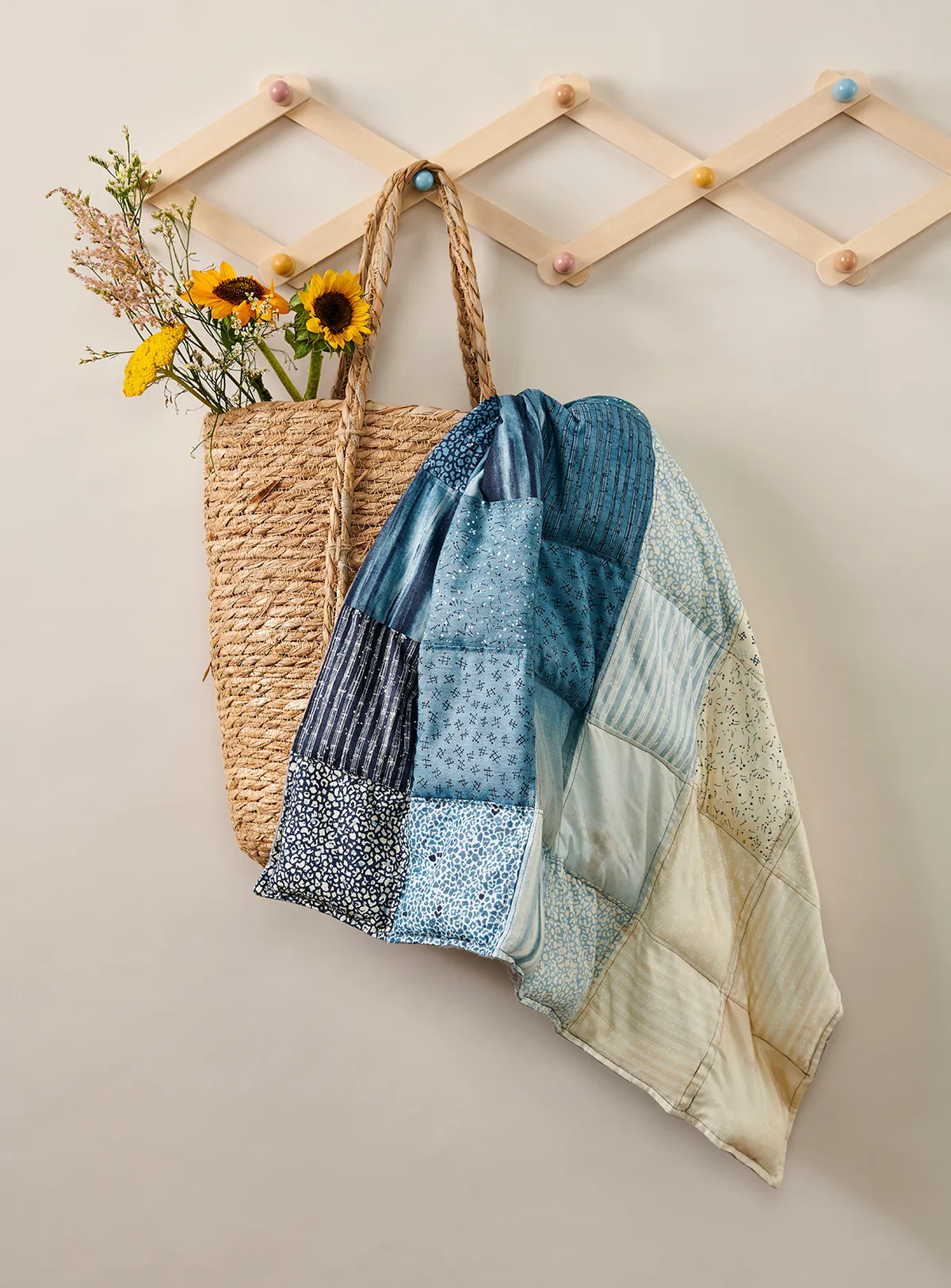
We are using quilted pockets in different fabrics for each of our weighted blanket sections. We love this patchwork look! But we have instructions for using just a single piece of fabric rather than the patchwork if you prefer that look.
You can easily make one with just a few bits of fabric, filling and a basic sewing kit.
Before you begin, you will need to consider what size blanket you want and how much filling you need. A good rule is to use no more than 10% of the body weight of the person who will use the blanket.
We used plastic poly pellets for filling because they are washable, durable and made from recycled materials. But there are many other materials you can choose based on your own needs.
You can use any materials you find cosy, but we recommend something durable without too much stretch, such as quilting cottons, brushed cotton, organic cotton or flannel fabric. Our tutorial will show you how you can make either a patchwork fronted version with quilted pockets or use plain fabrics for both the front and back.
If you're new to sewing, swot up on the basics with our guide to sewing for beginners, and if you're looking for easy home sewing projects, you might also like our favourite Rug Making Kits for beginners.
More beginner-friendly quilt patterns for you to enjoy:
- Make this easy baby quilt in just one weekend!
- 13 easy quilting patterns for beginners – download them tonight!
- Take your quilting to the next level with these modern quilt patterns
DIY weighted blanket – supplies
- Top fabric (printed cotton): one (1) Charm Pack (forty two (42) 5in squares) or 1yd of fabric (we used Moda: The Blues Charm Pack)
- Backing fabric (brushed cotton): 1yd (we used Robert Kaufman Brushed Cotton Flannel fabric)
- 1.5kg of plastic poly pellets, or weighted filling of your choice (we used Hugge Plastic Poly Pellets)
- Sewing machine (try our best sewing machines for beginners or long arm quilting machines)
- Basic sewing kit
Finished size
27in x 31in (approx 70cm x 80cm)
Notes:
- Seam allowances are 0.25in throughout, unless otherwise instructed.
- Press the seams to one side, unless otherwise instructed.
- Backstitch at the beginning and end of each seam and line of topstitching to secure.
- Small stuffing beads are not recommended for children aged 3 and under. Regularly check the seams before use, as well as before and after laundering, to avoid beads escaping.
- This pattern makes an approx 1.5kg/3lb weighted blanket. Adjust the amount of filling used for the weight required in your blanket.
- If you're not sure what filling to pick, Weighted Blanket Guides have a great article on 6 popular weighted blanket fillings.
How to make a weighted blanket tutorial
Step 1
Piece the blanket top as outlined below. If you do not want to piece patchwork to make the blanket top, skip to step 4 and simply cut 1 piece of top fabric to the same size as the back fabric.
If, like us, you’re partial to a spot of patchwork though, here’s how to make a quilted pocket patchwork top for your blanket…
Arrange your 5in squares of fabric in six rows of seven squares.

Step 2
Once you’re happy with the layout, sew the squares together in rows, pressing seams in opposite directions across the row as shown.

Step 3
Sew the rows together, carefully nesting the seams in each row. Press the seams toward the bottom of the blanket top. This will help to keep any filling beads from getting caught in the seams when you begin to fill the blanket.

Step 4
Cut your backing fabric to the same size as your completed blanket top (ours was 27.5in x 31.5in). Place the backing fabric right sides together with the blanket top. Sew along the two long edges, making sure to backstitch at each end of both seams to secure. Sew along one short edge in the same way.

Step 5
Turn the blanket right side out. Press the edges well. Mark a line ½in below the open edge of the blanket using a removable fabric pencil or tailor’s chalk.

Step 6
Starting and ending at the marked line, topstitch around the three closed edges of the blanket, ¼in from the edge. Backstitch at the beginning and end of the line of topstitching to secure.
Also topstitch ¼in from either side of the column seams of patchwork squares, making sure your stitching lines do not extend past your marked ½in line. This will form channels across the quilt top to add the weighted filling. If you are just using a piece of plain fabric for the front, you will need to mark out a 4½in grid across the fabric before beginning this step.

Step 7
Use a scoop or measuring cup to place an even amount of filling in each of the channels of the blanket. We used approx 35g of filling in each channel. Shake the blanket to make sure the filling goes all the way down to the bottom of the channel. Pin just below the bottom seam to help keep the filling in place.

Step 8
Topstitch ¼in below the seam of the bottom row of patchwork squares, removing pins as you go. Work slowly and carefully to avoid sewing over any of the plastic beads, pushing them toward the bottom of the blanket as you feed it into the machine. You may find it helpful to place your sewing machine on a large table to support the blanket as you sew. Or try placing an ironing board lowered to the level of your machine along your left side.

Step 9
Repeat the last step to fill and sew each of the rows one at a time. Make sure to use a consistent amount of filling in each section to keep the weight even across the blanket.
When you reach the last row, carefully press the raw edges of both the front and back to the inside by ¼in.

Step 10
Add the filling, then pin or clip along the top edge to temporarily secure. Topstitch, making sure to overlap the topstitching at each side of the blanket and across the channels, approx 3⁄8in from the edge. Add a second row of topstitching above this, approx 1⁄8in from the edge to ensure the folded edges of the blanket are caught. Make sure you backstitch at each end of the topstitching for a secure finish. Clip any loose thread ends, and your weighted blanket is complete!

DIY weighted blanket FAQs
Can I wash my DIY weighted blanket in a washing machine?
This depends on how you made your blanket. If the fabric you have used for your weighted blanket is washable, that’s good for machine washing. If you have stuffed it with plastic pellets rather than an organic material like rice or grain, that’s good for machine washing too. But we recommend using the hand wash wool cycle and use the lowest spin possible.
The biggest risk to your DIY weighted blanket in the washing machine is that the weight of each of the pockets causes the seams to give. You can minimise the risk by using a very low spin. For spot soiling, the long-term life of your blanket should use a spot cleaner rather than routinely washing in the machine.
What fabric should I use for my DIY weighted blanket?
You can use any materials you find cosy, but we recommend something durable without too much stretch, such as quilting cottons, brushed cotton, organic cotton or non-stretchy flannel fabric. Avoid any fabrics with Lycra or anything sheer like chenille, as you don’t want to see the filling through the fabric. Organic cotton is a nice choice to emphasise the well-being nature of this project.
Learn how to make a weighted blanket to help you feel calm and rested
There's evidence to suggest that weighted blankets provide a sense of calm and the feeling of being tucked in. You can buy one, of course, as there are plenty on the market. But making your own weighted blanket is a soothing activity in itself. This will also mean you can choose the fabric and size just exactly how you want them.
Complete your bedtime routine with a quick-sew sleep mask
Whether you need to sleep during the day due to shift work, crave a daytime nap due to a broken night, or simply want to block out any daylight for peaceful rest, a sleep mask is a must! Take a look at our quick-sew sleep mask project, which comes with its own pretty bag too!