
Here's what you can do to prevent incontinence in menopause, says expert
Ask any woman about the main signs of perimenopause and menopause and she might list hot flashes, tiredness and mood swings. But talk further and she might lean in and whisper: and leaking.
Incontinence in midlife and later years is more common and can happen as women’s bodies and muscles age, particularly after childbirth. But what is ‘normal’…and, in fact, is it even ‘normal’ at all?
- If you notice this in the toilet see your doctor immediately
- Do this one thing to lose menopause belly fat, says personal trainer
This shouldn’t be ‘normal’
Dr Maria Knobel (CORR) is the Medical Director and co-founder of MedicalCert, where she covers general practice, lifestyle medicine, menopause health, and aesthetic medicine.
She says: ‘The message that it is normal to leak angers me as it leaves women to suffer in an unnecessary way. I discuss 15-20 women each week with incontinence and stress incontinence reaches 35% of all perimenopausal women but when you accept it, you doom to progressive symptoms.
‘Even small leaks when sneezing or jumping indicate the lack of pelvic support, which worsens quickly with no medication. I am most concerned about sudden gushing, emptying the bladder, or unprovoked leaking – that indicates signs of prolapse or nerve damage that has to be immediately evaluated.’
So, if it’s not normal, why are we women preconditioned to believe it is?
Dr Maria says: ‘It is possible to be in your 40s and be in the physical condition of your life and feel betrayed by your body when you squat or sprint and leak. This is not a physiological failure; it is an event. The loss of estrogen in perimenopause deprives your deep core muscles of responsive tension and makes the whole support system of your bladder weak.
‘This compromised system is further undermined by many women who are unaware of the fact they sabotage it by holding breath when exerting pressure which increases internal pressure and leads to leaks. It is not mere chance but rather a foreseeable mechanical failure which you can easily rectify when you know how it happened.’
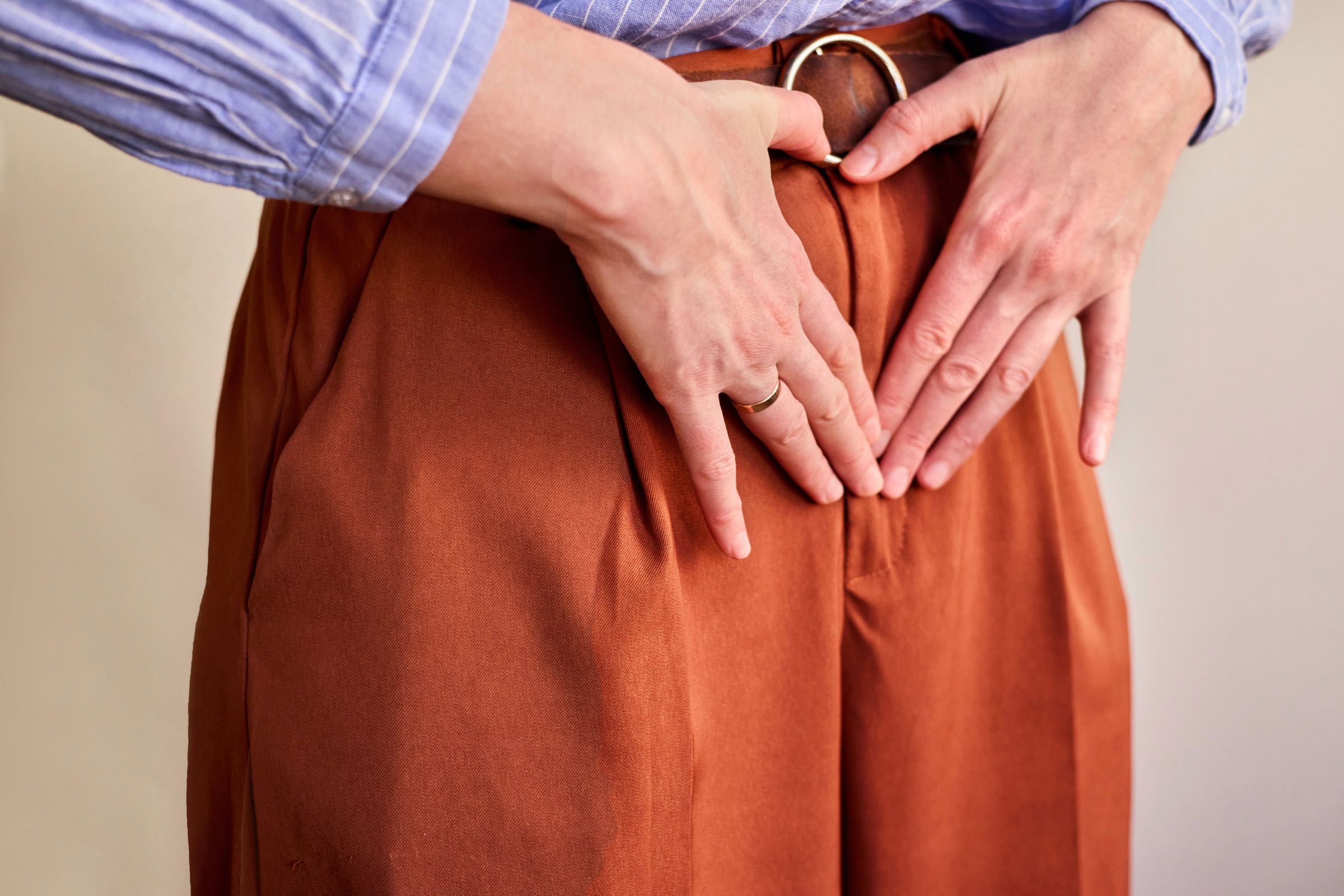
As we age, oestrogen declines
Dr Alice Scott, Menopause expert and Clinical Director at Essex Private Doctors, says ‘Bladder changes are common around the time of perimenopause and menopause, but that doesn’t mean women should simply accept incontinence as ‘normal.’ Estrogen is important for supporting the tissues in the bladder and the urethra and the reduction in this hormone at the time of the menopause can lead to weakening in the support for the bladder and urethra – pregnancy or childbirth history may contribute to this too.
‘There are effective treatments available, so we don't have to simply put up with it. The earlier you seek advice, the easier it can be to manage the symptoms. A GP or women’s health physiotherapist can help you identify the cause of the symptoms and advise treatment – sometimes simple lifestyle measures or women's health physiotherapy can be very beneficial.’
Dr Maria Knobel agrees and believes women should be proactive and refuse to be fobbed off.
She adds: ‘Any uncontrolled urine should be medically evaluated. I explain to the patients that 4 in 10 women over 45 experience some leaking, however, this should not justify pain. Blood in the urine, painful sensations, continuous dampness or mishaps with daily activity can be the indication of serious issues. I have diagnosed bladder stones and pelvic organ prolapse in women who have reported their symptoms as being the result of menopause. They are dismissed which affects their quality of life.’

Do your Kegels
Dr Scott says: ‘Pelvic floor exercises (often called Kegels) can be helpful at any age.’
Kegels are muscle-strengthening exercises any woman can do when she’s sitting, on the train, or even at work. They can be done by stopping urinating midflow, as well as squeezing the vagina muscles several times a day
Says Dr Scott: ‘They strengthen the muscles that support the bladder and bowel, and regular practice can significantly reduce leakage. It is often difficult to know if you are doing them correctly and a women's health physiotherapist can be very helpful here to teach you. Alongside pelvic floor exercises, there are several non-surgical treatments such as estrogen creams or pessaries to improve vaginal and urethral tissue health, bladder training techniques, and lifestyle adjustments like reducing caffeine and alcohol.’
What if Kegels don’t work?
For women who need more support, referral to a urogynaecologist can be helpful to discuss options such as urethral bulking injections and operations such as sling procedures or bladder neck surgery,’ says Dr Alice Scott.
These injections are available for women with stress incontinence and involves an injection done at various sites in the walls of the urethra (tube from the bladder) to improve the seal and prevent leakage of urine.
Maria Knobel says: ‘Combined treatments work best. Topical estrogen is effective on 80 percent of my menopausal patients who have bladder problems – the tissue thickens and the nerves work after 6-8 weeks. Pelvic floor physiotherapy is better than simple Kegels since the majority of women contract the wrong muscles. Patients are referred to specialists who do internal ultrasound on them to confirm that the muscles are firing correctly. Bladder training redefines your body signals and makes that time between bathrooms to take 30 minutes to 3-4 hours.’
Then there’s percutaneous tibial nerve stimulation – where a fine gauge needle is inserted just above the ankle next to the tibial nerve. A surface electrode is place on the foot and both the needle and electrode are connected to a low-voltage stimulator.
‘This produces stunning outcomes,’ says Maria Knobel. ‘Electric shocks re-establish incorrect bladder signals. A patient who was getting up 12 times a day to use the bathroom reduced this number to sleeping through after six sessions.’
As well as this, Dr Knobel recommends TVT surgery – tension-free vaginal tape procedure. This operation works by supporting the middle of the urethra with a polypropylene mesh tape, also called a mid-urethral sling procedure. The tape can be inserted through the abdomen or groin and supports the pelvic floor.
Says Maria Knobel: ‘TVT surgery offers a 90% success rate of fixing stress incontinence. Injections of Botox relax overactive bladders within a range of 6-9 months. Laser treatments of MonaLisa touch have definite future prospects but I am closely monitoring the long-term results.’
One thing is for sure, putting up with leaking just because you’re older or have had children is definitely not ‘normal’ and it’s time we stopped letting women think it is.

Kegal exercises
According to Dr Anne Henderson, at Always Discreet, training is one of the methods of treatment and prevention of stress urinary incontinence. This condition is very common. It occurs as a result of weakened pelvic floor muscles.
To make pelvic floor exercises for women more effective more quickly, it is also worth remembering to strengthen the whole body. The muscles of the abdomen, thighs and buttocks deserve special attention.
- Squeeze the muscles that you use to stop your urine flow. Make sure that you focus on only your pelvic muscles. Now pretend your vagina is a lift and you are going upwards. Be careful not to squeeze the muscles of the leg, buttock or abdomen instead.
- Hold for at least 4 seconds. The more often you do this, the “higher” you can go. Try holding for up to 10 seconds.
- Slowly exhale through your mouth and gradually release the hold. Repeat 10–20 times in a row at least 3 times a day.
- You can test your pelvic floor muscles with a simple stop–start test. When going to the toilet, begin to urinate and cut off the flow by contracting the muscles. If you experience better control than before, you know the pelvic floor exercises are working.
Read more:
