
If you clean your BBQ this way it could be deadly (plus other surprising grill dangers)
Nothing says ‘summer’ quite like the smell of a barbecue wafting through the air on a hot day. Yet, many people are unaware that the humble BBQ can lead to serious health issues if not handled properly.
The good news? You don’t need to stay away from grilling altogether. We’ve consulted experts to learn how to stay safe when cooking, how to prevent food poisoning, and the best food swaps to ensure your barbecue is both healthy and tasty.
Be cautious when eating burned meats
Some people love their meat crispy, but some experts have claimed that burned meat can cause cancer. British Dietetic Association spokesperson Dr Sammie Gill says it’s not that simple, ‘Processed meats contain chemicals called nitrates and nitrites. When cooked at high temperatures in the presence of protein, these chemicals can more easily transform into nitrosamines, which are considered carcinogenic.
‘For other animal-based meats (like beef, pork, chicken, fish), cooking at high temperatures can accelerate the formation of chemicals such as heterocyclic amines (HCAs) and polycyclic aromatic hydrocarbons (PAHs) which are linked to an increased risk of cancer by damaging DNA, as shown in lab-based studies. It’s important to note that these chemicals have not been proven to cause cancer. Studies to date focus on animals.’
When meat juices and fat drip through the grill, the flames create smoke that deposits PAHs onto the surface of the meat. The formation of these chemicals also varies depending on the type of meat and the length of cooking. For example, well-done meats that have been cooked for a long time tend to have higher concentrations of HCAs and PAHs.

But as Gill says, ‘This doesn’t mean you need to avoid barbecued foods altogether. It’s long-term exposure to these chemicals that are considered problematic, for example, if you were barbecuing and eating these foods frequently. What’s important is what your overall diet looks over the long-term, not whether it includes the odd BBQ during the summer months. If barbecued foods are only making up a very small amount of your overall diet, then it’s unlikely to impact your health in a negative way.’
Leaner animal-based meats, such as chicken, turkey, and fish, contain less saturated fat compared to red meat and are healthier choices than processed meats, like sausages. Oily fish – such as salmon – contain omega-3 fatty acids, which have anti-inflammatory properties.
You can also reduce the formation of HCAs and PAHs by pre-cooking or cooking smaller pieces to reduce cooking time, turning the meat regularly, using marinades, cutting off the charred bits before consumption, and trimming the fat off before cooking, which reduces flames and smoke.
Ways to avoid food poisoning
One of the easiest ways to guarantee food poisoning is to have raw and cooked foods touching, allowing bacteria from the uncooked food to transfer to the cooked.
Dr Kezia Joy, a registered dietitian and medical advisor at Welzo, says, ‘It feels obvious, but raw and cooked foods should never share the same plate. Once you’ve transferred any raw meat to the barbecue, wash the plate and tongs with hot, soapy water. Always wash your hands if you're unwrapping meat from its packaging, as it is very easy to transfer bacteria on your fingers into the bowl of crisps!’
Joy recommends giving raw food enough space: ‘Consider having separate raw and cooked sides of the barbecue so that cooked foods can be held at a medium temperature until ready to serve.’
Gill also advises, ‘Make sure you are cooking meat properly – just because it’s charred on the outside doesn’t necessarily mean it’s cooked on the inside. Use a food thermometer and rotate the meat regularly. Pre-cooking is helpful to ensure meat is evenly cooked through first, then pop on the BBQ for a few minutes at the end for the chargrilled taste.’
Be careful when washing the grill
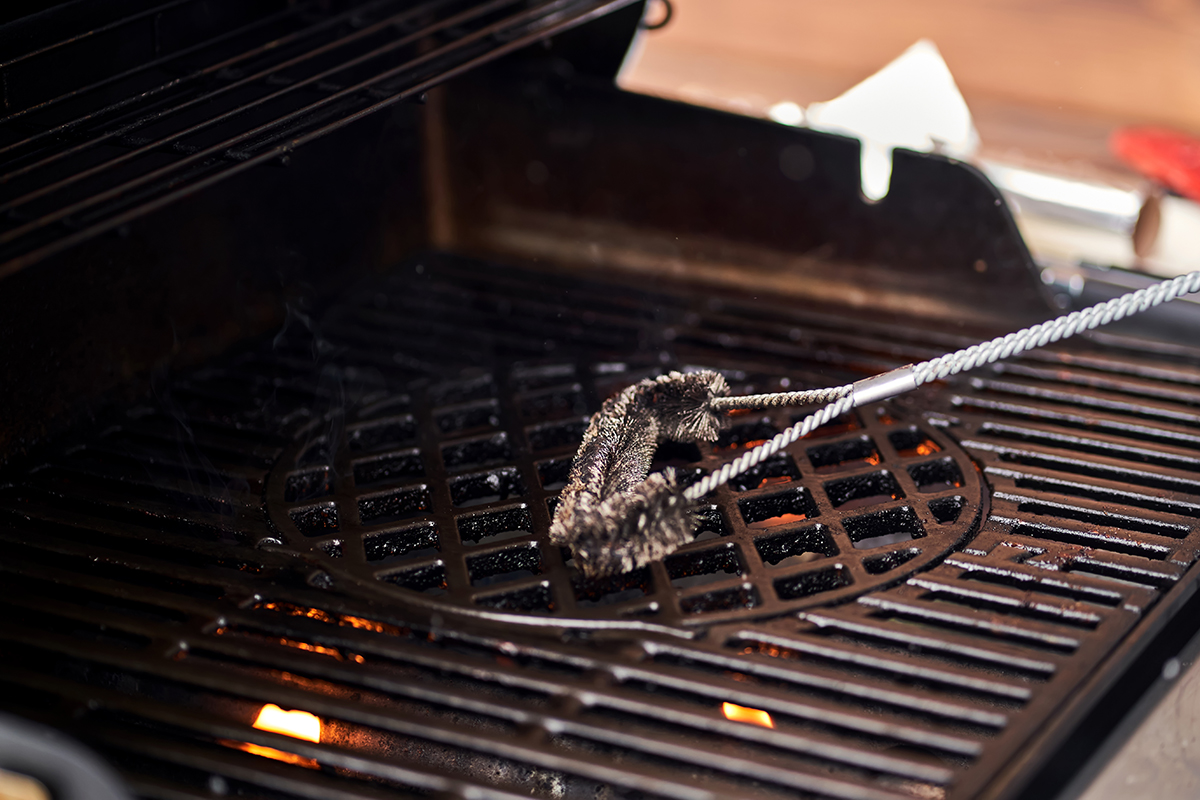
You may think that allowing the heat of the coals to kill germs will be enough to clean your barbecue, but according to Joy, heat alone won’t kill all nasties. ‘Make sure you use mild cleaning detergent to tackle stubborn grease and grime, but be careful when it comes to cleaning tools, because using a metal or wire bristled brush barbecue carries its own risk.’
A study conducted at the University of Missouri School of Medicine found that more than 1,600 injuries from wire-bristled grill brushes were reported between 2002 and 2014. And on occasion, wire bristles can become stuck on the grill and be accidentally ingested.
Joy recommends using coil brushes that do not have bristles. Another way to scrape away the grime is by using crumpled aluminium foil, which you can easily hold using a pair of tongs. This can leave small bits behind, so once finished, let the grill cool and use a wet cloth to wipe away the debris.
Safety first
Last year, an estimated 1,000 people visited A&E in the UK having had an accident involving a barbecue.
According to Government Consumer Safety Research, around 80% of severe injuries involve five or more days in the hospital or a transfer to a specialist burns unit. More than half of these accidents involved accelerants like methylated spirits, and accidents and burns caused by barbecues are increasing in frequency and severity.
The Royal Society for the Prevention of Accidents (RoSPA) advises that barbecue lovers should take the following precautions:
- When choosing a barbecue, stability is essential – ensure the one you choose is strong and sturdy
- Check your barbecue is in good condition (particularly if you have not used it for some time) and look for loose or damaged parts that may need adjustment or repair
- Never pour petrol, meths or other accelerants onto a barbecue. Some of the most serious barbecue-related accidents happen when people do this and the barbecue 'explodes' in their face
- Use long-handled tools
- Be careful of steam when opening foil parcels
- Don't leave children unsupervised near a barbecue
- Make sure the barbecue is fully extinguished before you leave it
- Take care when getting rid of a disposable barbecue or barbecue coals - ensure they have cooled down before placing them in a bin.
Beware of the emissions
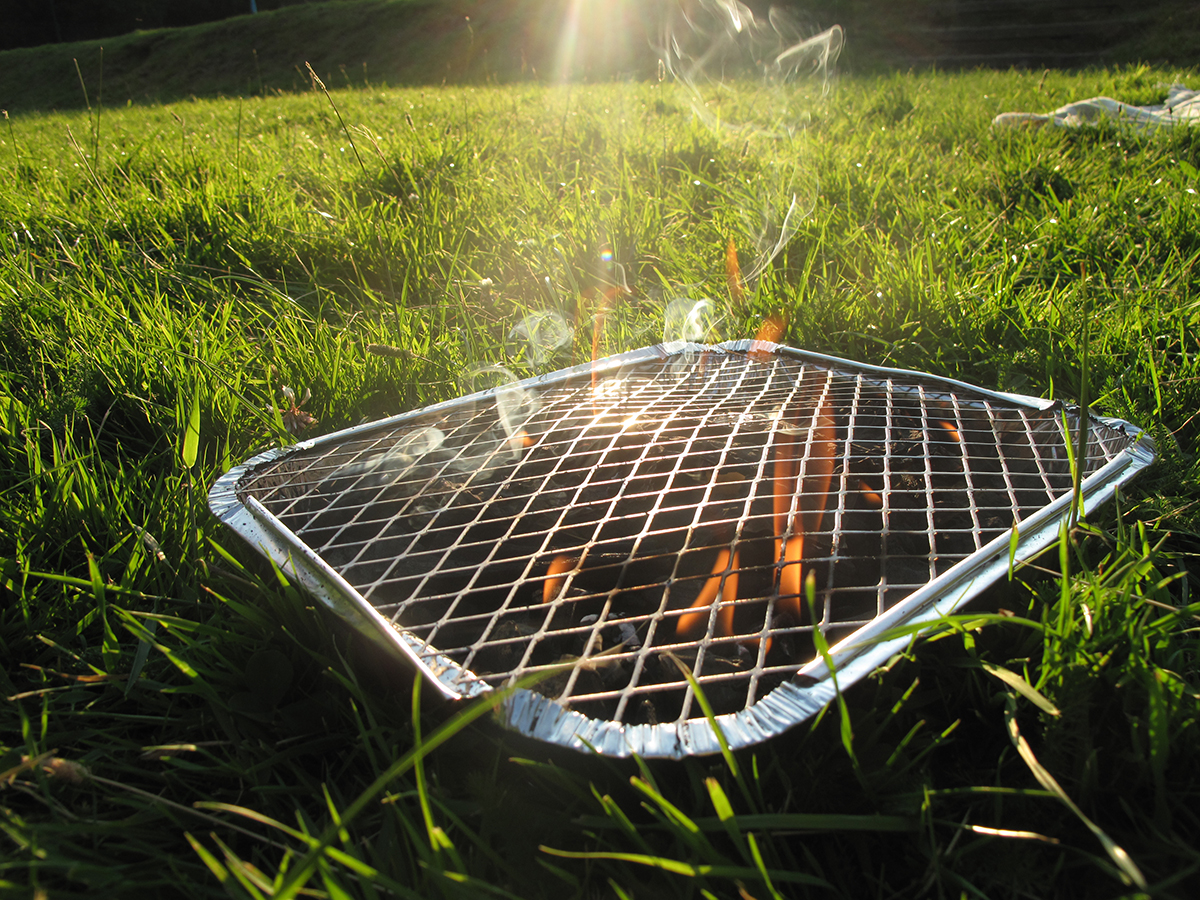
Although smoky emissions from barbecues are easy to see, most people have never stopped to consider the impact that grilling fumes can have on their health.
However, the reality is that harmful barbecue fumes can be inhaled, absorbed through the skin, and consumed through grilled foods, according to research. Different grilling methods may cause emissions in various ways, but none are entirely free from fumes.
Barbecue smoke contains many components that can have harmful health effects, according to the National Cancer Institute, including:
- Volatile organic compounds (VOCs) – A variety of carbon-based chemicals that exist as gases at room temperature, VOCs have been found to cause adverse health effects, including respiratory irritation, allergies and asthma, neurological toxicity, and cancer.
- Polycyclic aromatic hydrocarbons (PAHs) – Though the majority of barbecue-related PAH exposure comes from ingesting grilled food, PAHs can also be inhaled and absorbed through your skin. Exposure to PAHs can cause blood and liver abnormalities, as well as some forms of cancer, according to the EPA. Additionally, research studies have found that PAH exposure may negatively affect lung function and even cause lung cancer.
- Carbon monoxide (CO), a product of combustion, can be detrimental to your health when inhaled. CO exposure decreases the amount of oxygen in your blood, negatively impacting the functioning of your brain, heart and other vital organs. Barbecues are for outdoor use only. You must never light one indoors or in an enclosed space, such as a balcony or communal walkway, as this can lead to carbon monoxide poisoning.
- The toxic fumes created during a barbecue not only affect those in attendance. A 2012 study for the California Air Resources Board found that summertime grilling across different homes in an area can cause emissions to accumulate and negatively impact the health of everyone in the community.
Using propane and natural gas in your grill instead of charcoal can result in fewer toxic emissions, and grilling with an open hood allows the smoke to disperse more effectively. Change out of and wash your smoke-exposed clothes after a barbecue, so you don't bring any nasty particles into your home.

Cut back on the UPFs
While barbecue staples are typically relatively healthy when made from scratch using whole ingredients, many shop-bought versions can be packed with hidden additives and preservatives, turning them into ultra-processed foods (UPFs), warns Joy.
Regular consumption of UPFs has been linked to various conditions such as obesity, type-2 diabetes, cardiovascular disease, poor mental health and multiple cancers.
‘Store-bought burgers might be convenient, but are often packed with preservatives, fillers, and added sugars. Make your own patties using lean minced beef or turkey. Add your own mix of spices for a tasty, wholesome burger that’s free from unnecessary additives. Most supermarket burger buns are full of added sugar. Instead, look for wholegrain options from a local bakery, or skip the bun altogether and wrap your burger in crisp lettuce leaves.’
And while sticky, sweet barbecue sauce may hit the spot, Joy recommends using natural ingredients such as herbs, olive oil, lemon juice, and garlic to develop a delicious marinade that contains fewer added sugars.
Read more:

