
Are you secretly damaging your skin? Experts want you to make this change when applying SPF
The number of people in the UK being diagnosed with skin cancer has hit a record high since records began, according to Cancer Research UK, and the Skin Cancer Foundation says that 1 in 5 Americans will be diagnosed with skin cancer by the age of 70. With Melanomia UK saying that global cases of melanoma skin cancer will reach nearly half a million by 2040, the statistics are a warning to everyone about the importance of sun safety and sun cream use.
How often have you heard someone say they ‘feel better’ with a tan? Dr Ash Soni, dermatology specialist and leading skincare expert with AlumierMD, warns there is no such thing as a healthy tan. ‘Tanning damages your skin at the very deepest level. Some of my patients tell me that their skin looks and feels better after they have been in the sun. But this short-term ‘benefit’ can lead to some very scary long-term issues. Temporarily, your skin may look better, but in the long term, the tan has damaged your skin.
‘Tanning is a sign of skin cell DNA damage. When your skin tans or burns, it goes into high-crisis mode. Water is forced out and there is inflammation at a cellular level. This means the skin is forced into repair mode. The outcome of that repair is that blemishes quickly clear up, but the damage that’s being done to the cells at the same time actually accelerates acne scarring, lines, wrinkles, discolouration, large pores and even skin sagging.’
On a positive note, it’s also important to remember that a high proportion of melanoma skin cancer cases are preventable, but while more people are turning to suncream for protection, there are some mistakes being made that mean you’re taking more risks than you think. SPF stands for ‘Sun Protection Factor’ and measures the level of protection that a sunscreen provides against UVB rays.
Using SPF is one thing – getting it right is another. We’ve spoken to experts to find out exactly what you’re doing wrong and how to put it right.
Forgetting it expires
Dr Sasha Dhoat, consultant dermatologist at Stratum Clinics warns of the importance of the expiration date on suncream. ‘Expiration dates are usually set somewhat arbitrarily, and products are often effective long after the documented date. However, with regard to sunscreen, the expiration date is relevant and should be respected. Sunscreens past the expiry date are unable to achieve the SPF rating stated on the container, the primary anti-ageing and anti-skin cancer effect and are not fit for purpose. That goes for both chemical and mineral sunscreens.
‘Chemical sunscreens that contain ingredients such as oxybenzone, avobenzone, and homosalate can oxidize and become less effective. Mineral sunscreens, those with zinc oxide or titanium dioxide on the label, don't have that problem, but they do still degrade.
‘Expired sunscreen, both chemical and physical, is not as effective at preventing ageing damage and skin cancer from ultraviolet light, and the SPF listed on the label is not guaranteed. Additionally, out of date sunscreen can lose its consistency, become discoloured, or no longer look or smell the way you purchased it.
‘No sunscreen should be used past its expiry date, opened or unopened. All sunscreens will degrade with time, and this will occur quickly in heat and sun. Opened bottles should be thrown away after a year of first use.
‘It is helpful to write the purchase date on the bottle, to guide the above. The expiration date may be found written on the back of your bottle or on the base or it could also be in the form of a small jar symbol with a number such as ‘12M,’ which indicates the sunscreen is effective for 12 months after opening.
‘Sunscreen should be regarded as other medicines, which wouldn't be used after expiry date, as active ingredients are less effective. I would advise expired means expired - full stop, bin it.’
Heating it up
One of the UK’s leading aesthetic doctors Dr Ed Robinson says: ‘A big mistake that I see is leaving SPF in hot cars or beach bags. Heat breaks down the active ingredients, meaning you’re essentially applying a false sense of security. Opt for keeping your products out of direct sunlight and in cool storage spaces.’
Dr Sweta Rai says, ‘Vitamin C containing products, especially higher dose Vitamin C can be deactivated in direct sunlight. Many high strength active ingredients such as hydroquinone, niacinamide may also be affected by direct heat, light etc. The advice is to keep beauty products in a cool, dry area of your home as moisture and heat can cause bacterial growth and deactivation of the strength of the product or formation harmful by products when many actives are mixed together respectively.
‘Essentially cosmetics including sunscreens contain chemicals mixed to remain “stable compounds” for a certain period of time - termed ‘shelf lif’ therefore when the shelf life is exceeded the chemicals in the products may behave in an undesired manner and this needs to be avoided by using products within their valid shelf life.'
Not applying enough
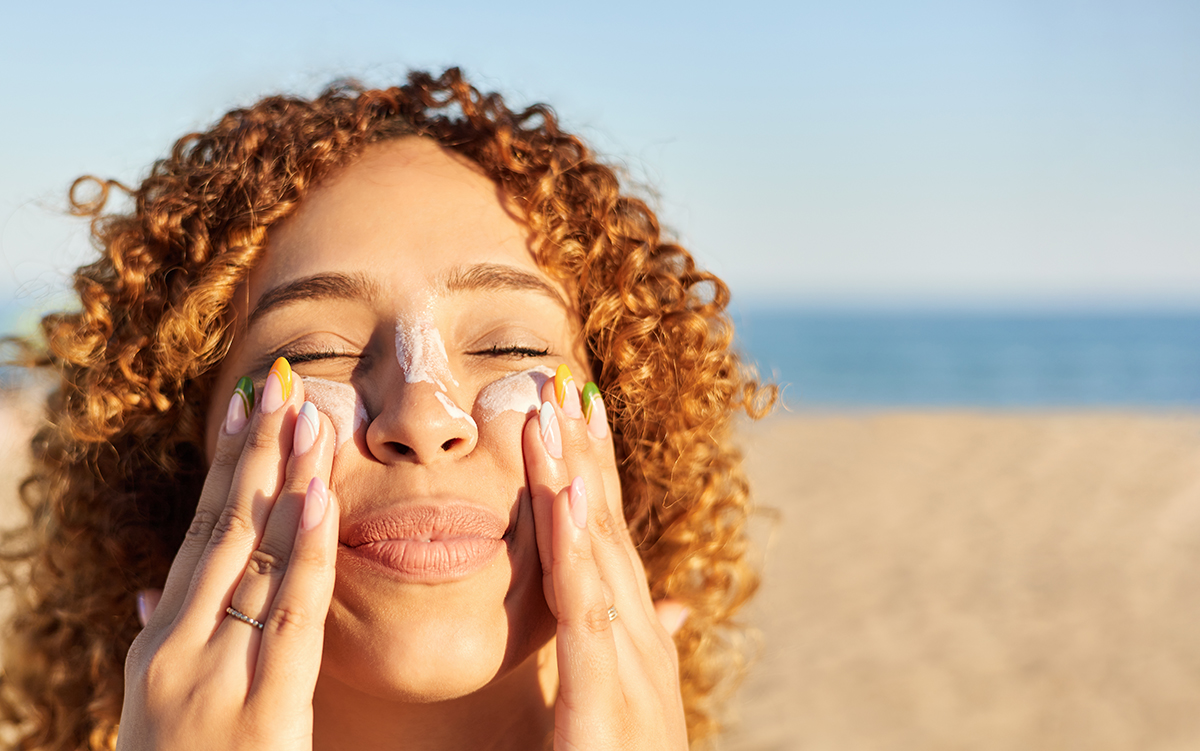
Bruce Green, Founder of SOS Serum Skincare says, ‘One of the most common mistakes people make with sun cream is assuming one application in the morning is enough to see them through the day. Even with a high-quality, broad-spectrum product like our SOS SPF 50 Sun Cream, reapplication is crucial. Especially after sweating, swimming or towel-drying. SPF isn’t a set-it-and-forget-it product, it needs topping up to maintain its protective film.
‘People often underestimate how much sun cream they actually need. Studies show most of us use only 25–50% of the recommended amount. This dramatically reduces the stated SPF protection. As a general rule, you should use about half a teaspoon for the face alone, and a shot-glass-sized amount for the body. With SOS SPF 50, we’ve used thin-film technology to help a little go a long way, but the key is still thorough, even coverage. Missing patches around the ears, hairline, and neck can lead to unexpected burns.’
Dr. Ed Robinson agrees. ‘Most people think they’re being sun-safe by applying SPF once in the morning, but that’s just the start. One of the most common – and dangerous – mistakes I see is patients applying far too little.
‘I always advise the ‘two finger rule’ for applying SPF – two finger lengths along your index and third finger will cover the face. Any less and you just aren’t getting the protection you need.’
Timing is crucial too, says Dr Ioannis Liakas, Medical Director of Vie Aesthetics. ‘Another mistake is neglecting application timing. Many people put on sun cream only once they’re already in the sun, but it needs about 15 to 20 minutes to fully absorb and start working effectively. Applying it too late reduces its protective benefits and increases skin damage risk.’
Not understanding the numbers
Do you really understand the numbers on suncream bottles? ‘Another misconception is around SPF numbers themselves. Many people believe that SPF 30 offers half the protection of SPF 60, but that’s not how it works’ says Bruce.
‘The SPF scale isn't linear. SPF 30 blocks around 97% of UVB rays, while SPF 50 blocks about 98%, and SPF 100 blocks around 99%. That single percentage point might seem small, but over hours of sun exposure, it can make a significant difference to your skin. It's not just about the number, but the formulation, the application, and the reapplication. Our SOS SPF 50 Sun Cream delivers a 5-star UVA rating and broad-spectrum protection, making it a reliable shield against both UVA and UVB rays, as well as blue light from screens.’
Dr Robinson adds, ‘A common misconception is that strength isn’t everything: a high SPF doesn’t mean you can stay out longer without reapplying, it’s about the percentage of UV it protects. Poorly applied factor 50 is much worse than well applied factor 10. It’s about how you use it, not just what numbers are on the bottle.’
Dr Karishma Hemmady, consultant dermatologist at The Harley Street Dermatology Clinic advises, ‘For adequate protection, a broad-spectrum sunscreen with an SPF of at least 30 is recommended for everyday use. For anti-ageing purposes, it’s essential to apply sunscreen daily as UVA rays, which cause premature ageing, can penetrate even through windows.’
Relying on clothing to protect you
Dr Karishma Hemmady, consultant dermatologist at The Harley Street Dermatology Clinic warns that many of us don’t realise that clothes are not enough to protect you. ‘You can in fact get sunburnt through your clothes under certain conditions. While clothing does provide a barrier against UV rays, not all clothes offer the same level of protection. Factors like fabric type, colour, thickness, and condition can influence how much UV radiation reaches your skin. To minimize the risk of sunburn through clothing, choose garments with tighter weaves, darker colours, and consider UPF-rated options for the best protection.’
Dr Hemmady shares some tips on the best clothing.
Fabric Type and Weave: The type of fabric and how tightly it is woven significantly influence its ability to block UV radiation. Loosely woven fabrics allow more UV rays to penetrate through to the skin. For instance, a lightweight cotton shirt with a loose weave provides less protection compared to tightly woven fabrics like denim or synthetic fibres designed for UV protection.
Colour of Clothing: The colour of your clothes affects their UV protection capability. Darker colours generally absorb more UV radiation and offer better protection compared to lighter colours, which allow more UV rays to pass through.
Fabric Thickness and Condition: Thicker fabrics provide more protection than thinner ones. However, worn or stretched fabric can have reduced effectiveness because the weave can become looser, allowing more UV rays to penetrate. Wet fabrics also typically offer less UV protection than dry ones, as water can change the structure of the fabric and increase transparency.
UPF Ratings: Some clothing is specifically designed to provide UV protection and comes with an Ultraviolet Protection Factor (UPF) rating. UPF-rated clothing has been tested to indicate how much UV radiation it can block. For example, a UPF rating of 50 means that only 1/50th of the sun’s UV rays can reach the skin.
Expecting make-up to do the job
Harley Street skin and aesthetics expert, and independent nurse prescriber Nina Prisk, of Update Aesthetics says that sun cream is one of the most important steps in protecting your skin from premature ageing, sunburn, and serious conditions like skin cancer, but many people use it incorrectly without realising. Especially when it comes to SPF in makeup.
‘While SPF in foundations or tinted moisturisers is helpful, it’s rarely applied in sufficient quantities to offer real protection. You’d need several layers of product to match the level of coverage in a dedicated sunscreen,’ she warns. ‘The term ‘broad-spectrum’ is crucial, this means it protects against both UVA and UVB rays.’
Thinking it’s just for holidays
While we tend to stock up on sun cream when we’re jetting off on holiday abroad, or heading to the beach on a weekend, we shouldn’t be saving it for those stereotypical sun hits. We should be wearing it wherever, all year round. The UV index can be checked through weather apps, online services, or government websites, it ranges from 0-11+. A value of 3 or higher signals a risk of harm from unprotected sun exposure.
Nurse Mel Recchia says, ‘Something we also really need to start talking about more: sun protection isn’t just for beach holidays. I actually think we should stop calling it sun cream and start calling it daylight protection. You're exposed to UVA, UVB, visible light, infrared and blue light all year round- yes this is even through windows and screens.
'Modern formulations like Heliocare now include added protection against infrared and blue light, which is brilliant if you’re on your phone or laptop all day, or even sitting near a window.’
Missing bits
Nurse Mel Recchia says, ‘There's also a few areas that people tend to forget- backs of the hands, neck, chest, and décolletage. These areas age just as quickly (if not faster) than your face, and they’re often the first to show signs of sun damage later in life.
‘There's also a few areas that people tend to forget- backs of the hands, neck, chest, and décolletage. These areas age just as quickly (if not faster) than your face, and they’re often the first to show signs of sun damage later in life.’
Pharmacist Carolina Goncalves adds, ‘Almost a third of Brits overlook applying SPF to delicate skin areas such as the lips. The skin on the lips is thinner and more delicate, so use an SPF 30 lip balm or higher. If you do get burnt, a thin layer of aloe vera gel or petroleum jelly will soothe.’
Bruce Green, Chemist and Founder of SOS Serum Skincare shares the five hacks to avoid with your sun protection.
1. Using a sponge to apply suncream
I prefer to use super clean fingertips to apply sunscreen because you can feel your face’s contours and feel for any blemishes or imperfections you might want o treat far easier than using a sponge. Using your fingertips also makes it easier to control how much product you apply plus a sponge absorbs a lot of product. This isn’t ideal when you are applying suncare particularly as not only can this start to be expensive, but it’s also important to apply an adequate amount so that product efficacy is maintained.
2. Storing your suncream in the fridge
Whilst some people believe that keeping your suncream in the fridge will help to retain the efficacy and shelf-life of the product once opened, this isn't a necessary step. Keep your suncream in a cool, dark place and avoid leaving suncream in bags, out in the sun or in the car during warmer temperatures.
3. Using an SPF setting spray so you don't have to reapply
This isn’t ideal when you are applying sun care particularly as not only can this start to be expensive, but it’s also important to apply an adequate amount so that product efficacy is maintained.

4. Using a stick SPF applicator for hands, feet and face
Whilst formulation is up to personal preference, a stick form applicator can be less accurate and more damaging to skin by applying inaccurately and too little. Applying too thinly can reduce the level of protection. It's also important to remember, however you apply your sun care and moisturisers, make sure everything is clean; hygiene is key.
5. Using a moisturiser or make-up with SPF
Double-duty products may make steps shorter and seem more efficient however, you cannot always rely on your daily moisturisers or make-up products to give you adequate protection, as often the SPF is too low (SPF 15) and to maintain an optimum level of sun protection requires regular application and re-application.
Skin Cancer: What it Is and How to Spot It.
Read more:
