How to pick the perfect Christmas tree and decorate it like the pros
Christmas trees are a little bit like snowflakes: no two are the same. Whilst some of us favour a bright and bold maximalist approach, others lean towards a chic and pared back Nordic look.
Some families can’t imagine Christmas without the smell of a fresh pine tree wafting through the house, while others count down the days until they can fetch their trusty artificial tree out of the attic and begin the yearly ritual of assembling it.
Whatever floats your boat, we’re here to help. Over the next few pages, we’ll be showing you all the tips and tricks you’ll ever need to find your perfect tree, care for it during the festive season (and beyond) and decorate it like a pro.
- 17 ways to feel warmer without turning the heating on
- This is why you overshare at parties (and how to stop!), according to neuroscientist
Real trees
When selecting the right tree for your home, the wide variety of options can be both wonderful and a little overwhelming. Pippa Wild of the British Christmas Tree Growers Association (BCTGA), explains, ‘There are several species of Christmas trees grown in the UK, each with different needle types, scents, and shapes.
‘Plan where your tree will go before you buy, and don’t forget to measure the ceiling height, allowing space for a topper and stand.’
Pippa explains that when it comes to Christmas trees, the most sustainable option is to shop local. ‘Choosing a British-grown tree supports local farmers and helps reduce transport emissions. Christmas tree farms provide important habitats for wildlife and create green corridors that benefit biodiversity.’
Popular Christmas trees
Christmas trees come in every shape, size and colour. Whether you choose a real tree or an artificial one you’ll be spoilt for choice.
Norway spruce
Appearance: Classic Christmas tree shape with bushy branches and a rich green colour.
Pros: Affordable, widely available and a strong pine fragrance.
Cons: Considerable needle dropping, especially in warm rooms.
Best for: Shorter display periods or outdoor use.
Nordmann fir
Appearance: Symmetrical shape with glossy, dark green needles and a silvery underside.
Pros: Excellent needle retention, plus softer needles, making it child- and pet-friendly.
Cons: Can be on the more expensive side.
Best for: Long-term indoor display in homes with pets or young children.
Fraser fir
Appearance: Narrow shape with dark green needles and a silvery underside.
Pros: Strong, citrus-like fragrance, good needle retention and fits smaller spaces well.
Cons: Not as widely available in all areas.
Best for: Smaller homes or apartments with small rooms.
Blue spruce
Appearance: Stiff, symmetrical branches with striking blue grey needles.
Pros: Striking colour and strong branches, ideal for heavier ornaments.
Cons: Very sharp needles and moderate needle retention.
Best for: Those who want to make an impact, or have heavier decorations/
Scots pine (AKA Scotch pine)
Appearance: Bushy, full shape with long needles and bright green colour.
Pros: Excellent needle retention and a pleasant, mild pine scent.
Cons: Less vibrant colour, plus longer needles can make decorating trickier.
Best for: Homes wanting a low-maintenance, long-lasting tree with the gorgeous scent of the season.
If you’re keen to explore even more eco-friendly options, pot-grown trees are a great choice – you can rent these trees for the festive period, without having to be cut down. Caleb Silcock, co-founder of Green Elf Trees explains, ‘Pot-grown trees can be left outside and maintained across the year to be used next Christmas.
Alternatively, there’s the option to have it collected and replanted: ‘At Green Elf Trees, we collect your tree and replant it back into the wild to live out its years, back with its friends in the forest.’
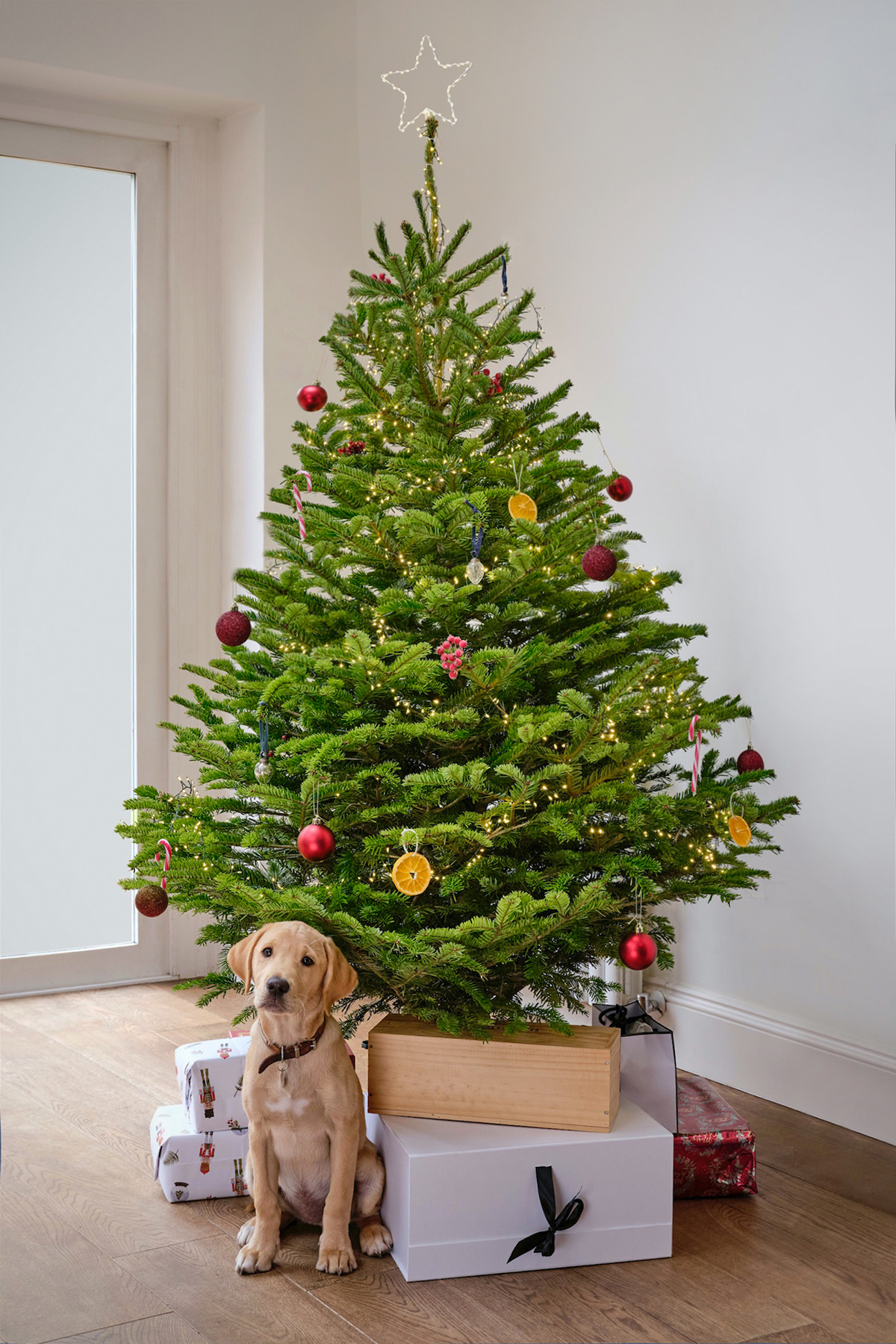
So, what should you look out for when it comes to the big deciding moment? ‘Real Christmas trees are a natural product, so freshness is key, explains Pippa. ‘Look for a tree with vibrant green needles that stay on when you gently run your hand along the branch – this indicates freshness.’
According to Pippa, ‘a well-chosen, well-cared-for tree should last around four weeks. Keep it outdoors in a bucket of water until you’re ready to bring it in, and once inside, place it away from heat sources.’
Don’t forget that your tree is also partial to a Christmas tipple – Caleb advises giving pot-grown trees a drink if the topsoil is dry. Pippa adds that cut trees need daily watering as well as a water-holding stand: a cut tree can drink up to a pint a day!
Disposing of your Christmas tree is a sad fact, but it must be done. Pippa explains that cut Christmas trees are completely recyclable, but they must be disposed of responsibly. ‘Many BCTGA members offer tree returns or recycling services. You can also check with your local council or charity for chipping and composting schemes. Or, get creative – your old tree can be repurposed in the garden or even used to make coasters, decorations, or wildlife shelters.’
Artificial trees
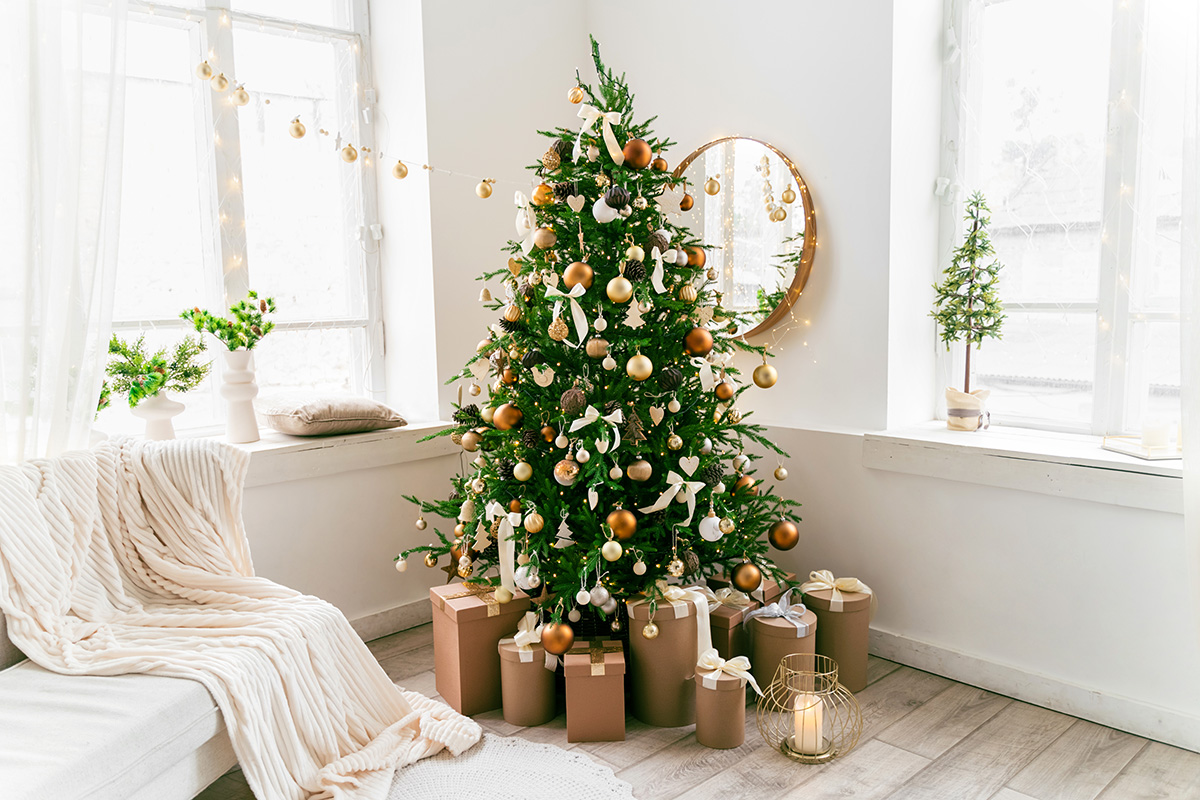
There are plenty of reasons why an artificial Christmas tree might be the best pick for you. Mac Harman, CEO of Balsam Hill explains, ‘Opting for a tree that is built to last can be a better investment for your wallet, as it will look great for Christmases to come.’
Plus, they’re mess-free, meaning you won’t have to bother with hoovering up fallen needles. Nowadays, brands like Balsam Hill have artificial trees that replicate the colour and texture of natural foliage mirroring the look and feel of real firs, spruces and pines.
‘When selecting the perfect artificial Christmas tree, I always recommend thinking about your space, your style, and your lifestyle,’ says Mac. Consider where your tree is going to go – for example, slimline trees are better suited for tighter spaces, and if your tree is going in front of a window, opt for a design with barer branches to avoid blocking natural light.
‘Style-wise, ask yourself whether you prefer the classic look of a green fir, the elegance of a snow-dusted spruce, or something a little bit different.’
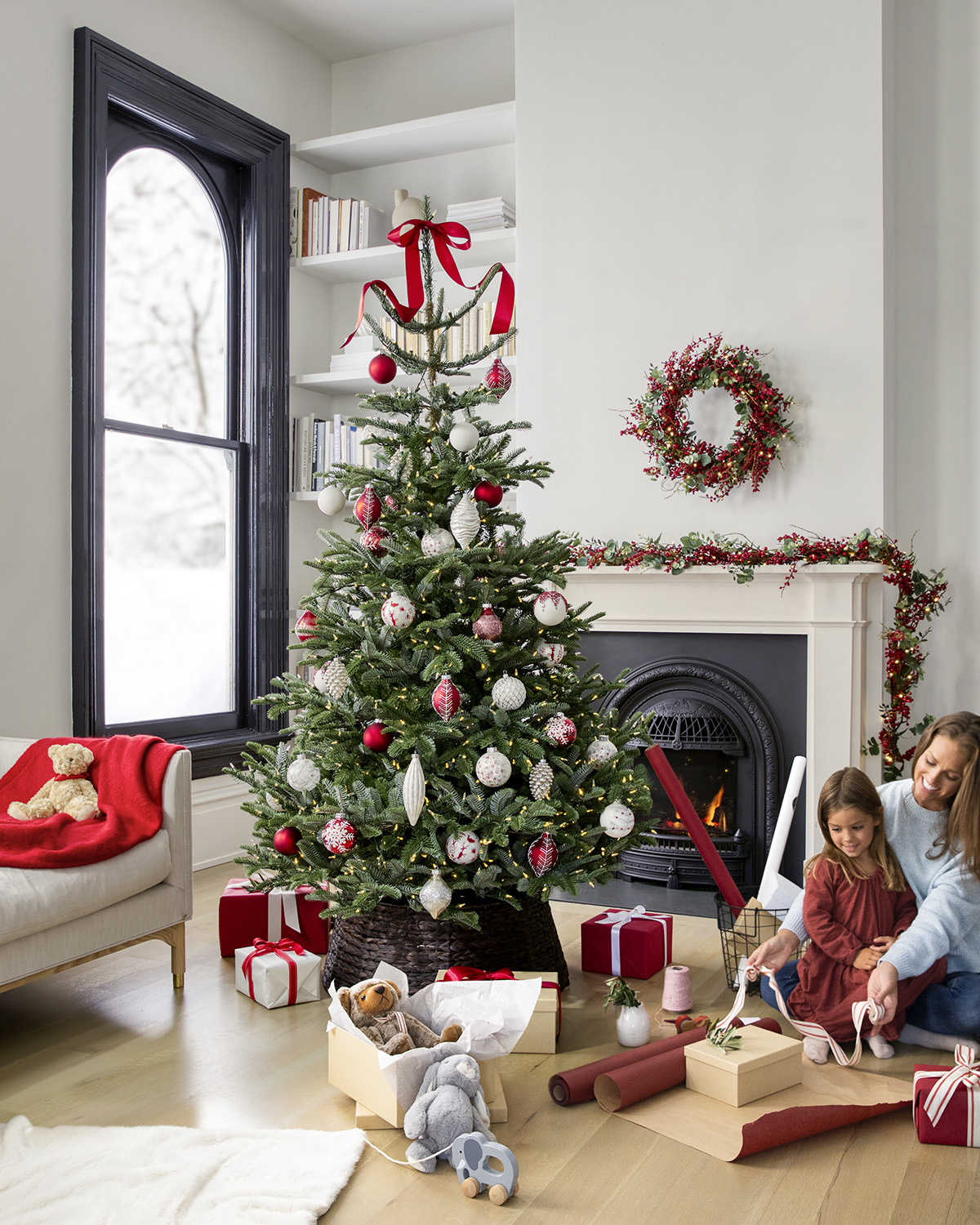
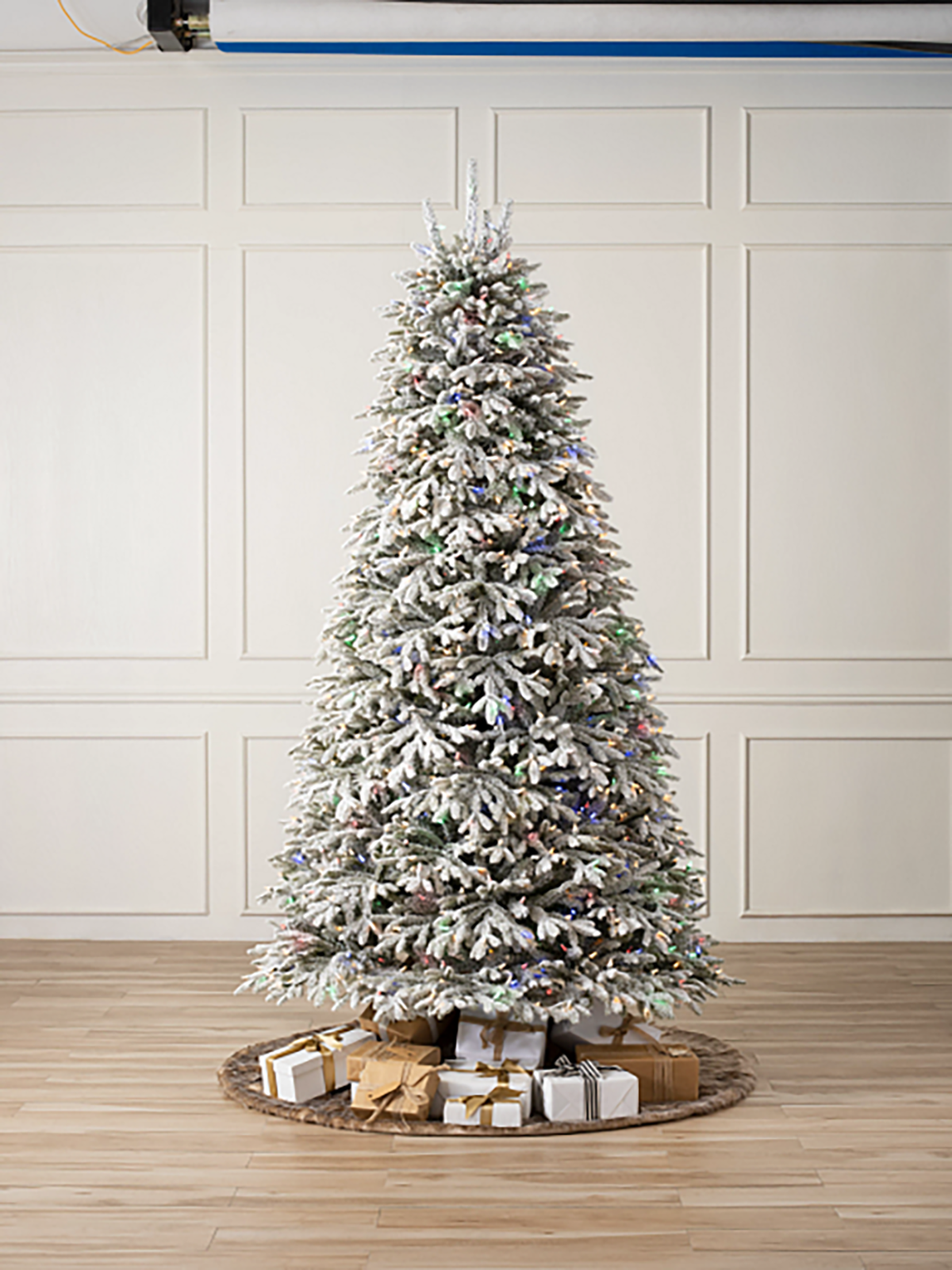
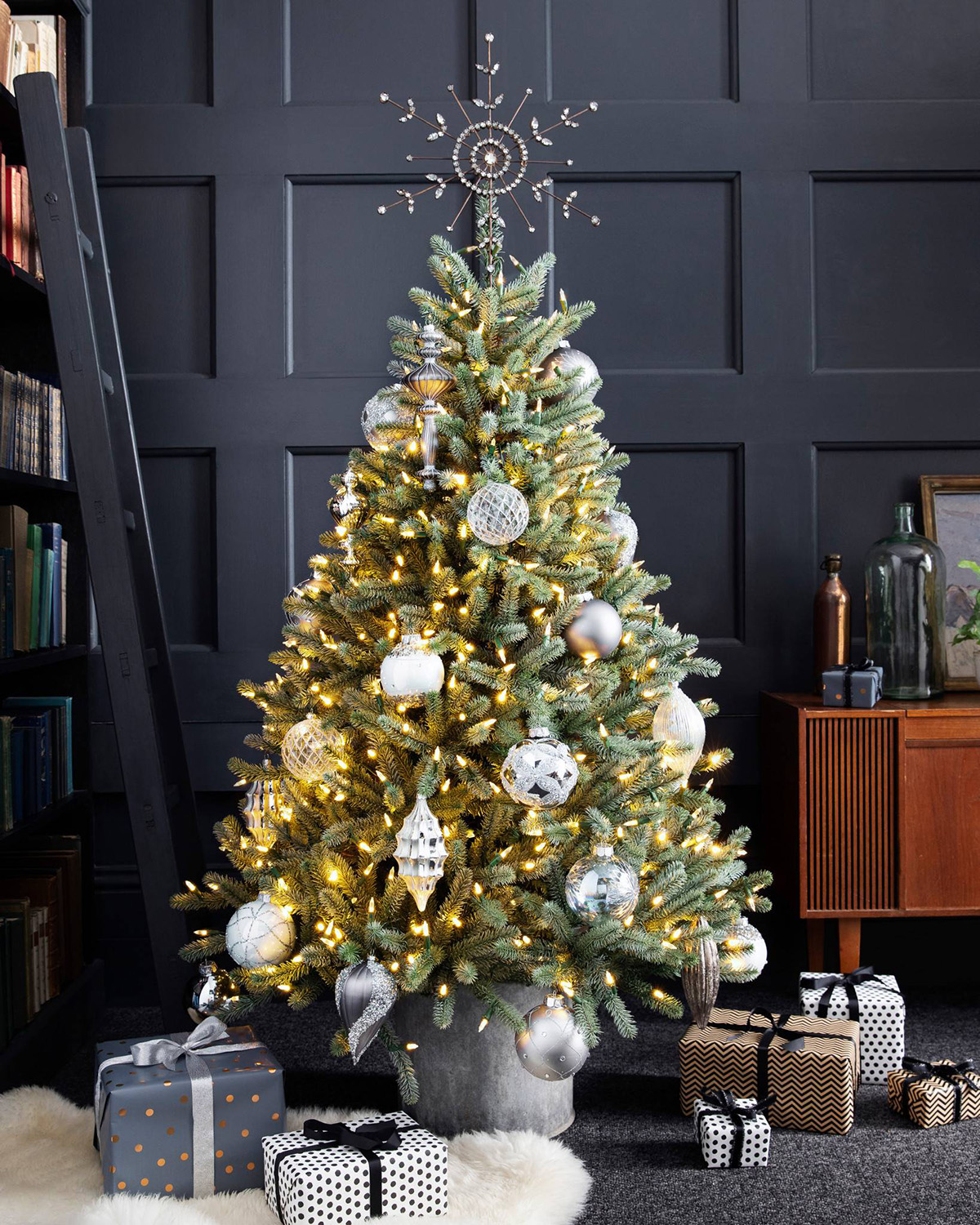
Mac tells us that, ‘British homeowners are increasingly choosing flocked styles to bring the magic of a white Christmas indoors. A frosted tree will also help the colours of your ornaments to really pop,’ explains Mac. ‘I’d recommend pairing this type of tree with warm lighting to help prevent it from feeling too cold.’
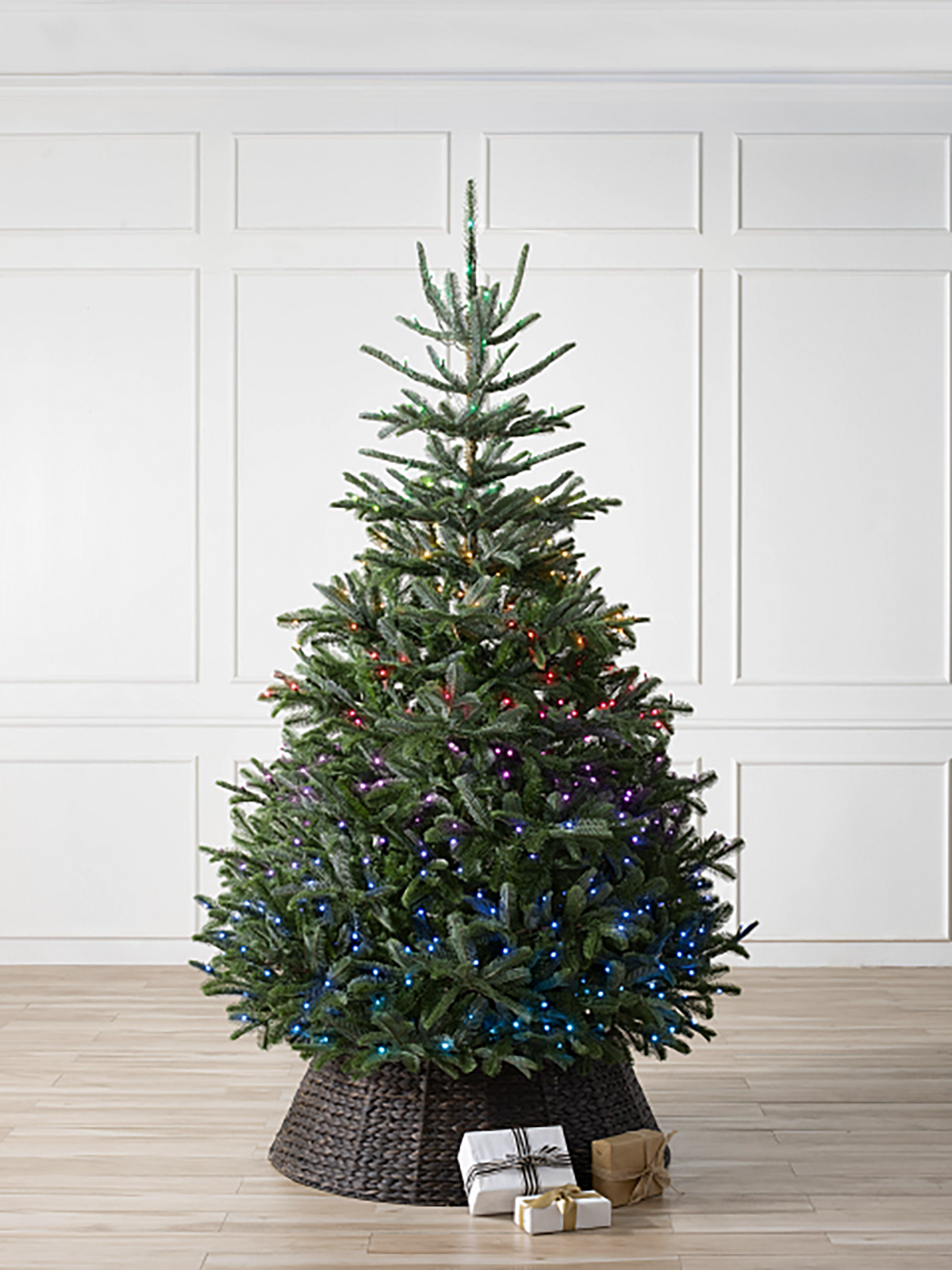
Another trend Mac has noticed gaining momentum is sparse Christmas trees, for a touch of simplicity. ‘Barer branches with warm lighting can add a festive feel without overwhelming the space and allow for you to show off the various decorations you’ve collected over the years.’
Now for the really important bit: how to fluff your artificial tree. ‘Fluffing is what takes a tree from flat to fabulous – it’s the secret to making any artificial tree look lush and full,’ says Mac.
‘Always start at the bottom and work your way up, shaping every branch individually. It’s best to start from the back of each branch (closest to the trunk), staggering each twig and sprig so that it is offset from the one before. The trick is to spread the branches out in a ‘starburst’ shape so that each sprig is pointing in a different direction from those nearest to it, to fill all gaps.’
Then, the final step: ‘Once the tree is fluffed, step back and look at it from all angles. Tweak any uneven sections before decorating. With the right prep, your artificial tree will have the wow factor of a real one, just without any of the mess.’
And what about when the fun’s all over? Fear not – as Mac explains, with the right care, a premium artificial Christmas tree can last for decades. The key is proper storage. At this point, you’ll want to de-fluff your tree – ‘compress the foliage of each branch in each section and then flip upside down, squeezing the branches into the main trunk.’
Mac’s top tip here is to tie up each section with a ribbon, so that all the branches are held down together.
Keep your tree in a cool, dry place like a loft or storage cupboard, and avoid any areas with damp or extreme temperature. Mac adds, ‘Treating your tree well means it will continue looking stunning season after season – a true investment in your family’s Christmas tradition.’
Decorating tips
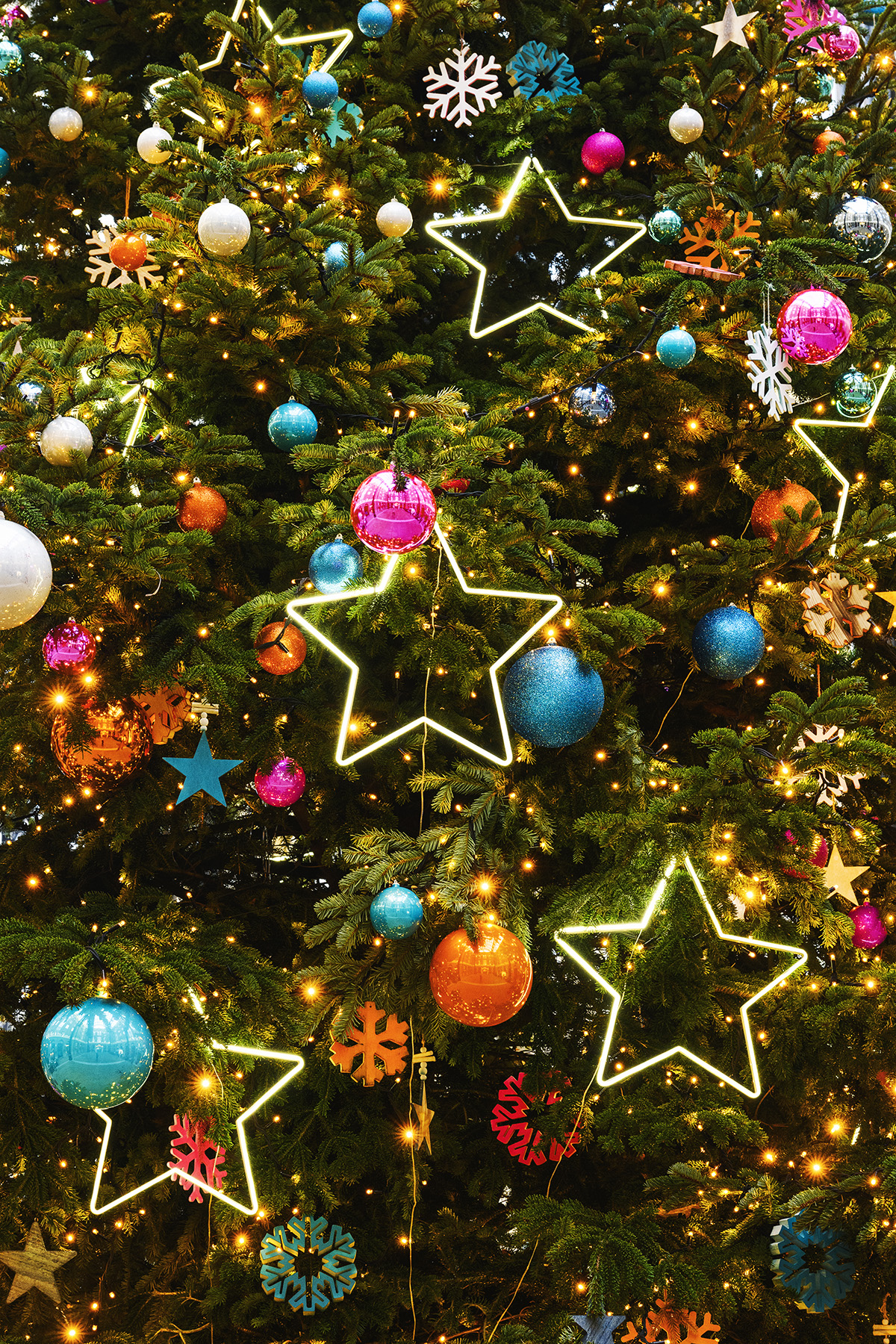
So, you want to decorate like a pro? First things first, you’ll need to plan your theme. When she’s not busy creating luxury wedding flower arrangements, Issy Watts of Wizz & Wild can be found literally decking the halls of her clients, creating bespoke festive displays for private residences.
Issy tells us that lately, she’s seen lots of her Christmas clients wanting more of a maximalist, but natural style: gorgeous, wild arrangements up staircases and over fireplaces, and installations that bring the outside inside for a magical Christmas.
Next up: let there be light! Always start from the base when adding lights to your tree and decide beforehand if you’re going for a zigzag or a spiral.
Issy adds, ‘I think that when it comes to lights, more is more. We would always decorate a tree starting with the lights, then add streamers or ribbons, and finally baubles.’
To avoid disasters, keep larger baubles to the inside of branches and smaller ones on the tips. Want to get rid of any gaps? Make your tree look fuller by adding decorative bows to fill the spaces.
When it comes to picking out a topper for your tree, make sure to keep it proportional to the tree’s size. You’ll also want it to match the general style of your tree – for example, a classic star or angel looks great paired with more traditional ornaments.
The options don’t end there, though – Issy notes, ‘I’ve seen a huge rise in clients wanting large, oversized bows as tree toppers, which brings a cool, modern twist to Christmas decor, but also a nod to chintz styling.’ Now for the grand finale! Finish your tree with a stylish tree skirt.
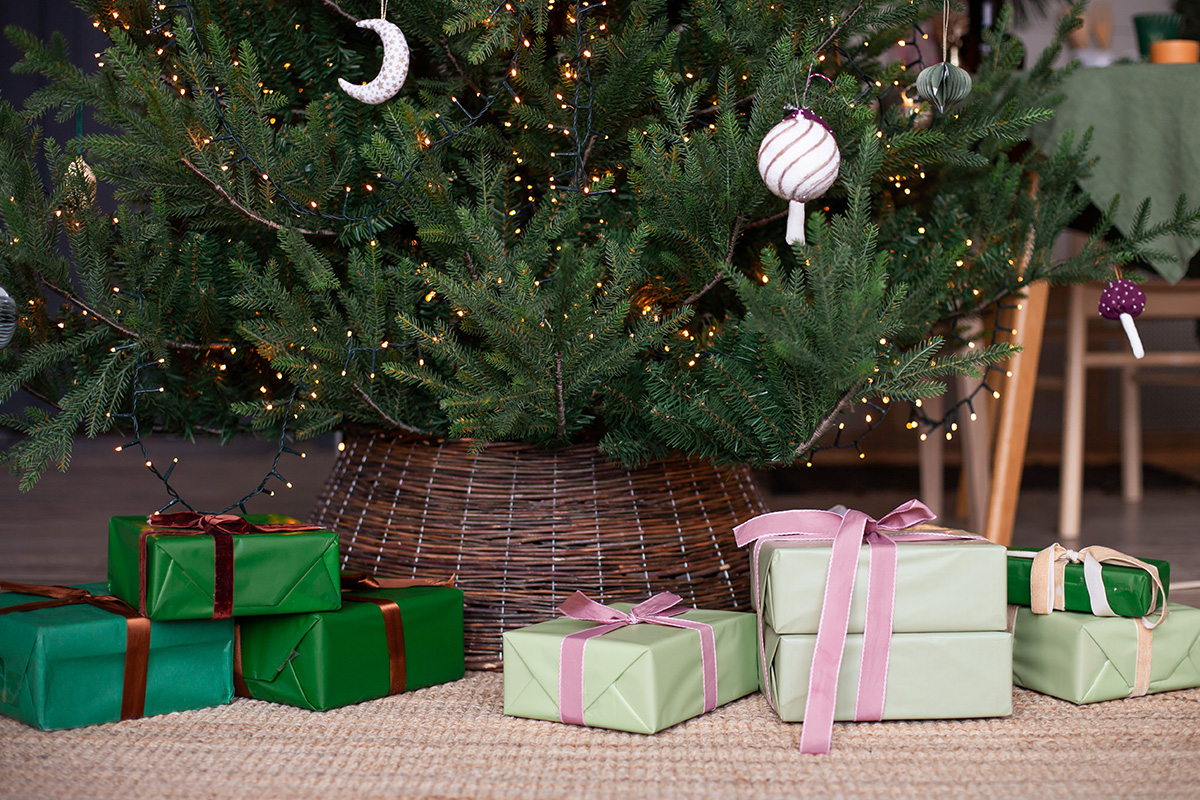
Five reasons why you should get a pretty tree base.
- A tree skirt is a perfect way to give your tree that professional, finished look. ‘I love a tree skirt and feel they are practical, hiding ugly tree stands,’ says Issy Watts of Wizz & Wild.
- They add additional texture and even a pop of colour. Why not pair chic, muted decorations with a brightly coloured skirt to really make it stand out?
- With such a wide range of styles, there’s a skirt for everyone: go for a fabric patchwork, velvet or faux fur, or if you like the cottagecore vibe, you may prefer a woven basket.
- Issy points out that tree skirts offer an opportunity to make your tree look more cohesive. Match your skirt to your ornaments for a polished look: ‘They often look so lovely to complement the colour of your decorations and bows,’ says Issy.
- There’s no need to break the bank – if you’re on a budget, you can use a blanket or throw. Those feeling crafty might want to try their hand at sewing their own patchwork tree skirt from scrap fabrics. Or use burlap for a simple, rustic look that allows your ornaments to really shine.
Read more: