
Summer is a delightfully sociable time of year. From pub trips to barbecues in the garden, it's all about spending quality time with loved ones.
Sunny days spent with friends and family are the stuff of memories. And we crave them so desperately during the winter when cold nights make everyone stay home and go into hibernation.
But there is, of course, the flip side of being fortunate enough to have close relationships – you're not going to see eye-to-eye on everything 100% of the time. Inevitably, there'll be the odd bicker, a heated clash of opinions or even a full-on, explosive row now and again.
Arguments, while we’ve all had them, aren’t generally a whole lot of fun for either party. Whether it’s a stranger with road rage or the love of your life, they really have a way of putting a grey cloud over the rest of your day.
While it doesn’t apply to all rows, many experts believe that clearing the air with a good old barny can be a sign of a healthy relationship, where those involved get to communicate their opinions, frustrations and needs to someone important. Unless, as all too often, they get slightly out of hand.
That said, most of us would probably be lying if we said we didn’t care who got the upper hand in an argument because ‘winning’, and the smug feeling of being right, can sometimes be pretty satisfying, can’t it?
- Here's how to catch a liar, according to experts
- This is why you should date someone you have nothing in common with, says relationship expert

The noun argument is defined in the Oxford English Dictionary as ‘an assertion or fact put forward in order to persuade or sway others; a reason advanced in support of (or in opposition to) a proposition; the assertion or point of view for which a person is arguing.
Often, fuelled by rage, fire and fury, it’s way more than that; as emotions boil over and personal shots are fired, sending tempers rocketing higher than the Empire State Building.
Psychotherapist and author Eloise Skinner says that while there are ways to come out on top, it’s also important to consider, from a psychological and relationship-based perspective, the real reason you want to win an argument in the first place.
She says, ‘It’s always helpful to remember that mutual respect and dialogue are the best ways to resolve disagreements, remembering also that the other person has reasons for their beliefs, based on their own experiences.’

Here Eloise shares her top tips to follow for the next time you get into an argument.
1. Allow the other person to make their points first: 'winning' an argument is easiest to do when all sides of the argument are fully understood (so that counter-arguments can be effectively suggested), so allowing the other person to make their points first can be advantageous. This also allows the other person an opportunity to feel heard and understood, before an opposing view is presented.
2. Think about the emotions behind the argument: often, 'winning' an argument depends on helping someone tap into the same emotions or perspectives as you share, so understanding the core drivers or forces behind the argument (both on your side and on your opponent's side) can be helpful.
3. Back up your points with evidence and data: where possible, use evidence to back up each point you make, especially if your points lean heavily towards one opinion or another.
4. Take breaks to reflect: the best arguments are thoughtful, incisive and deliberate - taking time to establish your next point can give you an advantage here.
5. Don't be afraid to concede on certain points: it might be that smaller points are less important to 'win', when it comes to the overall argument - don't forget to look at the bigger picture. Agreeing or conceding on minor points can allow your opponent to feel understood and appreciated, before you refocus on your main point.
6. Don't get too caught up in the emotions of the argument: staying calm and collected can help you focus on the substance of your argument, rather than getting distracted by emotional influences (on your side or your opponent's side).
7. Anticipate the main counter-arguments and suggest them first: if you can anticipate a major objection to your argument, raise it - and then explain why it's wrong, or doesn't apply, or doesn't feel compelling. This can help to disarm your opponent, requiring them to find new counter-arguments.
8. Always be respectful: the best arguments are 'won' while maintaining a level of respect and appreciation for your opponent. Remembering that other people's perspectives are valid, and that complex issues often have a number of strong points for each side, can help you to maintain this fundamental sense of civility throughout the debate.

How to have a successful argument
Clinical psychologist Kate Mason (womenandwild.co.uk) provides retreats to empower women to embrace adventure and wellness, training for corporate communications and parenting courses focusing on how best to navigate difficult conversations, including disagreements or arguments. She uses a method known as PACE.
PACE (which stands for Playfulness, Acceptance, Curiosity and Empathy) was a model originally developed for children who had experienced developmental trauma, and deregulating is exactly what people do in an argument, explains Kate.
Following the PACE method, she says, always puts the relationship first, keeping it firmly placed as more important than any argument.
Kate says, ‘When we deregulate, we are not accessing the rational, reasonable part of our brain. We go into a fight or flight response, we go into an accusatory state of mind, escalating to shouting at each other, making accusations about what the other person has done or said, which results in people pushing themselves even further away from each other as we’re both in fight or flight mode, without anything being resolved, leaving each party emotionally bruised and battered.
‘What PACE does is if there’s a behaviour change or something you need from the other person, you put the relationship and work with them on an emotional level, they are then able to access the reflective part of their brain, which is more likely to result in them giving you getting what you needed to gain or doing what you’re asking of them.
‘In an argument that would mean accepting how they are feeling, meaning that you accept that whatever emotion they’re feeling right now, be it right, wrong, out of context or over the top and dramatic, that is how they are feeling. What many people tend to do in an argument is react to this behaviour in the wrong way, instead of recognising that whatever they’re feeling is valid.
‘Everybody wants to be seen, heard and validated in any kind of interaction, so if we can accept by saying things like ‘I understand that you’re angry right now, or that you’re upset with me right now’ or ‘I can see that you’re cross’ and accept the emotion, that connects with the part of the brain which will bring them back down from a heightened response.’

Finding empathy
Kate continues, ‘Curiosity is about asking the right questions to understand what is behind the situation, like ‘I wonder if you’re upset with me because you felt I ignored you earlier on?’ or ‘I’m wondering if you’re upset because you’ve got so much going on at work and when you come home you feel you’re back into the trenches again?’
‘The empathy part means saying things like ‘Of course you feel upset, and I understand why you’re feeling cross or anxious’
‘It’s the ACE part which can really help bring the temperature of the argument down, it helps to move the individual out of being in that fight, flight, fighting and attacking mode and more into the reflective part.
‘When you’re in a heated argument throwing accusations at each other nothing ever gets resolved, but when you’ve had time to calm down, you’re more likely to either reflect and think you’ve been a bit harsh, or you might think ‘I should’ve said that, it would have been brilliant’.
‘It’s the same with kids, when you see them having a massive tantrum you can’t reason with them because they’re using the wrong part of the brain, but when you connect with them on an emotional level and put the relationship first it communicates ‘our relationship is good’.
‘That’s where the Playfulness part comes into play, obviously if they’re on the ceiling we need to bring them down first, but the Playful part of PACE is to communicate that your relationship is still fine, I still love you.
‘It’s either going to work at the start of the conversation or when the situation has de-escalated, depending on what kind of mood that person is in.’
It turns out, if you follow the advice of these experts when finding yourself in the middle of an argument, everyone’s a winner after all.
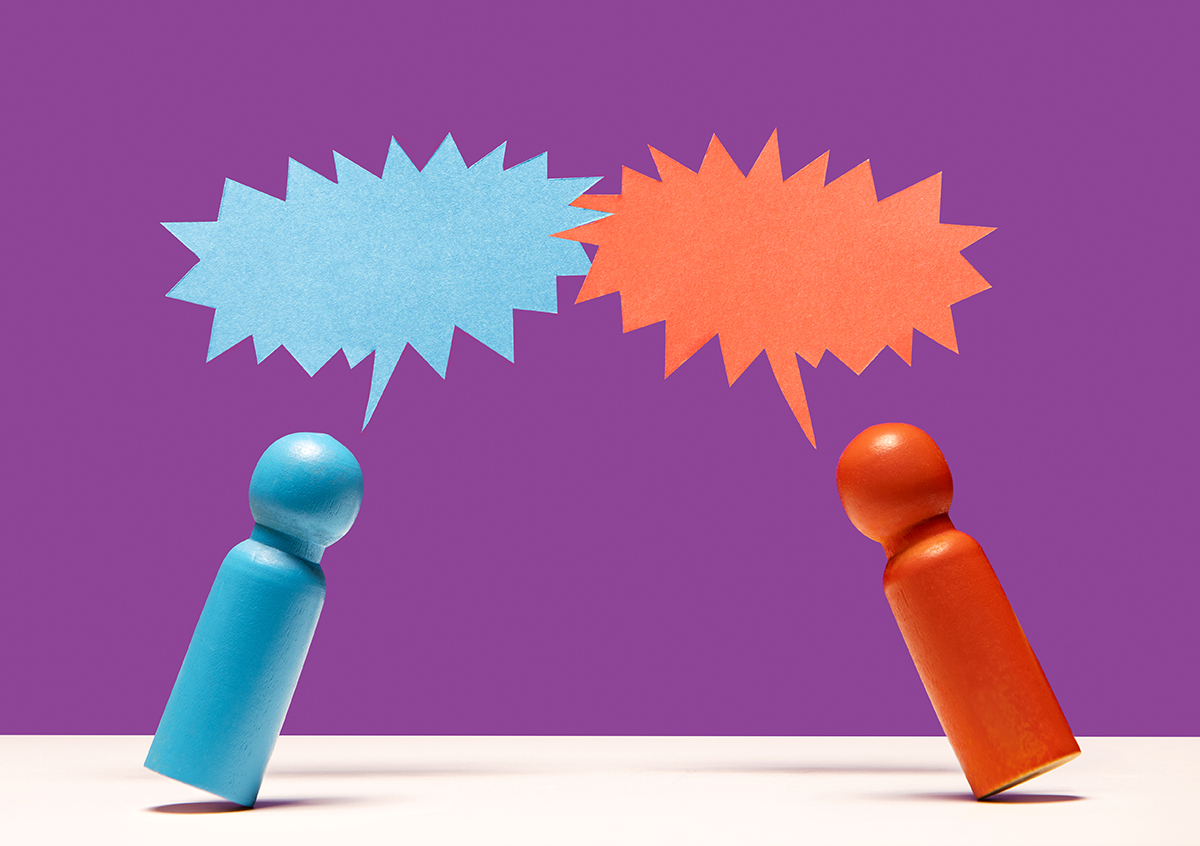
The best body language to use when you’re trying to win an argument
When you argue, your words are only part of the equation. Studies in communication consistently show that nonverbal cues often carry more influence than the spoken message itself.
The way you use your body, whether it’s your posture, gestures, facial expressions, or tone, can make the difference between appearing confident and persuasive or defensive and uncertain.
Mastering body language not only strengthens your argument but also helps you control the emotional tone of the exchange.
1. Maintain an open posture
One of the most powerful forms of body language in any argument is posture. Stand or sit tall, with your shoulders back and your feet firmly planted. This posture communicates confidence and stability. Avoid crossing your arms or legs, as this can seem defensive or closed off.
Keeping your stance open signals that you’re willing to listen and engage, which can make your opponent more receptive to your points.
Leaning slightly forward shows interest and assertiveness but do so within respectful limits because leaning too far can feel intrusive.
If you’re seated, sit upright instead of slouching. A slouched posture can imply defeat, fatigue, or disengagement, while a balanced posture projects calm authority.
2. Use eye contact wisely
Eye contact is one of the most important elements of persuasive body language. Maintaining steady, natural eye contact demonstrates honesty and confidence.
However, constant staring can come across as aggressive or intimidating, so balance is key. The goal is to convey that you are attentive and composed, not confrontational.
When the other person is speaking, nod occasionally while maintaining eye contact. This small gesture shows that you’re listening actively rather than simply waiting to respond.
When it’s your turn to speak, look directly at your counterpart to reinforce sincerity and conviction. If you’re addressing a group, make sure to distribute your eye contact evenly across your audience.

3. Keep your gestures controlled
Gestures can enhance your words if used deliberately. Open-handed gestures, with palms occasionally visible, signal honesty and openness. But avoid pointing fingers, which can feel accusatory, or waving your hands erratically, which suggests emotional instability.
When you’re making a key point, use a calm, decisive motion rather than abrupt or exaggerated gestures. A slow hand movement can underscore confidence, while quick, jerky gestures can betray annoyance or impatience.
In heated discussions, maintaining control of your gestures can help you project calm authority, even when you’re trying to temper your emotions.
4. Facial expressions
Your face often reveals what your words are trying to hide so during an argument, it’s crucial to keep your facial expressions aligned with the tone of your message.
A calm, neutral expression can convey strength and control. Frowning, sneering, or rolling your eyes undermines your credibility and causes more tension.
Slight, genuine smiles can make people feel more at ease and steer the conversation towards resolution. Even when you strongly disagree, maintaining composure on your face shows emotional intelligence and self-discipline.
5. Control your voice and breathing
Though technically not “body language,” your voice and breathing are part of the conversation. Speak clearly, at a moderate pace, and avoid raising your voice unnecessarily.
A calm, steady tone makes your words sound more rational and trustworthy. Deep, controlled breathing before and during the argument helps you stay composed, preventing your voice from trembling or rising in pitch when you feel emotional.
Pausing briefly before responding to a heated statement is also powerful body language. It shows that you’re thinking rather than reacting impulsively, and it subtly encourages the other person to mirror your calmness.

6. Mirror respectfully
Mirroring, or subtly matching the other person’s posture, tone, or gestures, creates subconscious rapport. When done naturally, it signals empathy and understanding.
However, it should be subtle; overt imitation can seem mocking! Mirroring helps to lower defences, making your argument more persuasive because the other person feels acknowledged rather than attacked.
7. Respect personal space
Maintaining appropriate physical distance is essential. Standing too close can feel threatening, while staying too far away can appear disengaged.
Aim for a comfortable conversational distance, roughly an arm’s length apart. This balance allows for connection without intimidation.
Read more:
