
We’ve all been there, getting a symptom or ailment and typing it into Google, wondering if it’s a sign of cancer.
The truth is, with over 200 different types of cancer, many everyday symptoms of illness may also be a sign of cancer.
Some symptoms, like a lump, are better known than others. But this doesn’t mean they’re more important or more likely to be cancerous. You should get any possible symptom of cancer checked out.
That’s why it’s important to be aware of what is normal for you and speak to your doctor if you notice any unusual changes or something that won’t go away.
This can help to diagnose cancer at an early stage, when treatment is more likely to be successful.
Dr Liz O'Riordan author of The Cancer Roadmap explains more about the subtle signs you may have cancer.
- What your poo says about your health. Learn how to read the warning signs
- Slept 8 hours but still tired? Expert explains the worrying reason why

Unintentional weight loss
O'Riordan says unintentional weight loss is one of the most overlooked warning signs of cancer.
‘If you're eating normally, or even more than usual, and still losing weight, something is disrupting the body's usual balance. Cancer can change how your body uses energy, almost speeding up your internal engine. Unexplained weight loss is never normal, and it warrants a check-in with your doctor.’
Unintentional weight loss can also signal an underlying medical condition, such as an overactive thyroid, digestive disorders like celiac disease, or diabetes.
If you lose 5% or more of your body weight in 6 to 12 months without trying, you should see a doctor for a proper diagnosis.
Loss of appetite or feeling full all the time
According to O'Riordan, when your appetite suddenly disappears, it can be a sign that inflammation is occurring somewhere in the body.
‘Some cancers release chemicals that interfere with hunger signals or slow digestion. Of course, stress can do this too, but if you find yourself skipping meals without meaning to, or feeling full after only a few bites, it's worth paying attention to it. You know your normal. If it's changed, don't ignore it.’

Unexplained bleeding
Any bleeding that is unusual for you should be checked.
O'Riordan says, ‘Whether it's blood in your stool, your urine, coughing up blood, bleeding between periods, or spotting after menopause, your body is trying to get your attention. Bleeding does not automatically mean cancer, but it is one of the most reliable signs that something needs evaluating. The earlier this is investigated, the easier it is to treat whatever is going on.’
Night sweats
We often associate night sweats with menopause, but when they happen out of the blue and soak the sheet, they can be a sign that your immune system is working overtime.
O'Riordan explains, ‘Some blood cancers, like lymphoma or leukaemia, can cause this. Patients often describe them as 'drenching,' where you have to change clothes or bedding. These kinds of sweats should always be taken seriously.’
Thankfully, there are often less sinister reasons for night sweats, which include:
- anxiety
- medicines, such as some antidepressants, steroids and painkillers
- low blood sugar (hypoglycaemia)
- alcohol or drug use
- a harmless condition called hyperhidrosis that makes you sweat too much all the time
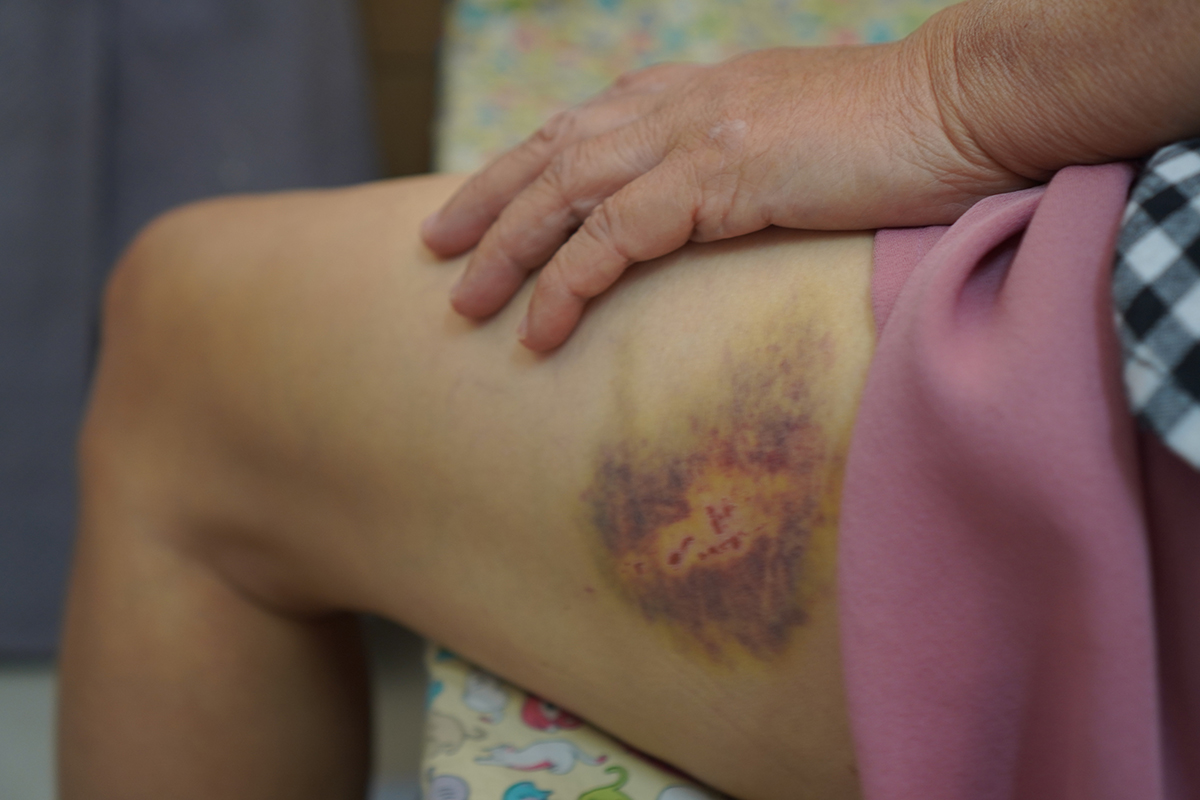
Unusual bruising
Bruising that appears without any remembered injury can signal issues with your blood, such as low platelet count.
As O'Riordan says, ‘This can happen in some blood cancers, because the bone marrow is not producing healthy blood cells. It's also one of those symptoms people easily brush off with, ‘Oh, I must have bumped into something.’ If bruising becomes more frequent or more dramatic, please speak to a clinician.’
Unexplained bruising can also be caused by normal ageing, certain medications, or underlying health conditions such as vitamin deficiencies or bleeding disorders.
Fatigue
Fatigue is the sneakiest symptom of all, because we're all tired sometimes. But as O'Riordan explains, cancer fatigue is different; it's bone-deep.
‘You can sleep a full night and still wake up exhausted. Fatigue from cancer happens because the body is using huge amounts of energy to fight abnormal cells or because your blood counts are low. If rest does not help, if it builds over time, and if your lifestyle does not explain it, it's worth getting checked.’
Fatigue can also be caused by a combination of lifestyle factors, such as lack of sleep, poor diet, and stress, as well as underlying medical issues like anaemia, infections, thyroid problems, and certain medications
Mental health conditions such as depression can also lead to persistent tiredness.

Persistent heartburn or indigestion
Persistent heartburn or indigestion can be a symptom of cancers like oesophageal cancer or stomach cancer, but it's essential to know that most cases are not cancerous.
O'Riordan says, ‘If you have heartburn or indigestion that lasts for three weeks or more, or is accompanied by other symptoms like difficulty swallowing, unexplained weight loss, or persistent pain, it is crucial to see a GP to get it checked.”
Lots of people get heartburn from time to time. There's often no apparent reason why. Sometimes it's caused or made worse by:
- particular food and drink – such as coffee, tomatoes, alcohol, chocolate and fatty or spicy foods
- being overweight
- smoking
- stress and anxiety
- an increase in some types of hormones, such as progesterone and oestrogen
- some medicines, such as anti-inflammatory painkillers (like ibuprofen)
- a hiatus hernia – when part of your stomach moves up into your chest
- a stomach ulcer
- a bacterial infection in your stomach

Mouth sores that won’t heal
If you have sores, lesions or white patches on your lips, tongue, gums or elsewhere in your mouth or throat that don’t go away, be sure to get them checked, especially if you use tobacco or drink heavily.
O'Riordan says, ‘You should see a dentist or doctor if a mouth sore has not healed within three weeks, is unusually large or painful, or is accompanied by other symptoms. While most sores heal on their own, a persistent sore could be a sign of an underlying condition or, in rare cases, oral cancer.’
Sometimes white patches in the mouth are precancerous sores caused by a condition called leucoplakia, which may develop into cancer if untreated.
Changes in urinary or bowel habits
O'Riordan says if you have constipation or diarrhoea persistently for several weeks or more frequent or painful urination or bowel movements, make an appointment to see your doctor.
‘While changes in bowel habits could be a symptom of inflammatory bowel disease such as Crohn’s disease, they may also be a sign of colon or stomach cancer. Changes in urination, too, like pain when urinating, frequency and a weak stream could signal a urinary tract infection, an enlarged prostate or prostate or bladder cancers.’
Unexplained lumps or changes to the skin
If you have an infection, such as a cold, you may notice lumps in your neck or throat from swollen lymph nodes.
O'Riordan says, ‘Be sure to have the symptoms evaluated by a doctor if they persist after you’ve recovered from your illness, or if you notice unusual lumps or swelling elsewhere on your body, like your armpit or testes, without a known cause like an infection.’
Bumps or changes to the colour, size or shape of, or new freckles, moles or warts, should also be checked out, since they may indicate skin cancer.
The charity CoppaFeel! has a guide for examining breasts here. The NHS has a guide for examining testicles here.

A cough or hoarseness that won’t go away
‘A dry, hacking cough that lasts longer than two weeks, especially if you are coughing up blood or a bloody discharge, may be a sign of lung cancer and should be checked by a doctor,’ says O'Riordan.
Also, see a doctor if you are experiencing persistent hoarseness or a breathy, raspy, or strained voice when you speak, particularly if you are also having difficulty swallowing or neck or throat pain. These could be symptoms of thyroid or throat cancers.
Persistent headache
O'Riordan says a headache that doesn’t respond to over the counter or prescribed pain medications and lasts more than two weeks should be assessed by a doctor.
In addition, blurred or double vision, hearing changes, facial drooping, seizures or other neurological symptoms should be evaluated. These could be warning signs of a brain tumour or brain cancer.
When to see a doctor about a symptom
Some symptoms sometimes associated with cancer, such as pain, heartburn or a lump or mole, are usually not caused by cancer at all.
These symptoms and others are common and may be triggered by benign (non-cancerous) conditions.
The key is being aware of changes in your body that just don’t seem right to you. It’s important to trust your instincts, especially if you are an older adult, and consider seeking medical advice.
When you experience common symptoms, you should seek medical advice if:
Your symptoms persist for more than a few weeks or get progressively worse
You have unusual lumps or bumps that don’t go away
Remember, it’s better to err on the side of caution. So, if you have any doubts, see your doctor, especially if you have a family history or other increased risks for developing cancer.
Read more:

