
Silver sex is booming and it's triggering an unexpected health crisis
The longstanding out-of-date perception of older adults – those nudging retirement age or over – typically centres around grumpiness, daytime TV and a preference for hot cocoa before bedtime over passion-fuelled romance. But the reality today couldn't be any different.
The people we assume are playing bridge or knitting booties are more active sexually than ever. Defying stereotypes that sexual interest fades with age, older demographics, into their 70s and 80s, are having sex and lots of it. The contributing factors include medical advancements, the rise of ‘silver swipers’ on dating apps and less taboo around older people having sex lives.
But there’s a downside to this twilight years sexual revolution. The number of STIs recorded among over-65s in the UK is soaring – from 2,280 in 2017 to 2,748 in 2019 – a 20% rise. The steepest increases are in gonorrhoea and chlamydia while attendance at sexual and reproductive health services is “skyrocketing” as a result of this change in behaviour, according to a report by the Local Government Association (LGA).
In February this year Age UK launched its ‘Still Got It’ initiative – the first ever guide to sex, relationships and intimacy from the charity. Urging older people to practice safe sex it warns: “STIs are a risk at any age” and reveals that 4.1 million (15%) of over-50s would be too embarrassed to go to a clinic to get checked for an STI. The guide also highlights that three in five (59%) over-50s believe that a healthy sex life is important for a relationship at this age, but 10 million (39%) feel uncomfortable discussing this openly.
- The painful sex problem no one talks about – and why so many women suffer in silence
- 25 things you probably don’t know about erections (and when to worry)

What do the experts say?
With the help of sexual health experts, we look into the reasons why STIs have risen among the over 50’s and share advice on how to enjoy a healthy sex life with no nasty surprises.
London based psychotherapist Ioana Rotaru believes it’s a generation thing. Gen-X and Boomers grew up with limited sex education coupled with a strong stigma around sexual health and a strong belief that STIs are a “young person’s issue”.
‘Relationship and sex education was made compulsory in 2020 and there is data to show that only 33% of over-55s feel confident in recognising the symptoms of common STIs,’ she says. ‘It’s the boomer generation who lived in the era of free love and sexual liberation. It is a paradox that they had less education about STI prevention than the generations that followed. As much as they feel sexually liberated, they also feel invisible in this domain.’
Ioana explains the drivers behind the rise in STIs among over 50s are as much psychological as they are medical. ‘There’s a distinct mindset behind (older adults) not using protection, how shame delays testing and why older adults may not see themselves as vulnerable to STIs,’ she adds. ‘When combined with higher divorce rates, dating apps and increased sexual longevity, this can create a disconnect between behaviour and perceived risk.’
The situation
To get to the root of the problem Dr Deborah Lee, a consultant clinical psychologist and founder of Dr Fox online pharmacy shares some hard truths. ‘Make no mistake, people aged 65 and over are having sex. In one recent study, 53% of those in this age group reported having had sex in the past 12 months. In those aged 81 to 87, 25% had been sexually active in the past 12 months. But in GP consultations older people have only 10% of patients say they were asked about sexual activity, and only 17% about the possibility of STIs.
‘In the UK there has been a slow and steady increase in STIs in those aged 65 and older in recent years, according to the 2024 UK Health Security Agency Report. In 2023, there were 1,649 cases of chlamydia, gonorrhoea and syphilis in this age group, up from 576 in 2014, showing that the number of STI infections have almost tripled.
‘Around the world (including the US, Australia and Canada) STIs in those over 50 have been increasing in recent years and research suggests the rise will continue in older people until 2040. Yet in 2021, the WHO report on global changes in STIs did not even mention STIs in those aged 49 or over. Older people are consistently overlooked and marginalised even by the authorities and there’s a severe lack of research into STIs in this age group.’

The reasons
Taboo
‘Older generations haven’t ever talked about sexual health issues as openly as we do now,’ says Noel McDermott, mental health expert and CEO and founder of Mental Health Works. ‘Sex and sexuality as a discourse is also dominated by younger people as they are targeted for marketing purposes and even within storylines on TV shows. It’s also younger generations defining the LGBTI, trans and fluidity (among others) movements today and so sex continues to be associated with youth. Older people are largely invisible in their realm and are often assumed to be asexual over a certain age. As a society, we’re still a bit squeamish about thinking of our elders being sexually active, so it’s partly down to taboo.’
High Risk
‘An increase in divorce rates, the availability of dating apps (for all ages) and medical advances such as Viagra and HRT mean that for the first time, we have a generation re-entering the dating pool and continuing sexual activity,’ says Ioana. ‘But this is happening without them being bolstered with the framework of negotiating safe sex.
‘There is likely to be a higher level of shame and vulnerability in asking a new partner to use a condom or to get tested. Some people haven’t had to discuss sexual boundaries in decades, or ever. With such a gap in knowledge about sexual health, the behaviour immediately becomes riskier. Not because this is a risk-taking generation, but because they are more risk-unaware. You are more likely to engage in unprotected sex if you don’t understand the risks.’
Divorce and separation
‘Around 42% of marriages in the UK currently end in divorce,’ says Deborah. 'Although the divorce rate has fallen recently to pre-pandemic levels, the rate has continued to increase in the ‘silver separators’ – the over 65’s. Due to increased life expectancy a man aged 65 can now anticipate to live another 19 years and a woman of the same age, 22 years. This means an unexpected extra 20 years of being together. Also divorce is more socially acceptable these days, both men and women tend to be more financially independent and older people often don’t want to stay together just to keep up appearances.’
New freedoms
‘Advances in medication to enable arousal are a significant factor,’ says Noel. ‘Also with advances in tech facilitating people meeting on dating apps there’s no doubt people have a new lease of life post-divorce. Dating and hookup apps have revolutionised how older people meet new partners – recent research reveals 13-17% of those over 65 are actively using online dating to meet new people. Promiscuity was also not necessarily part of the previous experience of this age group. They were brought up to marry and settle down, not sleep around. So they are making up for lost time void of the safer sex mindset that’s embedded in younger generations.’
Negative attitudes
‘Middle aged plus health is a complex topic,’ says Noel. ‘Most older people aren’t planning their sex lives as much as younger people do and stigmas around talking about sex remain more prevalent in the older generations, which aligns with negative attitudes to sexually active older people. Elder sexuality itself is largely only seen in the context of longer term relationships.’

More reasons
Dr Deborah Lee offers up some more theories behind the rise in STIs in older people.
Fresh starts
‘Marriages in the over 65 age group and there are more new relationships in older people than ever before: 62% of those aged 65 and over would like to have a partner to grow old with and 12% are active in their search, according to Age UK.’
International travel
‘Having sex with a casual partner on holiday is a recognised risk factor for an STI. Foreign travel is common in older people who often have the income and the opportunity to jet away. In one survey, 9.2% of men and 5.3% of women admitted to having sex on holiday abroad.’
No protection
‘Older people may not feel the need to use barrier contraception, especially post-menopausal and with no risk of pregnancy or if the man has had a vasectomy. Also, poor erections make condom use difficult or applying the condom can mean loss of the erection.’
Bodily changes
‘The thinning of a woman’s vaginal epithelium can contribute. The vaginal epithelium (the inner lining consisting of multiple layers of cells) thins with age and is more susceptible to micro-abrasions caused during sex allowing STIs to enter the bloodstream more readily.’
Not clued up
‘Older people are not clued up on STIs. In a 2020 survey of men and women aged 65-94, 63% thought that HIV and HPV were the same virus, 49% thought there was a gonorrhoea vaccine and 38% thought you could diagnose chlamydia just by the smell of the vagina.’
Tricky diagnosis
‘Diagnosis becomes murkier. Vulval or penile blisters may be put down to skin conditions. Symptoms of chlamydia and gonorrhoea may be misdiagnosed as UTI. Genital irritation may be erroneously explained as ‘thrush.’ Older people are also just less likely to be tested.

The main culprits
The most common STIs in older people. Dr Deborah Fox says: ‘Older people can get all the same STIs as younger people, but some infections are more common in older generations. Everyone should have regular STI screenings no matter what your age. This still applies even if you regularly use condoms.’ Here are the top five to watch out for.
Syphilis
‘We now have a syphilis epidemic in the UK. Older people are not uncommonly diagnosed with syphilis and are more likely to be diagnosed at a more advanced stage. Syphilis is now much more common in heterosexual partners.’
Chlamydia
‘In many cases chlamydia is asymptomatic. It can cause reactive arthritis which may be put down to old age and causes a delay in diagnosis. It can cause chronic pelvic pain, painful sex, testicular pain and urinary symptoms. See your doctor if you have any of these symptoms.’
Gonorrhoea
‘Similarly, gonorrhoea can also be silent. It may only be diagnosed from clinical suspicion due to longer term symptoms such as chronic pelvic pain, painful sex, testicular pain and urinary symptoms, or if it causes disseminated gonococcal infection and/or endocarditis.’
HPV
‘Human papillomavirus (HPV) may present in older people with genital warts. They will not have had HPV vaccinations which are now routinely given to young teenagers. HPV affects the skin particularly around the mouth, throat or genital area. It’s common and easy to catch.’
Herpes simplex (HSV)
‘This is common in older people. It causes painful ulcers in the genital regions. HSV2 antibody levels have been linked to an increased risk of cardiovascular disease and used as a 5 year indicator of mortality. A large proportion of patients will need suppressive therapy.’

The solutions
Noel McDermott gives his advice:
- ‘Engage in safer sex and still feel spontaneous and fun, but remain in touch with your emotional needs when coming out of a long-term relationship into the world of dating.’
- ‘Be aware of the risks of sexploitation online and send nudes or any other personal or confidential details with caution – scammers are rife on dating apps and websites.’
- ‘Take your time. It’s worth remembering the ‘making up for lost time’ phenomenon is driven by tech companies who want older people to stay active on the apps.’
Don’t rely on condoms
‘It can be difficult in the modern world to know how to approach sex with a new partner and this is as important in midlife as it is for younger people,’ says Deborah. ‘Although using a condom reduces the risk of infection – it does not reduce it by 100%. Make sure condoms are in date.’
DIY tests
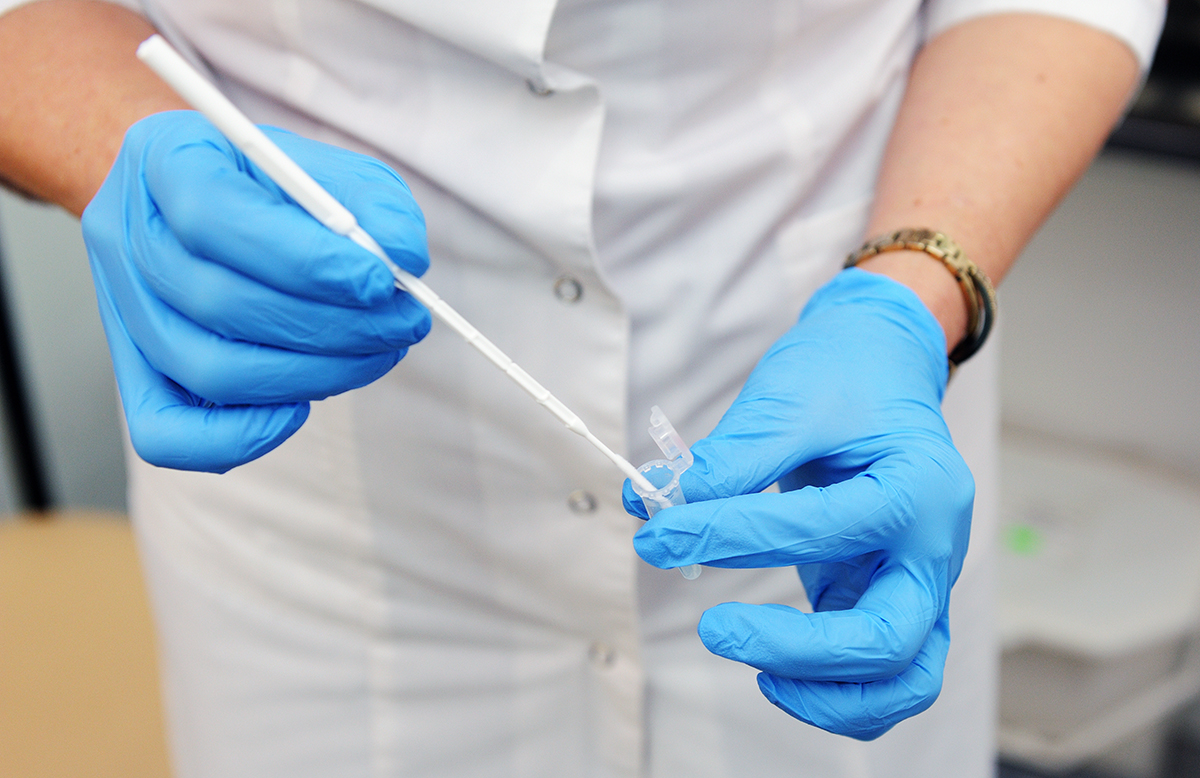
‘To avoid any embarrassment of physically attending the clinic, request a postal screening service,’ she says. ‘You do the swabs and urine and blood tests at home and send them back in the post. This includes chlamydia, gonorrhoea, HIV and syphilis testing. If you have symptoms, you will need to attend the clinic, but don’t be embarrassed. The staff are well trained to put you at your ease and have seen it all before, plus the service is strictly confidential.’
Have the conversation
‘Initiating the subject of safe sex and STIs might seem unromantic, but your new partner will probably be relieved and communication is key,’ adds Deborah. ‘If he or she hasn’t been screened, ideally this should be done before you have sex for the first time. Be aware that STIs can pass from close physical intimacy, touching and oral sex.’

When to get checked
If you haven’t been getting tested regularly and you answer yes to any of these statements, book an STI screen,’ says Deborah. ‘If you are not in a long-term monogamous relationship, it’s a good idea to get tested once a year.’
For everyone
- You have had sexual partners outside of your relationship in the past three months
- You are about to start a new relationship
- You have genital STI symptoms
- You’ve had casual sex on holiday
- You’ve paid for sex
For women
- You’ve noticed an increase or change in vaginal discharge, urinary symptoms, soreness, itching or irritation down below.
- You’ve found a lump down below
- You experience pelvic pain during sex
- You experience abnormal bleeding. For example: bleeding in between periods or after sex, very heavy or painful periods, spotting found on condoms.
For men
- You feel pain passing urine or in your testicles
- You’ve noticed penile discharge
- You have found lumps in the genital region
- You feel pain with an erection or ejaculation
- If you are a man who has sex with men (MSM) the NHS advises STI tests and an HIV test every three months.
Read the Age UK Sex, Relationships and Intimacy Guide here. Hard copies are available.
Read more:
