
Do you know your blood type? If you don’t, you’re not alone – around one-third of Americans and more than 50% of Britons don’t either.
Not only could this health information become essential in an emergency, but it’s also believed to offer a glimpse into your true character.
In Japan, there is a popular theory that our blood type runs deeper than just biology. It’s thought to determine personality, strengths, weaknesses and even compatibility with others.
Think of it like a medical horoscope that’s guided by the blood coursing through your veins, rather than the stars above.
This belief system called Katsueki-gata, plays a significant role in shaping social interactions, workplace dynamics and even romantic relationships.
- 10 questions that reveal your true personality (especially number 4)
- This is why you can blame Saturn for your midlife crisis
The origins
Blood-typing has chilling roots, originally tied to Nazi race ideologies. In 1916, while studying in Germany, Dr Kimata Hara published a research paper that linked blood groups with temperament.
His theory was later adopted by Japan’s militarist government, which attempted to breed and train better soldiers based on blood type.
Backlash caused the fad to die out, until it resurfaced in 1927 when psychologist Takeji Furukawa released a thesis based on his family members.
The theory gained massive attention in the 1970s when Masahiko Nomi published the bestselling book, Understanding Affinity by Blood Type.
‘The blood type personality theory in Japan has complex historical roots,’ explains Tatsuya Sato, associate professor of psychology at Ritsumeikan University in Kyoto, ‘Though the hypothesis was denied by academia, the basic idea has not been denied in Japanese culture.’
Japan’s fascination with blood typology is evident in its pervasive influence across society: from self-help books like An Instruction Manual for People with Type B Blood, to daytime TV shows broadcasting “blood horoscopes”, and even anime characters being assigned blood types.
Blood-type specific products – such as soft drinks, chewing gum and even condoms – alter the look, feel and flavour of their product to market them to different blood groups.
What does your blood reveal about you?
Type A | The meticulous
Caution and organisation make individuals with Type A blood incredibly reliable and hardworking.
However, this perfectionism can also be their downfall, as they may become easily stressed and overly sensitive.
Type A is the most common blood type in Japan, accounting for approximately 40% of the population.
Strengths: Kind, cooperative, punctual, patient, perfectionist, sensitive, loyal, considerate, responsible, earnest and sensible.
Weaknesses: Stubborn, uptight, reserved, overanxious and tense.
Romance: The only blood type that can handle the sensitivity of Type A is… Type A. Their partnership tends to foster a slow, steady relationship where both individuals feel safe enough to open up.
Career: Accountant, writer, economist, librarian, and graphic designer.
Celebrity: Abraham Lincoln, Marie Kondo, Britney Spears, OJ Simpson and Ringo Star.
Type B | The innovator
Described as free spirits who follow their hearts, those with Type B blood aren’t afraid to try new things and are incredibly adaptable.
However, their headstrong nature can lead them to break the rules, make selfish decisions and lead unpredictable lives.
Strengths: Empathetic, passionate, creative, strong, thoughtful, adventurous, curious, cheerful, eccentric, individualistic and active.
Weaknesses: Selfish, uncommitted, irresponsible, unforgiving and erratic.
Romance: Type B’s can lose interest quickly and may sometimes be selfish lovers. They are most compatible with Type O, who won’t be intimidated or Type B, who can match their eccentricity.
Career: Journalist, artist, actor, sales advisor, musician and business owner.
Celebrity: Leonardo DiCaprio, Jack Nicholson and Paul McCartney.
Type AB | The mysterious
A perfect blend of Type A and Type B personality traits, people with Type AB blood possess both Type A’s controlled nature and Type B’s creative whimsy.
This combination makes them incredibly balanced, yet also contradictory and aloof.
Strengths: Rational, adaptable, artistic, genius, caring, cool, eccentric, controlled and mysterious.
Weaknesses: High-maintenance, forgetful, indecisive, serious, critical, distant and unpredictable.
Romance: The rarest of the blood types, AB individuals are unique and eccentric partners who are heard to pin down.
They have a no-nonsense approach to love and would match well with their own blood type – if they can find another!
Career: Teachers, lawyers, activist, bartender and social worker.
Celebrity: Barack Obama, Marilyn Monroe, Mick Jagger, Luciano Pavarotti and Jackie Chan.
Type O | The leader
Natural born leaders, people with Type O blood are ambitious, charismatic and won’t crumble under pressure.
They tend to be optimistic yet realistic and can articulate themselves beautifully. However, their strong-willed confidence can also come across as arrogant and even rude.
Strengths: Confident, resilient, understanding, rational, organised, outgoing, optimistic, energetic, decisive, curious and generous.
Weaknesses: Self-centred, unstable, cold and stubborn.
Romance: Type Os tend to dive straight into love and for once, let their partner’s take the lead, enjoying feeling protected in a relationship.
As laidback lovers, they are a match for Type Bs who bring excitement and passion into the romance.
Career: CEO, politician, executive director, banker and pro-athlete.
Celebrity: John Lennon, Elvis Presley, Queen Elizabeth II and Paul Newman.
Blood types explained
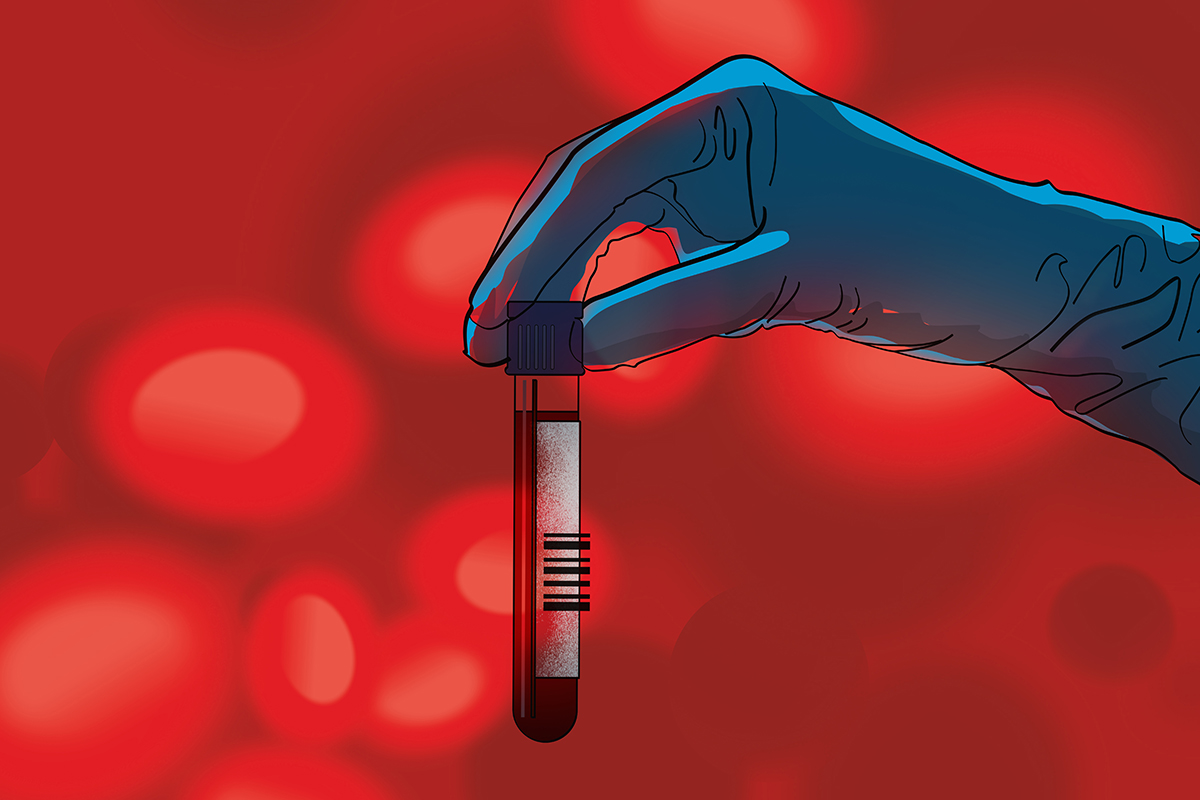
Blood types are determined by the antigens present on the surface of red blood cells. The presence or absence of A or B antigens, along with a protein called the Rh factor, combine to create the 8 main blood types:
- Type A+: Has A antigens and the Rh protein.
- Type A-: Has A antigensbut no Rh protein.
- Type B+: Has B antigens and the Rh protein.
- Type B-: Has B antigens but no Rh protein.
- Type AB+: Has both A and B antigens and the Rh protein.
- Type AB-: Has both A and B antigens but no Rh protein.
- Type O+: Has neither A nor B antigens. Has the Rh protein.
- Type O-: Has neither A nor B antigens, nor the Rh protein.
The discovery of blood types
The ABO blood group system was discovered in 1901 by Austrian physician Karl Landsteiner. His research aimed to understand why blood transfusions sometimes worked and other times had disastrous consequences.
Landsteiner realised that when incompatible blood types were mixed, the red blood cells would clump together instead of merging, causing harmful reactions.
His groundbreaking work earned him a Nobel Prize in Physiology or Medicine.
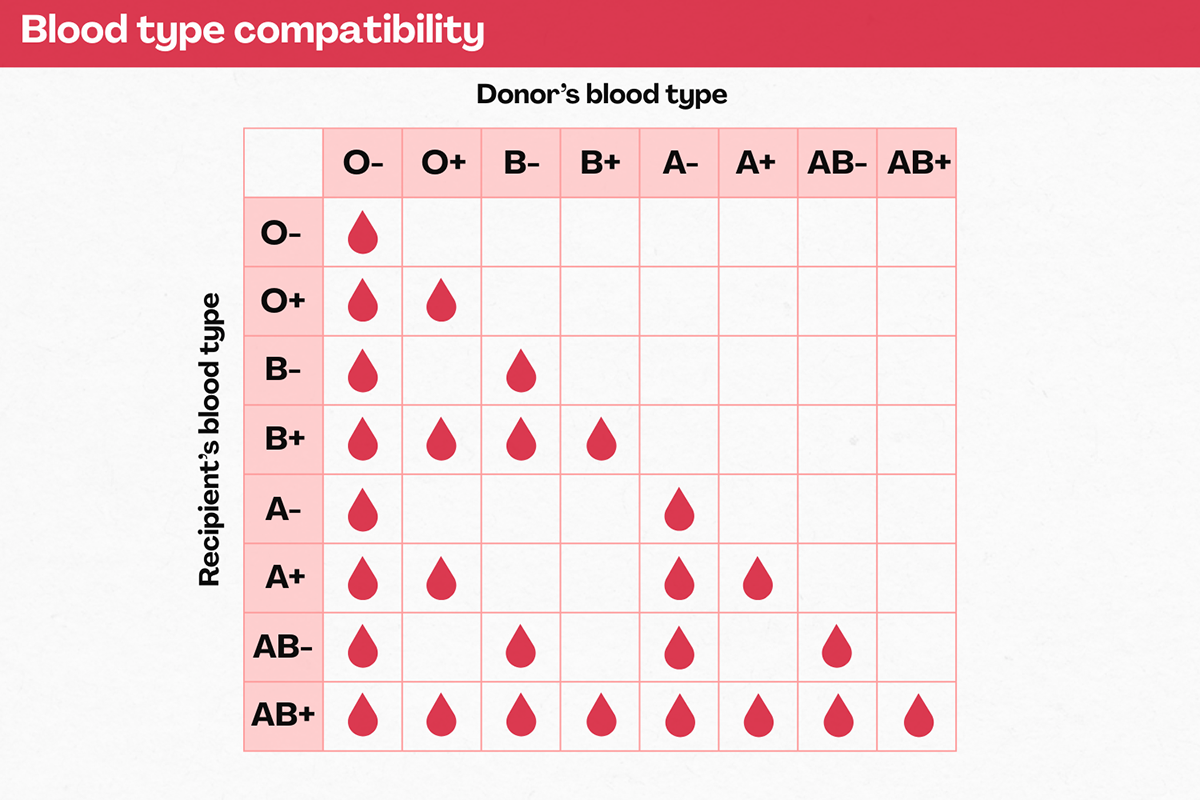
Which blood types are compatible?
Medically, blood type compatibility is crucial, as mismatched transfusions can have life-threatening consequences.
When a patient receives incompatible blood, their immune system can attack the transfused blood cells, causing severe reactions such as blood clots, organ failure and even death.
The dark side of the theory
Blood type beliefs have a dark side, contributing to negative stereotypes and even discrimination.
In Japan, blood type can influence how people are perceived and treated, leading to bullying in schools and workplace discrimination known as"blood-type harassment" or "bura-hara" in Japanese.
‘Types A and O together account for 70% of the population,’ explains Sato, who breaks down the distribution as follows: Type A = 40%, Type B = 20%, Type O = 30%, and Type AB = 10%.
‘The personality traits attributed to the majority blood types are favourable, while those attributed to minority types are decidedly undesirable. This forms the foundation for blood type discrimination and blood type harassment which has persisted from the 1970s through to the 2020s.’
This prejudice is still prevalent today. In Japan, individuals may lose out on job opportunities or even romantic relationships due to the unfavourable traits linked to their blood type. For example, people with Type B blood are often seen as selfish and unwilling to compromise.
One study found that this bias resulted in a 12.7% decrease in marriage rates among Type-B men, and a 121% increase in unemployment rates.

This belief is so ingrained that in 2011, disgraced Japanese politician Ryu Matsumoto, who was forced to resign due to offensive comments, blamed his behaviour on his blood type.
"My blood's type B, which means I can be irritable and impetuous, and my intentions don't always come across," he said publicly after his resignation. "My wife called me earlier to point that out. I think I need to reflect about that."
What does the science say?
Despite widespread belief, there is no scientific evidence to support the blood type personality theory. In 1992, Tatsuya Sato co-authored a comprehensive review with Yoshiyuki Watanabe, examining the validity of these claims.
‘Proving a negative is difficult,’ says Sato. ‘It’s often called 'proving the devil. Just as one can provide evidence of infidelity but cannot prove the absence of infidelity, definitively stating there is no relationship between blood type and personality is not entirely possible.’
‘Since Furukawa’s thesis in 1927, approximately 300 replication studies were conducted in Japan over the next five years. However, no consistent findings regarding the association between blood type and personality were found. Despite this, the blood type personality theory has persisted stubbornly as a popular belief. Negation requires comprehensive judgment. The rationale for why blood type cannot be linked to personality stems from the fact that the concept of personality itself emerged over time and is socially constructed; it is not directly related to biological factors.’
A lack of scientific evidence hasn’t loosened the theory’s grip on Japanese society. Asking someone for their blood type is still a common practice in Japan and an estimated 99% of the population will know the answer.
Blood types are even included on CVs and dating profiles, and they appear on the directory of members of parliament.
Perhaps the theory’s enduring presence in Japanese culture comes from its connection to the country’s historical social order.
The rigid class structure of feudal Japan mirrors the blood type personality categories: the earnest and dedicated farmers (A), the headstrong and individualistic merchants (B), the sensitive and eccentric artisans (AB), and the strong-willed and magnetic samurai (O).
Though experts agree the theory is nothing more than pseudoscience, a combination of confirmation bias and cultural significance has kept it alive.
Whether viewed as a light-hearted ice breaker or a total deal-breaker, Japanese society continues to search for a sense of self and meaning through their blood type.
Read more:
