Stomach pain, bloating and a noticeable change in bowel movements are unpleasant experiences – but telling someone about your symptoms can be even more uncomfortable.
But ignoring signs that your gut isn't happy won't make them go away, and they'll often just get worse.
In more severe cases, symptoms might even indicate a more serious illness, so it's crucial that you investigate what's going on and speak to your GP.
Read on to learn the key warning signs that your gut health might be in trouble, so you can prevent symptoms from developing and catch more serious conditions early.
- If you notice this in the toilet see your doctor immediately
- These are the laziest ways to burn belly fat fast
Chronic bloating and gas
Bloating and gas is often normal and not a cause for concern. Many of us will feel bloated after eating a large meal, or experience excessive gas after eating quickly or drinking a fizzy drink.
Certain foods are also more likely to make us bloat, including ones that are high in fibre or high in salt – the latter making the body store more water, resulting in a puffy appearance.
However, persistent bloating that cannot be explained might indicate a more serious issue with your digestive health, especially if the stomach is extremely swollen, feels hard or is accompanied with pain.
A common and typically less serious explanation for bloating is IBS. IBS is a functional gastrointestinal disorder, which is a condition related to how the brain and gut communicate.
As it's due to a brain-gut miscommunication, nothing abnormal is visible in tests, however that does not make the symptoms any less real. Typically a lifelong condition, with sufferers experiencing flare-ups throughout their life that can last days, weeks, and even months, IBS can be extremely debilitating and have a significant impact on a person's quality of life.
Currently, doctors cannot say what causes Irritable Bowel Syndrome (IBS) but as a functional gastrointestinal disorder, they believe this can potentially cause symptoms due to the food passing too quickly or slowly.
They also believe that other factors - such as stress, food sensitivities, gut infections and a family history of the condition - can make someone more likely to develop IBS.

Despite its similar acronym and causing some of the same symptoms as IBS, including ongoing bloating, Inflammatory Bowel Disease (IBD) is a serious, chronic medical condition.
IBD is an umbrella term encompassing the immune-mediated diseases Crohn's disease and ulcerative colitis, with the former causing inflammation and ulcers anywhere along the digestive tract and the latter affecting only the colon and rectum.
Because this inflammation damages the digestive tract, signs of the disease can usually be identified through tests.
If you suspect you might have IBD, it's important that you visit your GP, as, if left untreated, it can lead to serious complications, including bowel obstruction, bowel perforation, severe infection (including sepsis), a higher risk of developing bowel cancer, and other life-threatening complications.
Another common cause of persistent bloating and gas is a food sensitivity or intolerance. Sensitivities are a general term relating to any food that causes symptoms when consumed, whereas intolerances are where your body is physically unable to digest a food, which can be diagnosed through tests.
Coeliac disease is technically not an intolerance – but rather an autoimmune disease in which the body attacks the lining of the small intestine in response to digesting gluten. However, it can also be detected through a blood test.
Unlike food intolerances, coeliac disease can have serious long-term complications and even be life-threatening, as damage to the small intestine can prevent it from absorbing nutrients, potentially causing malnutrition and an increased risk of certain cancers.
In rare cases, bloating can also be a sign of bowel cancer – especially when accompanied by other symptoms such as a change in bowel habits and blood in your poo.
So if you're experiencing persistent bloating, make sure you speak to your GP to rule out these more serious conditions, which are easier to treat if caught early.
Change in bowel habits
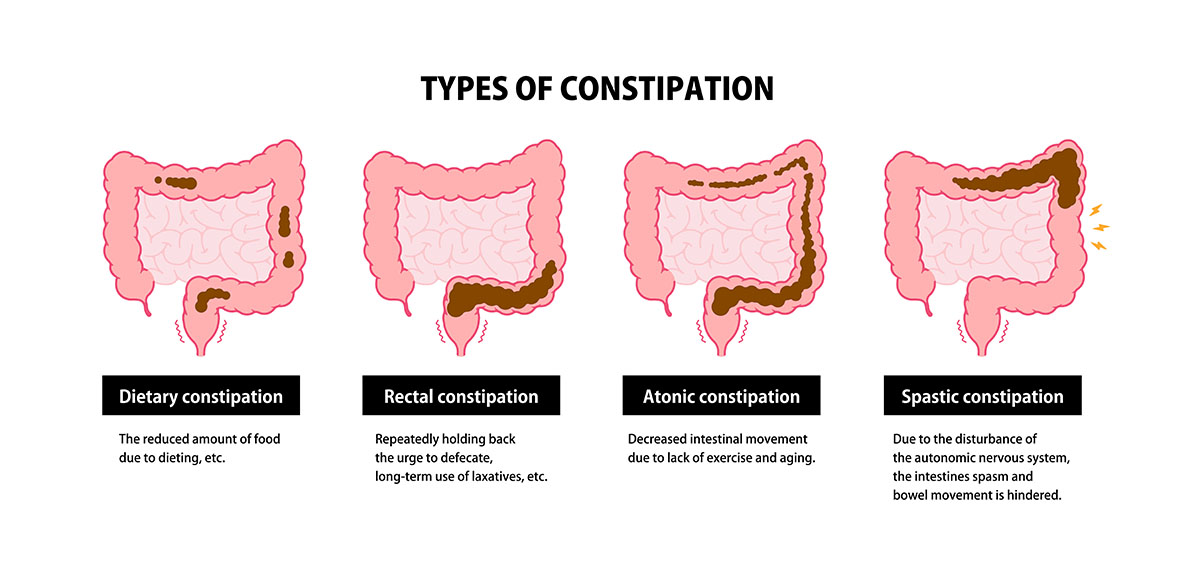
A sudden or persistent change in your bowel habits, including either constipation or diarrhoea, could signal a problem with your bowel. So though it might feel unpleasant, it's important to take note of your bowel movements.
Constipation can often be explained by factors such as not getting enough fibre, not drinking enough water, not getting enough exercise, or ignoring the urge to go, all of which have easy fixes.
However, if you're experiencing chronic constipation, persisting for several weeks, this could be a symptom of IBS, or in severe cases IBD and occasionally even bowel cancer.
As with constipation, diarrhoea is often not serious and may be the result of a food sensitivity, intolerance, or IBS – which are unpleasant experiences but should eventually clear up on their own.
It might also be a symptom of an infection or food poisoning, which may require treatment such as antibiotics and should be evaluated by a doctor.
Again, in more serious cases, and where diarrhoea has lasted for several weeks, it is vital that you make a doctor's appointment, as it could be a symptom of IBD or bowel cancer. Also seek urgent attention if there is blood or mucus in the stool, weight loss, or significant pain.
Pain in the abdomen
Abdominal pain is another clear indicator that something is wrong with your gut health. This pain may be a symptom of bloating, constipation and acid reflux, or a sign of long-term conditions including IBS, food intolerances, coeliac disease and IBD.
Stomach pain is another common sign of an infection or food poisoning, especially when the pain starts suddenly and is accompanied by other stomach bug symptoms such as vomiting, diarrhoea and a mild fever.
If you experience sudden, severe abdominal pain, you must take this seriously and act swiftly, as it may be a sign of a number of serious conditions and diseases, including:
- Appendicitis. Pain is severe and usually experienced first around the belly button, which then moves to the lower right side of the stomach and gets worse quickly. It also typically comes with vomiting and a fever. Always seek medical attention immediately if you think you have appendicitis, as the appendix can burst, which can be fatal.
- Gallstones. Gallstones are stones that form in the gallbladder, and they may require surgery. Gallstones are generally harmless, but can cause complications such as blockages.
- Kidney stones. Kidney stones cause sudden waves of intense abdominal pain on your flank, which is on the side of your back below the ribcage, and travels to the lower stomach and groin. Kidney stones often come with several other warning signs, such as vomiting, blood in urine, feeling like you need to wee more frequently, pain when urinating, and a fever. If left untreated, there is a risk of serious infections such as sepsis developing.
- Pancreatitis. This is felt in the upper abdomen, around the middle to left side, which spreads into the back. It often comes with vomiting and a fever, and symptoms can progress quickly.
- Perforated bowel. A perforated bowel, which is a hole in the wall of the small or large intestine, causes excruciating pain that comes on suddenly and worsens if you move. In addition to what is described as unbearable pain, sufferers may experience a rigid stomach, vomiting, fever, dizziness, confusion and a fast heartbeat.
These are all considered to be medical emergencies, and can be life-threatening. If you think there is a chance you have any of them, act swiftly and seek urgent medical care, such as going to A&E or dialling 111 in the UK.
Abdominal pain can also be a sign of bowel cancer. The pain is typically experienced as cramping and bloating and is persistent, slowly worsening over weeks to months rather than being sudden, severe pain.

Blood in the stool
If you notice blood in your stool, it's natural to feel alarmed – and it's important to take it seriously, as it can sometimes be a sign of a serious medical condition.
Usually, however, blood in the stool can be explained by less severe conditions, such as anal fissures – which are breaks in the skin around the anus – and haemorrhoids (also known as piles), which are where veins become swollen (often from straining), forming a lump on or near the anus, which can cause pain, itching, and bloody stool.
For both symptoms, the blood will appear bright red, and the conditions will usually resolve on their own.
However, when not caused by either of these common conditions, bright red blood in your poo suggests bleeding somewhere lower down in the gastrointestinal tract, such as IBD, a polyp, or bowel cancer.
Black stool with a tar-like appearance is due to bleeding higher up in the digestive tract, including the oesophagus, stomach, and upper small intestine, as the blood has been digested.
Therefore, it's important to identify what is causing the bleeding, as it could be due to ulcers in the stomach or small intestine, gastritis (which is an inflamed stomach lining), and certain types of cancer, including stomach and oesophageal cancer.
Taking iron supplements can also make your poo go black, and the cause may be as innocent as this.
But never ignore blood in your poo and speak to a medical professional if you notice ongoing blood in your stool, a change in bowel habits, pain and weight loss.
Seek urgent attention if you have black stool, there's a large quantity of blood, or it's accompanied by symptoms such as extreme pain, vomiting, dizziness, confusion and a rapid heartbeat.

Persistent skin conditions
If you think an unhappy gut will only show symptoms relating to your digestive tract, you'd be mistaken.
A 2019 study which explored 109 participants with eczema and 100 who did not have the condition found that 56.9% of those with eczema also suffered from IBS, compared to just 28% of people without – researchers highlighting a link between eczema and IBS.
This is supported by a 2021 review of the literature, which suggests that some skin conditions are linked to an imbalance in the skin's bacteria, as well as in gut bacteria.
The review reveals that when these bacteria (known as the microbiome) are disrupted, it can affect the immune system and result in the development of various skin conditions, including acne, dandruff, eczema, psoriasis, and skin cancer.
Therefore, if you're experiencing chronic skin issues, it's worth looking at your gut health to see if inflammation there is causing a similar effect in your skin.
As an immune-mediated disease, IBD can also cause inflammatory skin symptoms. The two most common conditions are:
- Erythema Nodosum. This condition causes painful, red lumps on the skin of your extremities, such as your hands, feet, and lower legs, and occurs during IBD flare-ups.
- Pyoderma Gangrenosum. This is a rarer, serious skin condition in which a small bump develops into a painful ulcer. It usually occurs in the legs or, if you’ve had surgery, near the wound.
Mood changes
Another surprising symptom of gut health issues is a change in mood or worsening mental health. This can include stress and anxiety, irritability, mood swings, low mood and depression.
This is due to the gut-brain axis, which refers to how the gut and brain are in constant communication – with an imbalance or inflammation in the gut potentially causing mental health effects as a result.
The gut plays a major role when it comes to the body's happy hormones. Serotonin stabilises mood – with a lack of serotonin causing symptoms such as anxiety and depression – and up to 95% of this hormone is produced in the digestive tract.
The gut also regulates dopamine, which is known as the "reward chemical", and is responsible for the "feel good" sensation you get after working out.
Additionally, the gut plays a role in the production of the inhibitory neurotransmitter gamma-aminobutyric acid (GABA), which slows brain activity – promoting feelings of calmness and relieving stress.
Evidently, the gut is extremely influential in regards to mental health. And the gut-brain connection is not a one-way street – your brain can also disrupt your gut health and cause symptoms such as bloating, pain and a change in bowel movements.
So if you're struggling with your mental health, in addition to speaking to a professional, it's definitely worth exploring whether your gut health could be sabotaging your mood.
And equally, if you've noticed an onset of symptoms during a more difficult or stressful time, it could be a clear warning from your body that you need to take care of yourself.
Ultimately, no matter the symptom, if you suspect your gut health needs attention, you should always seek professional medical advice.
At the very least, you deserve to have your mind put at ease and feel your best physically. But it could also help you diagnose more serious conditions early and prevent medical emergencies from arising.

Read more: