
This what your hands reveal about you, according to palm reader
Forget looking to the stars – palmistry puts the insight of astrology into the palm of your hand. The ancient practice maps out lines, shapes and fleshy mounts like constellations in the sky, and each detail is thought to reveal a different aspect of who you are and where you’re headed.
Linglin Chang comes from a lineage of palmists and has her own thriving palm reading business based in Singapore. For her, palmistry is less about fortune-telling and more about taking control of your own story.
‘Our hands can be incredibly expressive,’ she explains. ‘In palmistry, the hand is seen almost like a symbolic map of our conscious and subconscious patterns.’
We asked her to break down the basics, so we can start reading our own palms and place fate in our hands – literally.
- Is tarot reading the new therapy? The answer might surprise you
- This is why you can blame Saturn for your midlife crisis
A brief history of palmistry
Palmistry has been taken seriously for over 3000 years. Historians trace its roots back to ancient India, where scriptures instructed monks not to read palms for money.
‘The practice then travelled into ancient Greece and later to Europe, mainly through Persia, Egypt, and Turkey,’ explains Chang. ‘Where it became connected with other systems that explored the art of decoding personality and destiny.’
Your palm pattern is as unique as your fingerprint – a 2022 study confirmed that even identical twins have variations in their palm ridges.
‘By observing elements such as lines, finger proportions, mounts of the palm, flexibility of the hand, and the texture of the skin, we can potentially gain insight into an individual’s natural tendencies,’ explains Chang. ‘How emotions may be processed or created, approaches to decision making, and instinctive responses to various challenges.’
Today, many palm readers have moved away from fixed fortune-telling. ‘Palmistry has evolved into a more reflective practice,’ explains Chang – one designed to support and empower rather than predict.
What your hand shape says about you
Before a palm reader even looks at your hand lines, they’ll assess your hand shape. In palmistry, hands are classified into four elemental types, each associated with a distinct set of core personality traits.
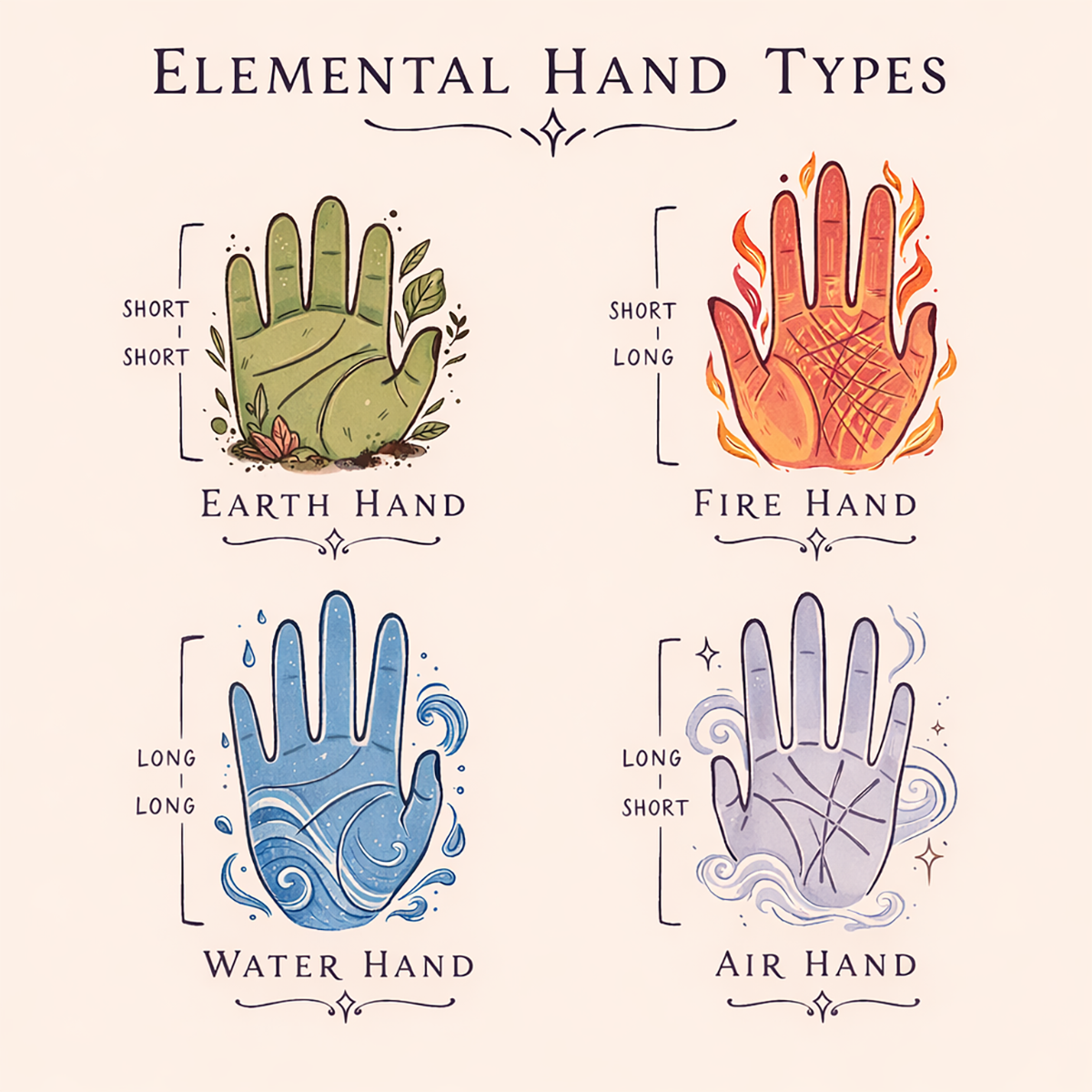
- Earth (square palm, short fingers):Practical, grounded, routine-loving, and outdoorsy. Their strength is stability; their weakness is stubbornness. They can get so lost in the moment that they find it hard to see the bigger picture.
- Fire (long palm, short fingers):Creative, energetic, social, passionate, confident and industrious. They’re hot-headed in nature and tend to lead with their heart, which makes them exciting but also prone to reckless decisions that burn those around them.
- Water (long palm, long fingers):Emotional, intuitive, sensitive, compassionate, imaginative and prone to overthinking. Their soft nature makes them deeply empathetic but also means their feelings are easily hurt, which can strain close relationships.
- Air (square palm, long fingers):Analytical, curious, inquisitive, articulate, intellectual and logical. They live in their heads, which makes them brilliant deep thinkers, but a tendency to interrogate can lead to anxiety and restlessness.
Even the way you naturally hold your fingers offers insight. ‘A wider span between the ring and pinky finger may indicate a stronger inclination toward freedom and risk-taking,’ says Chang. ‘A narrower span between these two fingers might suggest someone who is potentially more cautious, measured or risk-averse.
‘Rather than offering absolute answers that cannot be changed or fixed, the hand offers statistical clues and insights,’ Chang. Some hands may reflect a more analytical or practical mindset, while others suggest a more intuitive or emotionally driven nature by heart.’
The palmistry map
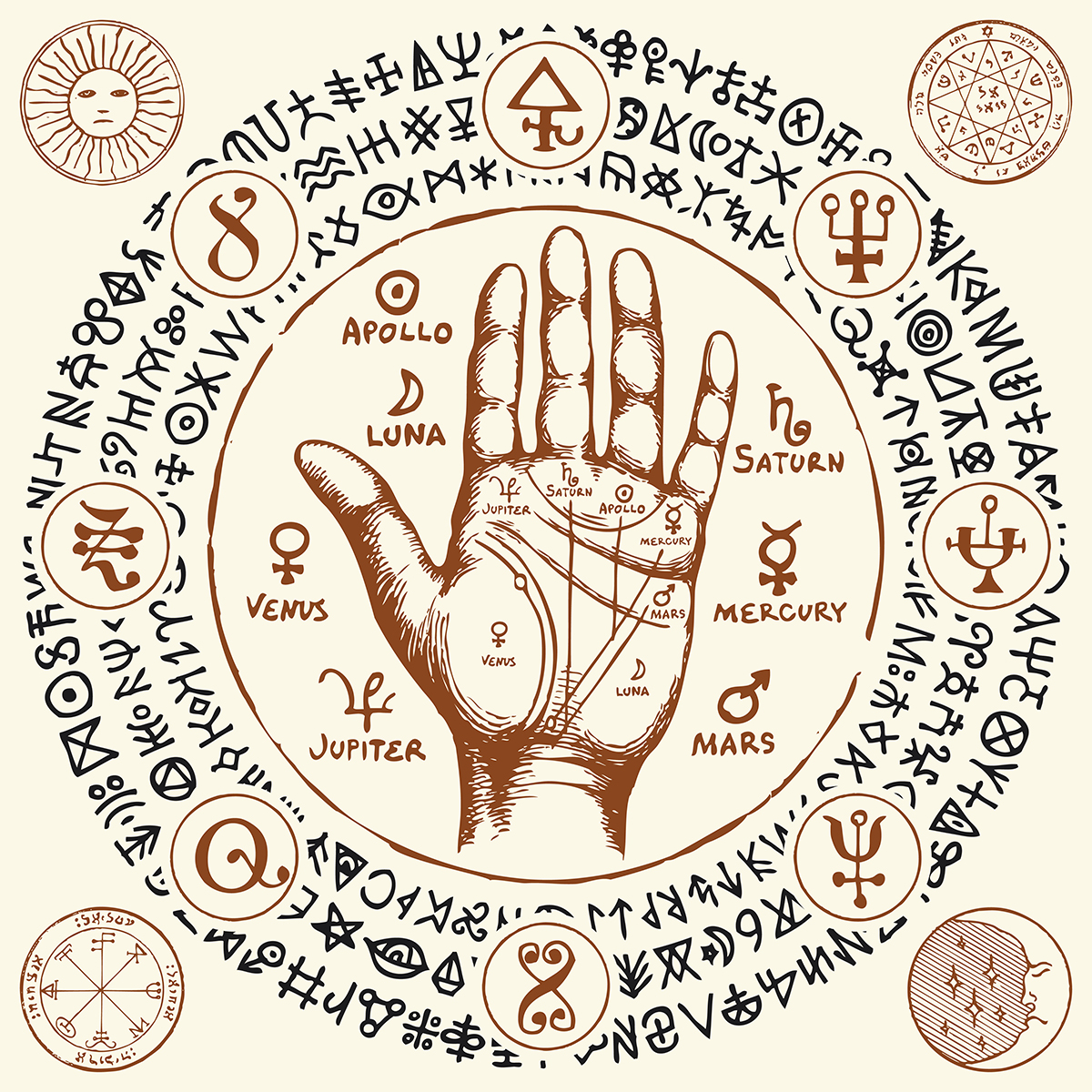
Your palm is divided into sections called mounts. Turn your palm face up – and look closely at the fleshy pads across your palm that resemble a mini mountain range.
Each of these mounts are named after a planet and associated with specific qualities. ‘Such as creativity, ambition and communication styles,’ explains Chang.
Typically, a person has seven to nine main mounts which can be analysed to understand a person’s character and potential.
‘The prominence or flatness of these mounts can offer clues about where a person’s natural strengths or inclinations may lie,’ explains Chang. ‘A well-developed mount may suggest that a particular trait or energy is especially active in a person’s life, while a flatter area indicates that the quality is less dominant or less active.’
The meaning of your hand mounts
- Mount of Jupiter | The Leader (base of the index finger): associated with ambition, power, bossiness and confidence.
Overdeveloped: Egotistical and ruthless
Underdeveloped: Low-self-esteem and lack of ambition
- Mount of Saturn | The Scholar (base of the middle finger): associated with wisdom, responsibility, seriousness and discipline.
Overdeveloped: Pessimistic and isolated
Underdeveloped: Superficial and lacks focus
- Mount of Apollo | The Creator (base of the ring finger): associated with creativity, warmth, vitality, enthusiasm and success.
Overdeveloped: Vain and obsessed with recognition.
Underdeveloped: Reserved and pragmatic.
- Mount of Mercury | The Speaker (base of the pinky finger): associated with communication, strategy, intelligence and business skills.
Overdeveloped: Greedy and manipulative
Underdeveloped: Shy and introverted
- Mount of Upper Mars | The Warrior (between the index finger and thumb): associated with moral courage and endurance.
Overdeveloped: Intense and reckless
Underdeveloped: Weak morals and lacks resilience
- Mount of Lower Mars | The Warrior (below the Mercury mount): associated with assertiveness, initiative and drive.
Overdeveloped: Cruel and short-tempered
Underdeveloped: Passive and timid
- Mount of Venus | The Lover (base of the thumb): associated with love, passion, sexuality and vitality.
Overdeveloped: Overindulgent
Underdeveloped: Cold and closed off
- Mount of Luna | The Spiritualist (base of the palm under the pinky): associated with emotion, empathy, intuition and imagination.
Overdeveloped: Out of touch with reality and erratic
Underdeveloped: Close-minded and emotionally unavailable
- Mount of Neptune | The Visionary (between the Luna and Venus mounts): associated with health and subconscious energy.
Overdeveloped: Weak immune system and emotionally unstable
Underdeveloped: Shallow and disconnected
An overdeveloped Mount of Jupiter? You may be narcissistic and hungry for power. Underdeveloped? This could suggest low confidence and little social sway. Each mount works the same way, suggesting too much or too little of a good thing.
At the centre of the palm sits Plain of Mars, nestled between the Lower and Upper Mars Mounts. It’s where the head and heart lines intersect, acting as a battleground between logic and passion, and is thought to reveal how you handle pressure.
A slightly hollow plain suggests balance, firm and raised points to combativeness, and sunken to an anxious temperament.
A palm reader will also observe the outer edges of the palm, which can offer insight into broader life themes. ‘By looking at how these regions interact with the major lines of the hand, a palmist builds a more complete picture of a person’s overall tendencies,’ explains Chang.
How to read your hand lines
Tracing the lines or creases of your hands lets palm readers see the road ahead and offer a prediction of your future.
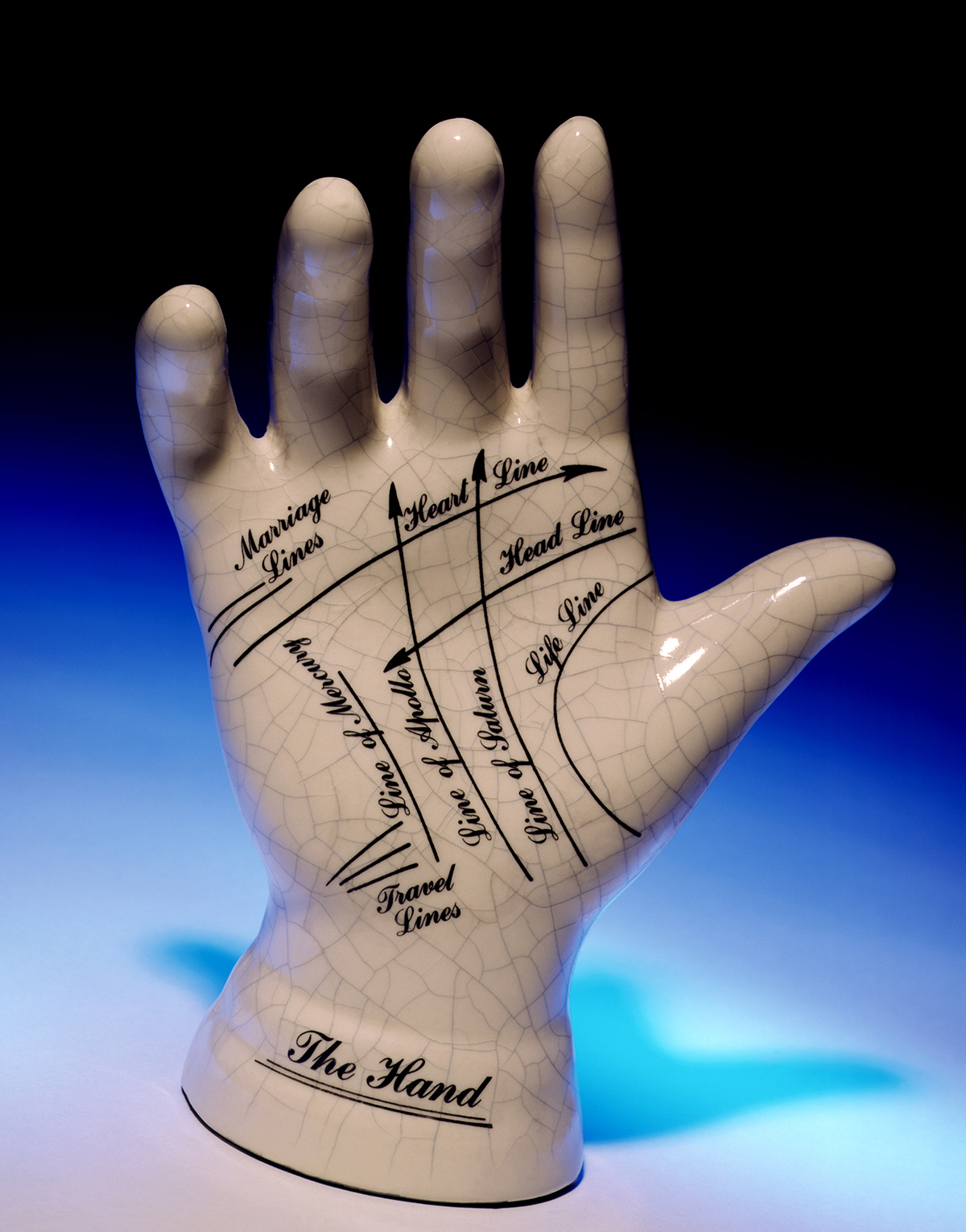
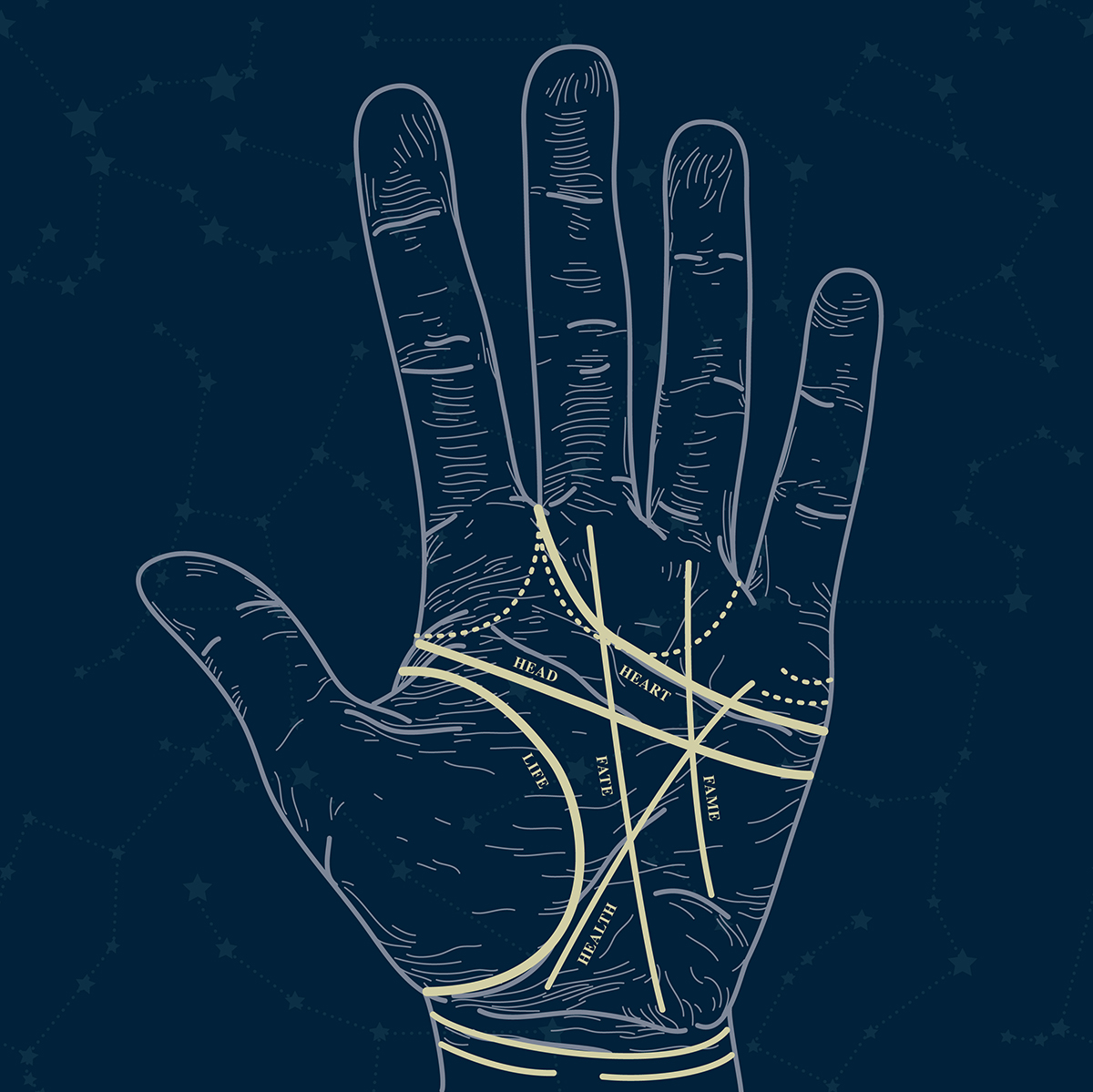
‘Most palm readings begin by looking at three major lines: the life line, the head line, and the heart line,’ says Chang. ‘These lines form the basic foundation of interpretations because they relate to some of the most fundamental aspects of the individual’s human experience in life.’
The heart line
Running near the top of the palm, the heart line represents our sentimental relationships from romance to friendships. ‘It relates to instinctive emotional expression, relationships, and how feelings are processed,’ says Chang.
If the line starts from the index finger, it suggests stability, where as if it starts under the middle finger, it points to turmoil or restlessness. Breaks in the heartline on one hand could suggest heartbreak and infidelity and on the other, hint at multiple love affairs.
The head line
This line is said to reveal our destiny through insight into our mental approach. ‘The head line runs across the middle of the palm and reflects a person’s thinking style, decision-making patterns, and intellectual approach to the world,’ explains Chang.
The depth is associated with complex thinking, the length reveals the reach of topics, and breaks can signify internal conflict or mental breakthrough.
The life line
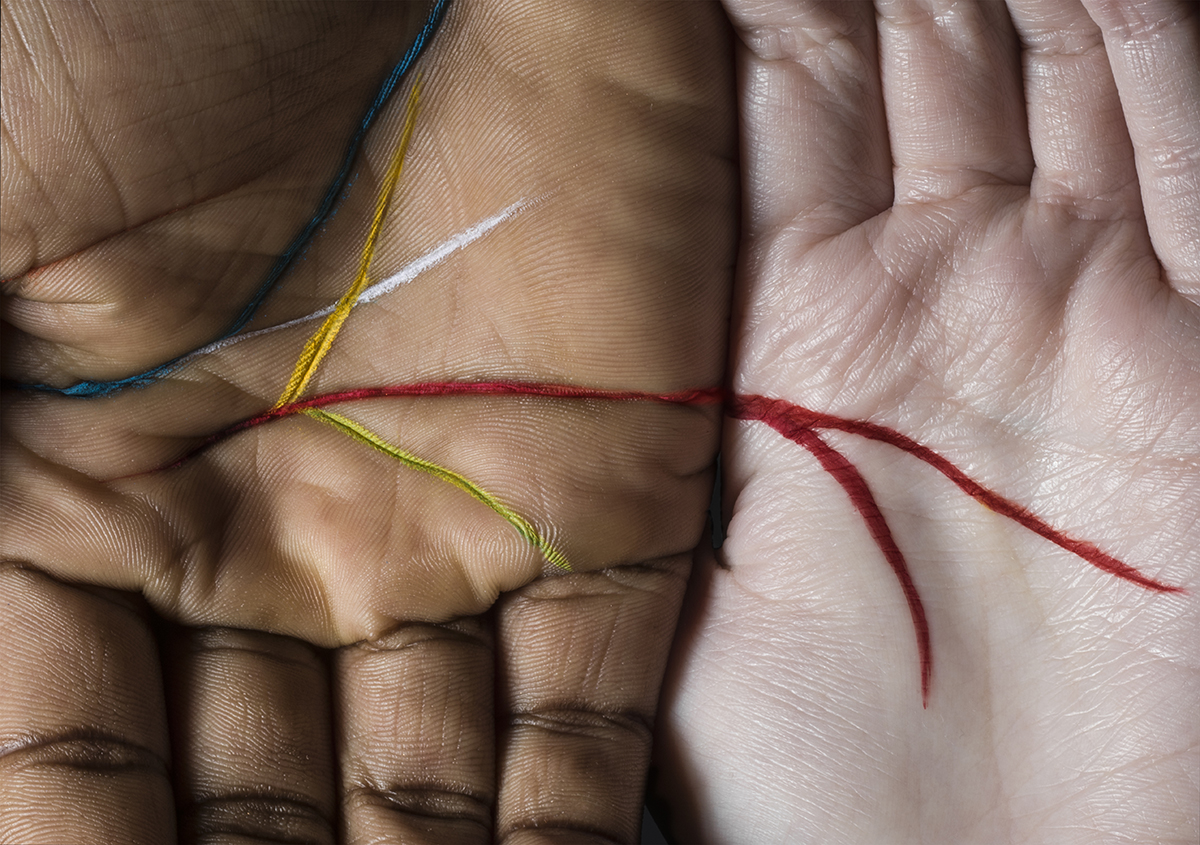
Contrary to belief, this line is less about duration and quality of life. ‘The life line is one of the most recognisable features of the palm, curving around the base of the thumb from the space between the thumb and index finger, ending towards the wrist,’ explains Chang, who says the significance of the line is so often misunderstood.
In reality, it reflects vitality and the richness of life experiences. A deep, clear line suggest you approach life with energy, while branches and breaks indicate transitions and turning points.
‘The life line is best understood in context with the rest of the hand,’ says Chang. ‘Rather than projecting the assumption that it determines the fate of longevity,’ continues Chang. ‘It may offer insights into how an individual moves through life’s cycles, highlighting moments of growth, challenge, and transformation.’
The fate line
Not everyone has one, but this rare line runs vertically through the centre of the palm and is thought to symbolise career and life purpose. No fate line? This doesn’t mean your career is doomed – it just means you’re likely to forge your own path.
A long, deep line suggests a clear sense of purpose, a faint one could indicate multiple career changes, while multiple fate lines could mean multiple ventures ahead.
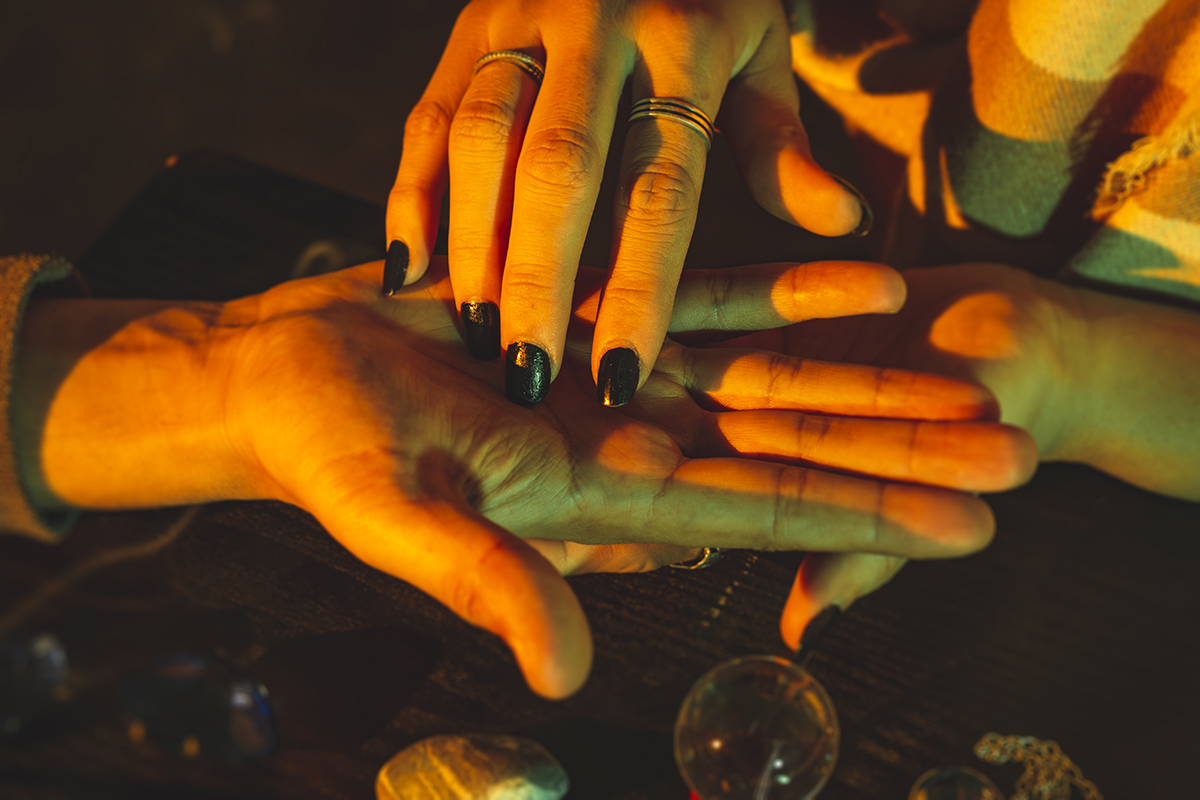
Look out for special markings – squares, stars, crosses, triangles, or minor lines – scattered across the palm. They can also indicate life events or personality traits.
‘Together, these baselines and significant markings create a framework that assists in further understanding the broader patterns present in an individual’s life,’ adds Chang.
- Squares: A protective marking thought to act as a shield during difficult periods.
- Stars: A sign of intensity that amplifies whichever line they sit on, for better or worse.
- Crosses: A warning that signals challenges or turning points.
- Triangles: A mark of talent that indicates a special skill in the area they land.
- Marriage lines: These short, horizontal lines located on the edge of the palm below the pinky finger represent our romantic encounters. Deep, clear lines suggest strong lasting relationships, while multiple, faint lines indicate multiple, fleeting affairs.
‘Ultimately, palmistry is less about making fixed life predictions,’ says Chang. ‘Instead, it can potentially help individuals understand their strengths, potential weaknesses and tendencies more clearly, which serves as a powerful starting point for self-awareness and personal reflection.’
The future isn’t set in stone and even the stories told in our palms change with us, meaning readings can evolve over time.
‘Palm lines may change throughout our lives, and those changes can potentially mirror personal growth, life experiences, and shifting priorities,’ Chang continues. ‘Because of this, palmistry can be a meaningful way to reflect on patterns in our lives: how we think, relate to others, and move through different phases. In that sense, it becomes less about predicting a fixed future and more about understanding ourselves more deeply.’
Read more:
