
Being short can feel like a curse for men trapped in the under-6ft category on Hinge and Tinder.
Though the average male height globally is around 5’7” – rising to roughly 5’9” in the US and 5’10” in the UK – dating app filters have added pressure to rising male height anxiety, pushing some to take extreme measures to climb the ranks.
Now, a Frankenstein-esque surgery promises an escape for “short kings” – offering to break your legs for the chance to ascend into the over-6ft dating pool – but at what cost?
- The quiet but deadly cancer symptoms doctors warn are often missed
- This is the fastest way to lose weight without the weight loss jab, says expert
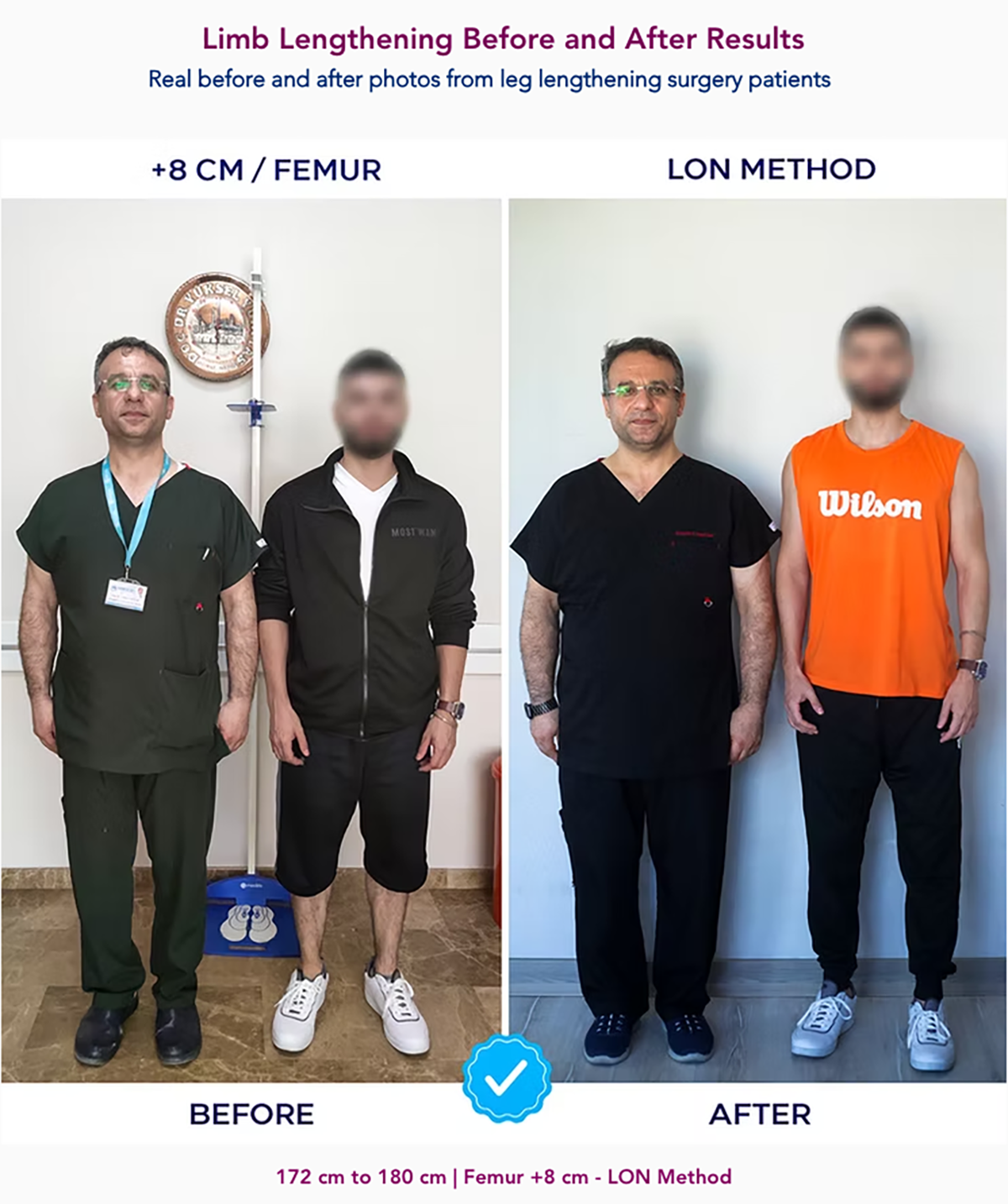
What is height surgery?
This procedure originated in 1950s Russia, when orthopaedic surgeon Gavriil Ilizarov developed a technique to treat badly healed fractures using a metal frame of rods, pins and wires fitted around the leg.
While experimenting with the device, he discovered that slowly drawing two sections of bone apart caused new bone to grow between them – adding length.
Today, this technique has been adopted globally, not only for severe orthopaedic problems but as a fix for height anxiety.
Despite medieval-looking contraptions and an excruciating recovery process, analysts predict the leg lengthening market could double to $8.6 bn by 2030.
This largely unregulated and rapidly expanding industry offers life-changing results: longer limbs, boosted self-esteem and, in some cases, chronic pain, permanent nerve damage and even fatal complications.
Orthopaedic surgeon Dr. Yuksel Yurttas, head of the world’s largest height surgery centre in Istanbul, is keen to distance the procedure from cosmetic surgery.
‘It's bone reconstruction,’ says Yurttas. ‘The entire procedure is built on a biological principle called distraction osteogenesis, which basically means the body's own ability to regenerate bone when we create a controlled gap. The full treatment process, from operation through to complete recovery, takes around 9 to 12 months.’
The step-by-step process
Height surgery isn’t cheap – prices range from around $15,000 in Turkish clinics to upward of $280,000 in US practices.
But in some ways, the time cost is greater. ‘Each procedure takes about three to four months of active treatment and around a year for full recovery,’ explains Yurttas.
Most patients begin walking with support within the first week, progress to walking without assistance by month four or five and return to work and daily life between four and six months.
1. The surgery (1.5-3 hours)
‘We start the surgery with an osteotomy,’ explains Yurttas. ‘A precise, planned incision through the bone, usually the femur or tibia.’
A fixation device is then inserted: either a fully internal lengthening nail or a combination of an internal nail with a temporary external fixator.
2. Immediate post-surgery (5-7 days)
Patients remain in the hospital for around five days following the operation, monitored as the body begins its initial recovery.
According to Yurttas, this is the most painful stage of the process. ‘The worst of it comes in the first 24 to 48 hours after surgery, once the anaesthesia wears off,’ he warns.
‘We manage this window with patient-controlled analgesia (PCA), which allows the patient to self-administer pain relief within safe, pre-set limits. After the first couple of days, the acute surgical pain drops considerably, and then we move to oral medication.’
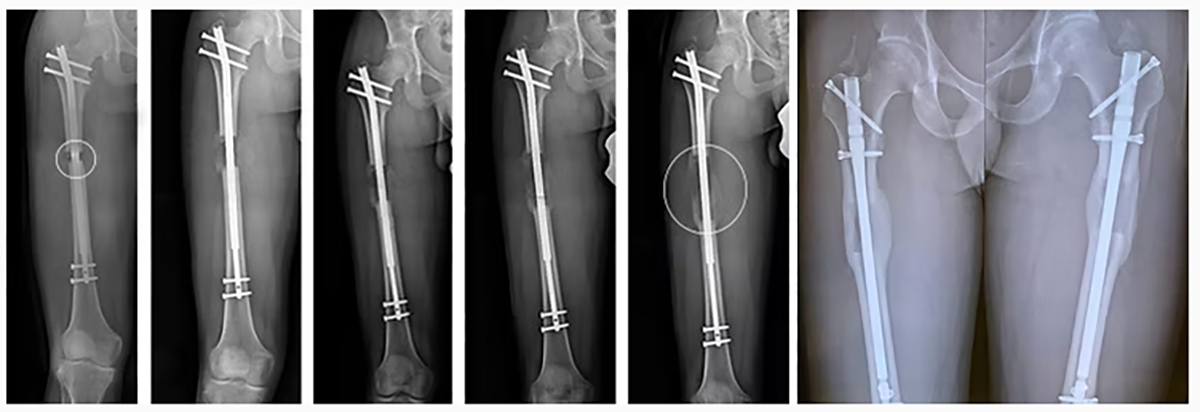
3. Lengthening (60-90 days)
‘The patient begins what we call the distraction phase,’ says Yurttas. During this period, the bone is gradually separated at a rate of 1 mm per day – slow enough for the body to respond by filling the gap with new bone tissue and incrementally adding length.
4. Consolidation & Rehabilitation (3-6 months)
‘Once the target length is achieved, you enter the consolidation phase, where the new bone mineralises and hardens,’ Yurttas continues.
This stage is as much about rebuilding strength and mobility as it is about bone maturation, with physiotherapy playing a central role.
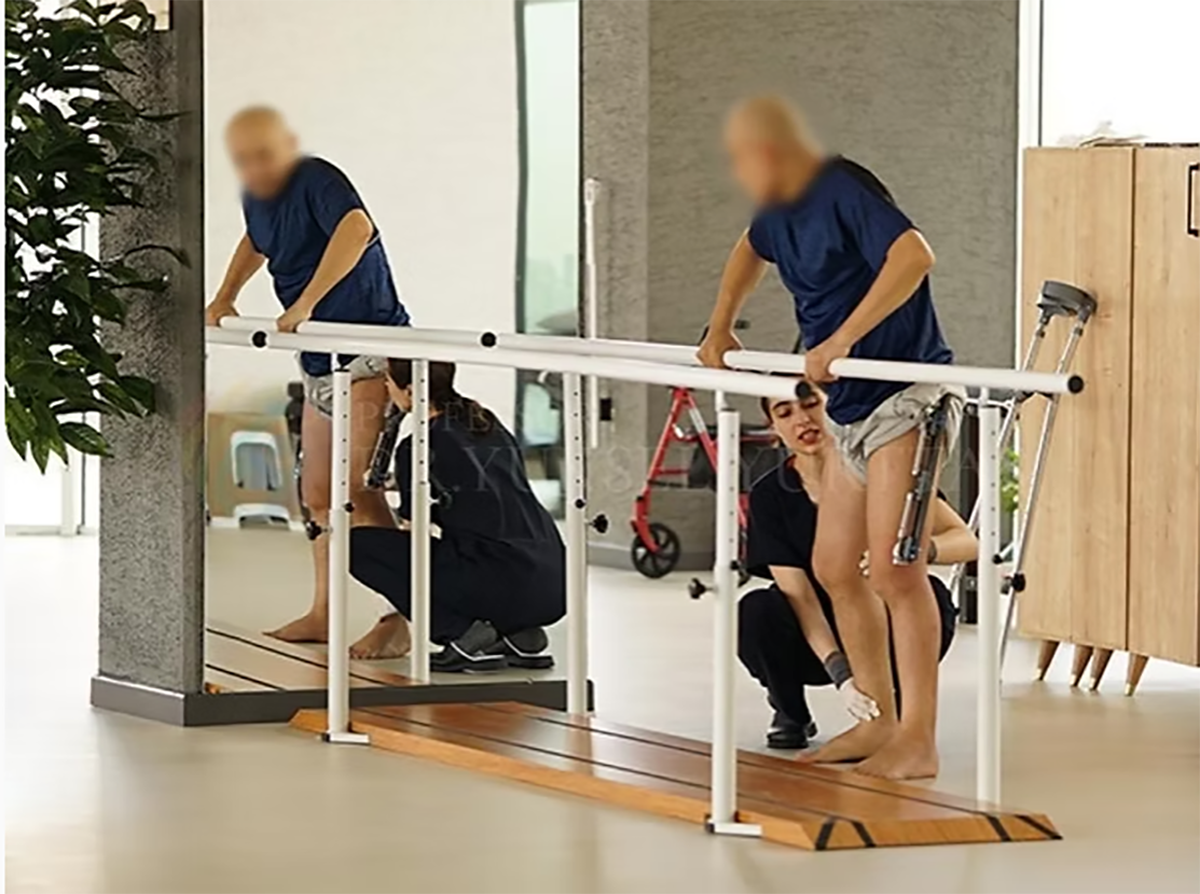
5. Final recovery (6-9 months)
With the bone fully solidified, the focus shifts to returning to normal life. By the end of this stage, patients’ lengthened legs should be capable of handling high-impact activities.
‘Full physical activity – running, weightlifting, and intense sports – takes nine to twelve months,’ says Yurttas.
6. Internal nail removed (12-18 months)
Once recovery is complete, the internal nail is removed in a subsequent surgical procedure, marking the end of a process that can span well over a year.
No pain, no gain
Height surgery is a gruelling process even without complications. ‘Limb lengthening is a painful procedure,’ warns Yurttas.
‘The pain and discomfort can span for months, showing up in different forms and intensities depending on where you are in the process. Patients with a very low pain tolerance or extreme sensitivity to discomfort are not ideal candidates for this procedure.’
The lengthening phase is a unique kind of discomfort, according to Yurttas.
‘The bone is being stretched each day, and the muscles and soft tissues are adapting to a length they've literally never been before. Patients describe it as a deep pulling sensation. Some days are fine. Other days are harder, especially at night. And the discomfort doesn’t stay consistent. As you approach the final centimeters of your target, the pain increases because the soft tissues are being pushed past their natural elastic limits. Approximately half of our patients experience sleep difficulties during this period.

‘But the pain is part of the process, not a complication. It’s manageable and temporary. The patients who commit to their physiotherapy, follow their medication schedule, and stay consistent with the daily routine almost always report lower pain levels than those who fight the process or skip sessions. I've seen it hundreds of times.’
The health risks
The procedure is not only painful, but the health risks can also make it a hellish ordeal.
A study published in the Journal of Orthopaedic Surgery and Research found that 30-45% of 760 patients experienced complications, including infection, problems with bone-healing, joint stiffness and nerve damage.
Despite this, Dr Yurttas maintains that the most serious complications are rare. ‘Bone healing problems (where the bone heals) too fast, too slow, or, in rare cases, fails to heal, occur in under 5% of patients,’ he says.
‘Nerve or blood vessel injury sits below 2%, and fractures also under 2%. Device malfunctions occur in under 5%.’
However, according to Yurttas, long-term problems typically stem from two sources: surgical precision and patient compliance.
If the limb alignment is even slightly off in surgery, it can accelerate cartilage wear in the knee or hip, increasing the risk of early joint degeneration.
But he stresses that recovery also depends heavily on the patient: ‘Those who don't follow the physiotherapy protocols during and after lengthening take significantly longer to restore their natural walking pattern,’ he warns.
‘In cases of consistent neglect, the consequences can become permanent. This includes muscle contractures, joint stiffness, and abnormal gait.’
Unlike cosmetic fillers or minor procedures, limb-lengthening is irreversible. So, if the bones heal misaligned or the new proportions feel unnatural, there is no way back. And some patients don’t even get to enjoy their added height.
‘As with any major surgery, life-threatening complications such as deep vein thrombosis and pulmonary embolism exist,’ says Yurttas, who also estimates bout 10% of patients experience significant psychological distress during the lengthening process – clinics attempt to manage this through ongoing monitoring and support.
Complications can be fatal. In 2024, a patient who travelled from Saudi Arabia to Istanbul for surgery with the Wanna Be Taller clinic died from a blood clot 16 days after his procedure.
Surgeons argue that such outcomes are rare, affecting another patient at the clinic last year.
Key health risks and complications
- Bone issues: Non-union (failure to heal), delayed union (slow healing), or premature hardening (preconsolidation).
- Nerve ending damage: Potential permanent numbness or damage to nerves and blood vessels.
- Infections: Including deep bone infection (osteomyelitis) or pin-site infections with external fixators.
- Mobility Loss: Muscle tightness, joint stiffness, contractures, abnormal gait or permanent limp.
- Blood clots and embolism: Deep vein thrombosis. Pulmonary embolism and rare fat embolism.
- Chronic pain: Persistent discomfort even after bone consolidation.
- Psychological distress: Anxiety, depression, or emotional strain during prolonged recovery.
Who is getting height surgery?
‘Most of our patients are healthy, functioning adults experiencing what’s clinically known as Height Dysphoria,’ explains Yurttas. ‘A persistent dissatisfaction with one’s stature that goes beyond simple vanity. It affects how they move through the world: their confidence at work, in social settings, and in relationships.’
Patients come from varied backgrounds – engineers, entrepreneurs, personal trainers, students – and many are over 40. ‘These aren't people who woke up one morning and decided they wanted to be taller,’ Yurttas adds, claiming most cite long-standing prejudice due to their height.
However, despite a diverse clientele, there is still a sense of shame around the procedure.
‘What I find most telling is the secrecy,’ he continues. ‘The majority of my patients never tell anyone – not friends, not partners, sometimes not even family. That shame doesn’t come from the patient.’
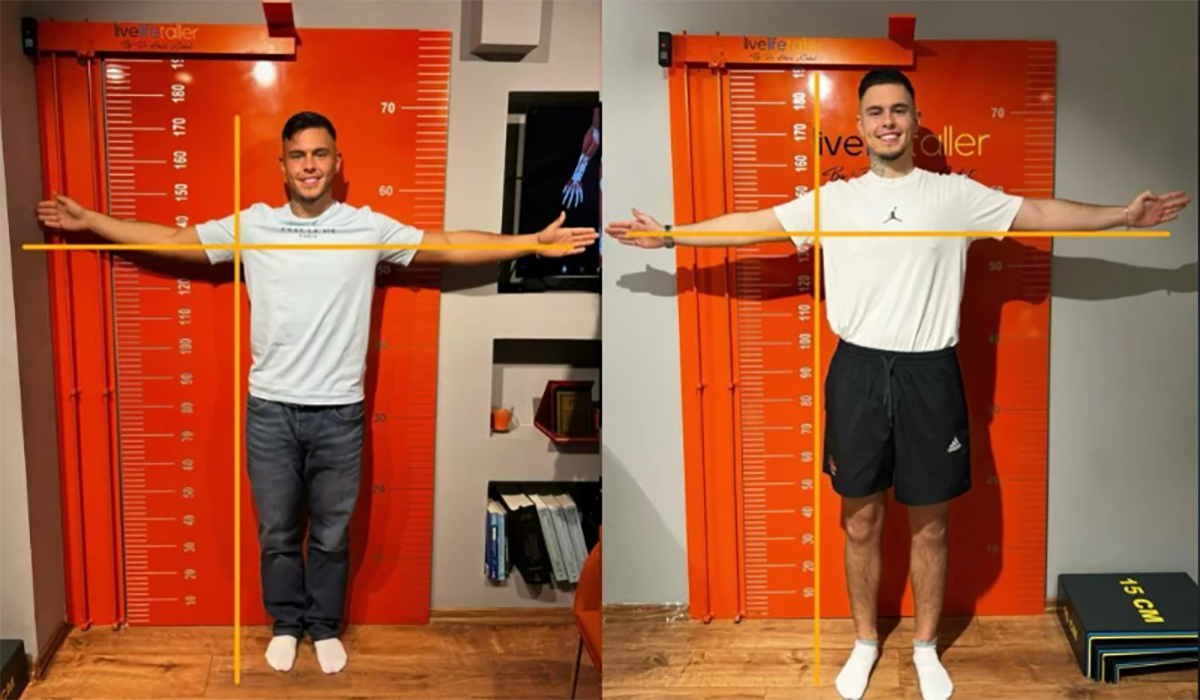
Yet, alongside the secrecy is a growing influencer culture. Leon Otremba, who increased his height from 5’6” to almost 6’2” through two procedures, now works as a height surgery consultant, selling a €2999 six-month coaching package and documenting his journey online.
His business is emblematic of the male support network driving the limb lengthening industry forward – one that is not only normalising the procedure but actively encouraging it.
Tackling the male height anxiety epidemic
Can three more inches truly change a man’s life? Or are we ignoring the root causes of a rising height dysphoria?
With critics warning that online marketing downplays the risks of limb-lengthening surgery – and botched procedures abroad repeatedly leaving the NHS to pick up the pieces – doctors are urging caution. Yet demand continues to grow.
So, do the social penalties of life below 6ft outweigh the gruesome risks?
‘Height bias is one of the few remaining prejudices that often isn’t even recognised as a prejudice,’ says Yurttas. ‘The data on this isn't ambiguous; it is clear that height prejudice is still quite widespread.’
Height bias in dating is real. A product manager at Bumble reported that many women set their lower limit at 6 feet – a filter that would roughly exclude 85% of US men.
But these figures don’t account for women who don’t filter by height at all, and dangerously fuel manosphere narratives such as the so-called 80/20 rule explored in Adolescence, which suggests that only the top 20% of men are desirable to women.

Research suggests heightism extends well beyond dating. Around 58% of Fortune 500 CEOs are over 6 feet tall, compared to just 14.5% of the general U.S. male population. A Swedish study of 1.3 million men found that taller executives consistently earned more.
This bias also spans into politics – voters favour taller presidential candidates – and begins as early as kindergarten, where teachers perceive shorter boys as less academically capable.
Height, in other words, functions as a subconscious proxy for status and ability.

And yet, the cultural picture is more complicated. Many widely admired and desired celebrities fall well under the six-foot benchmark.
Today, actors like Tom Holland (5’7”) and Jeremy Allen White (5’7”) are celebrated as heartthrobs – and Tom Cruise (5’7”) has spent decades as a global action star.
Even historically, leading Hollywood heartthrobs such as Brad Pitt (5’11”) and Robert Redford (5”10’) hover below the mythical six-foot threshold.
If the female gaze was only interested in towering men, Hollywood’s casting history would look very different.
Meanwhile, online rhetoric around height anxiety is intensifying. Encrypted discord chats and TikTok communities evangelise limb lengthening surgery to men who are already within average height ranges.
Forums increasingly suspected of manosphere influence frame height as destiny, with shortness serving as a barrier to wealth, respect and love – pedalling toxic ideas around masculinity.
So, though three extra inches may change how a man is perceived in certain rooms, it cannot resolve the growing insecurity driving men to break their legs in the first place.
Post-surgery regret
Yurttas admits that post-surgery regret, though rare, does occur.
‘Some patients understood this surgery as a cosmetic procedure,’ he explains. ‘They were excited about the idea of being taller, and that excitement carried them into it without ever really understanding what the process would feel like – the pain, the immobility, the dependency on others.’
Serious complications, like slow bone healing or nerve issues, can trigger intense regret until resolved.
For this reason, he says, screening is rigorous. Every patient undergoes a full physical and psychological evaluation covering BMI, bone health, medical history, and mental fitness. Smokers must quit weeks before surgery, no exceptions and those with substance abuse histories are not accepted.

‘If someone shows signs of untreated psychological distress, we won't move forward,’ Yurttas assures. ‘If Body Dysmorphic Disorder is suspected, we refer the patient for psychiatric evaluation before continuing with any discussion about surgery. We've turned patients away. We'll continue to do so.’
Read more:
