
Brushing your teeth is an essential part of the morning routine. It's feels so automatic that most of us could do it with our eyes closed.
But just because you have a routine, doesn’t mean that it involves all of the steps needed to protect your dental hygiene, particularly if you’re only brushing twice a day as a minimum.
There’s a variety of precautions we should be making to protect our oral health and living as fit and healthily as possible.
Oral hygiene is the process of keeping a clean, healthy mouth, where your teeth and gums are in a positive condition, rather than stained or sore.
Maintaining high oral hygiene will make our breath smell fresher, brighten the appearance of our smile, reduce our risks of oral cancer and decrease our need for dentures, fillings, or implants.
For some, you may not even remember the last time you went to the dentist or thought about your dental health more than just ‘when do I next need to buy toothpaste?’.
For others, you may be administering every dental product you can throw into your basket at one time, leaving your mouth looking like a Jackson Pollock canvas. Neither approach will support your long-term oral hygiene.
‘Social media is littered with ‘tips and tricks’ that claim to whiten your teeth,’ shares Dr Hanna Kinsella, celebrity dentist and CEO of Icy Bear Dental. ‘Teeth whitening tricks are actually just myths that resurface every so often. Some could have minimal whitening effects but these don’t last long, many actually damage your teeth and affect your smile in the long run.’
- Slept 8 hours but still tired? Expert explains the worrying reason why
- Thinning hair? Stylists say these tricks actually help it grow back

‘I completely understand that looking after your teeth can feel daunting, especially with so much conflicting advice out there, but oral health doesn’t have to be complicated.
‘Brushing twice a day, flossing, staying hydrated as these simple things make the biggest difference. That’s why I created the Icy Clean Routine, a simple four-step process that takes the guesswork out of dental care and makes it second nature rather than something to stress about.’
Dental Hygiene 101
1. Brushing
You need to be using a fluoride toothpaste to brush your teeth and brushing at least twice a day.
Also avoid brushing straight after eating, as Dr Hanna explains: ‘Brushing too soon can actually push acids deeper into the enamel, leading to erosion. It’s best to wait at least 30 minutes before brushing. It’s not, though sugar-free gum can help stimulate saliva and reduce bacteria between meals.’
When it comes to choosing a toothbrush, there are three main contenders; plastic, powered, or bamboo.
Plastic is the medically safe standard, working to successfully remove food and bacteria build up on your teeth surface. They’re cheap, reliable, and found in most supermarkets.
Research has highlighted that powered toothbrushes have a better impact at reduce plaque build-up in your mouth, but they can also be more expensive.
Bamboo is a plastic-free alternative to toothbrush models, with a smaller carbon footprint in their reduction, although they do need more land space and water to be produced.
No matter which model you’re opting for, just make sure you’re using it at least twice a day.
2. Flossing
‘Flossing is that step everyone forgets, but it has so many benefits,’ advises Dr Hanna. ‘It removes plaque and debris that linger between teeth, helps prevent decay, and can even brighten the smile.’
Flossing is a part of inter dental cleaning, where we prioritise our oral hygiene outside of a standard brush.
A regular brush alone may only target the surface of the tooth it can reach, leaving the surface area between teeth open to food building up or insufficient plaque removal.
People who actively perform inter dental cleaning have been found to have cleaner, more hygienic mouths.
‘Keep your floss or water flosser next to your skincare products so you remember to use it,’ adds Dr Hanna.
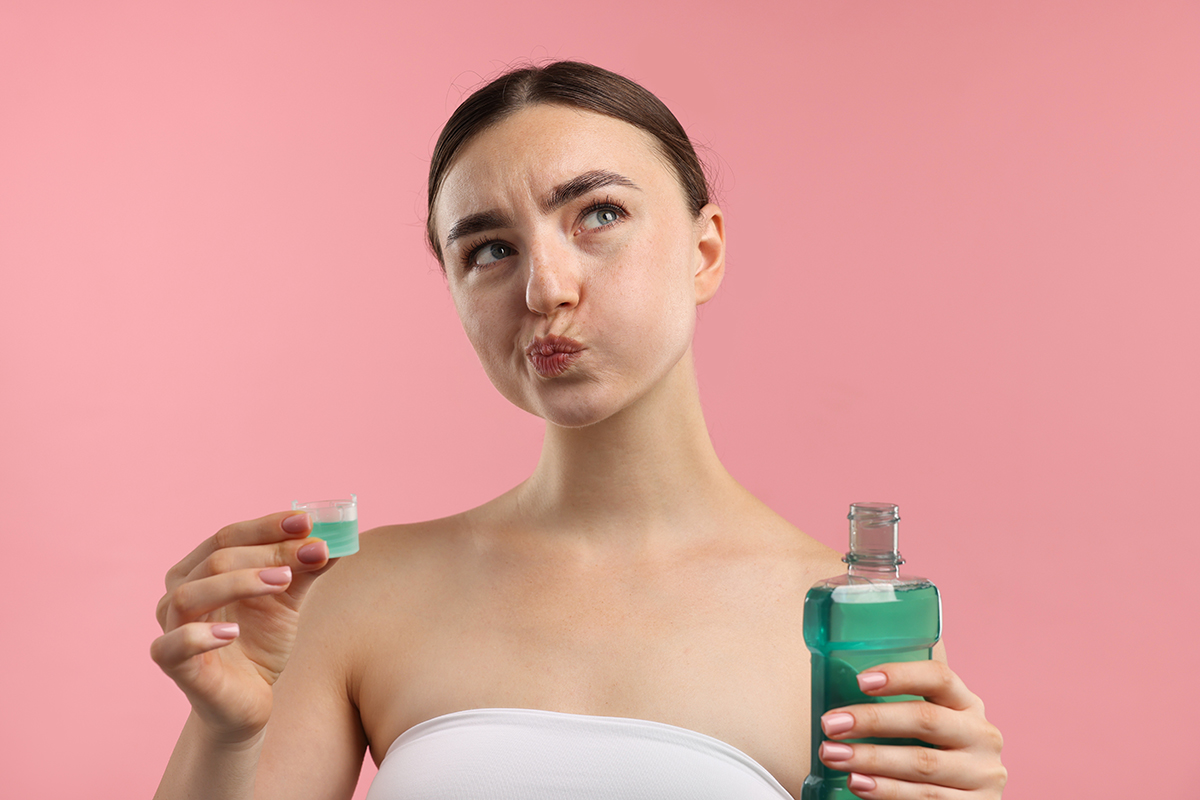
3. Mouthwash
Alcohol free mouthwashes reach parts of your mouth that standard brushing doesn’t. It leaves your breath smelling and feeling fresh.
Make sure that you rinse your mouth out after brushing with a mouthwash and not water, as water will rinse out the fluoride that is protecting your teeth.
‘Using mouthwash first, before brushing, can help eliminate bacteria and make brushing more effective,’ recommends Dr Hanna. ‘Little adjustments like these can have a huge impact without adding extra effort.’
4. Lifestyle
No lifestyle change will mean that you magically wake up with white, dazzling teeth. There are specific lifestyle swaps, however, that can reduce the likelihood of teeth discolouration as they irritate the teeth less.
This includes reducing your tobacco and alcohol intake, maintaining a healthy exercise routine and drinking enough water.
Swapping out fizzy or high sugar drinks can also reduce the amount of high-risk liquid that your teeth comes into contact with, as these damage the enamel and add to extrinsic damaging, where the surface of the tooth looks stained.
‘Avoid foods and drinks that stain your teeth, such as wine, coffee and tea, if you want your teeth to stay whiter for longer,’ recommends Dr Hanna.
Dentist Check Ups
Having a dentist check-up can be intimidating, particularly if it’s been a while since you went to your last appointment.
About 44% of UK adults admit that a dentist appointment scares them, with 76% of people putting off their appointments.
However, it shouldn’t have to be something we keep putting off. Routine dental appointments are essential parts of maintaining a healthy lifestyle.
‘It’s wrong to assume that visiting a dentist is something you only do when you’ve got a toothache,’ advises Dr Hanna. ‘Your dentist can often identify wider health issues early, but when appointments aren’t accessible, staying consistent at home is more important than ever.
‘A structured routine that includes rinsing, flossing, tongue cleaning and brushing with a fluoride toothpaste can help prevent gum disease, tooth decay and bad breath. Prevention is key and the more you do at home, the better your long-term dental health will be.’
If you don’t attend a dentist appointment, you could be putting your long-term physical and oral health at risk.
For example, if you develop an infection in your mouth and don't visit a dentist, it could increase in severity and pass through the bloodstream to the rest of your body, worsening the symptoms of a whole-body illness.
If you have a condition such as diabetes, osteoporosis, or HIV/AIDS, then it’s important to take a particular interest in taking care of your dental health, as these will often have a negative impact on your teeth and gums.
If you’re looking to have your teeth whitened, be cautious with what products you apply. It’s recommended that for all teeth whitening activities, these should be carried out by registered professionals, who may apply a procedure in their practice or share products with you to use at home.
That’s because the chemicals used in teeth whitening procedures are sodium perborate and chlorine dioxide-based, which bode a high risk to your oral health if used incorrectly.
Buying a cheaper alternative to a dental procedure from a medical professional isn’t worth the cost that it may have on your gum health or teeth sensitivity.

Myths about your mouth
Dental equipment and procedures can feel expensive. It may be why so many of us put them off for so long, knowing that it can sometimes add an expensive price tag to our bills already. When the internet offers a quick and cheap ‘solution’, falling for a trick may be easier than we care to admit.
We asked Dr Hanna to debunk some of the biggest myths that people believe when it comes to dental hygiene to figure out the impacts they’re having to our teeth and gums:
Lemon juice has whitening effects – ‘Whitening your teeth with lemons is something I strongly advise against. Even though the acid from the lemon might dissolve some surface staining, the acidity from lemons will damage and erode your teeth.’
Charcoal toothpaste is what you should buy – ‘There is actually no evidence that whitening your teeth with charcoal is successful, so I recommend avoiding these kinds of toothpaste’
Kitchen products, like baking soda, can replace dental products – ‘This can actually really damage your teeth and cause your teeth to erode away. Once enamel is gone, it doesn’t regenerate.’
Bleach is the same as a teeth whitening kit – ‘Do not use kitchen bleach, toilet bleach or any sort of domestic bleach to whiten your teeth. The bleach we use in dental practices is safe, regulated and the right concentration for your smile.’
Read more:
