
You can learn to be more sociable, explains expert. Here's how
Loneliness looks different these days – it’s no longer sitting alone in a dark room, waiting for the phone to ring. It’s the sterile glow of group chats you can’t keep up with. It’s a laggy Team’s call where you spend an hour analysing your own eyebrows. It’s a total mind blank at the pub as you struggle to keep the conversation flowing.
As our screen time and follower counts rise, our face-to-face interactions seem to lose their spark – as if online connections are draining the life force out of our real ones. This misalignment isn’t just in your head. We’re in the midst of an epidemic of awkwardness and a social recession – lingering effects of the pandemic that worsen as we retreat further online.
Though we’d rather keep the topic of covid masks and two-metre distances firmly in the past, the isolation they enforced has left its mark. A recent survey reported that 59% of people found it harder to form relationships since the onset of covid, while almost half of undergraduates who came of age during lockdowns reported significant loneliness in 2023 – a 4.7% increase compared to 2019.
When 1 in 6 people worldwide report feeling isolated, and a hundred people die from loneliness every hour, social disconnect is not just a concept – it’s a real threat.
Loneliness can increase your risk of death by 26%, making you more vulnerable to dementia, stroke and coronary artery disease. A meta-analysis found that a lack of social connection is as harmful to your health as smoking 15 cigarettes a day or having an alcohol disorder.
So, we know our weakened social skills could eventually be deadly – but how do we combat loneliness when connecting feels harder than ever?
- Group chat red flags: Subtle signs a friend may need support
- 10 relationship warning signs you could be overlooking

The barriers to socialising
Most of us crave connection and yet we often feel that invisible walls stand in our way. The cost-of-living crisis has made these obstacles tangible: time and money are scarce.
A recent study found that 4 in 5 people face barriers to socialising, with financial constraints hitting Gen Z (42%) and Millennials (47%) hardest, compared to 30% for Boomers. Lack of time is also an issue, with 36% of Millennials and 28% of Gen Z citing it as a hindrance, versus just 11% of Boomers.
But the trickiest barriers are more elusive than economic turbulence – they’re the ones that come from within. Prolonged isolation can dull our social skills – literally shrinking parts of our brains tied to interaction.
During the pandemic, we all grew accustomed to social distancing, and by the time restrictions were lifted, there was no easy path back to ‘normal’.
Now that society is less anchored in community – nearly half of Americans say people have become ruder since covid and a study in China found children tended to be less prosocial – our internal obstacles have become just as great as the external ones.
Social isolation doesn’t just make us a little ruder; it also feeds a vicious cycle. Isolation causes heightened sensitivity to social threats, the fear of faux pas and embarrassment, which makes us retreat further and leaves many to rely on a more curated, distant form of connection through social media.
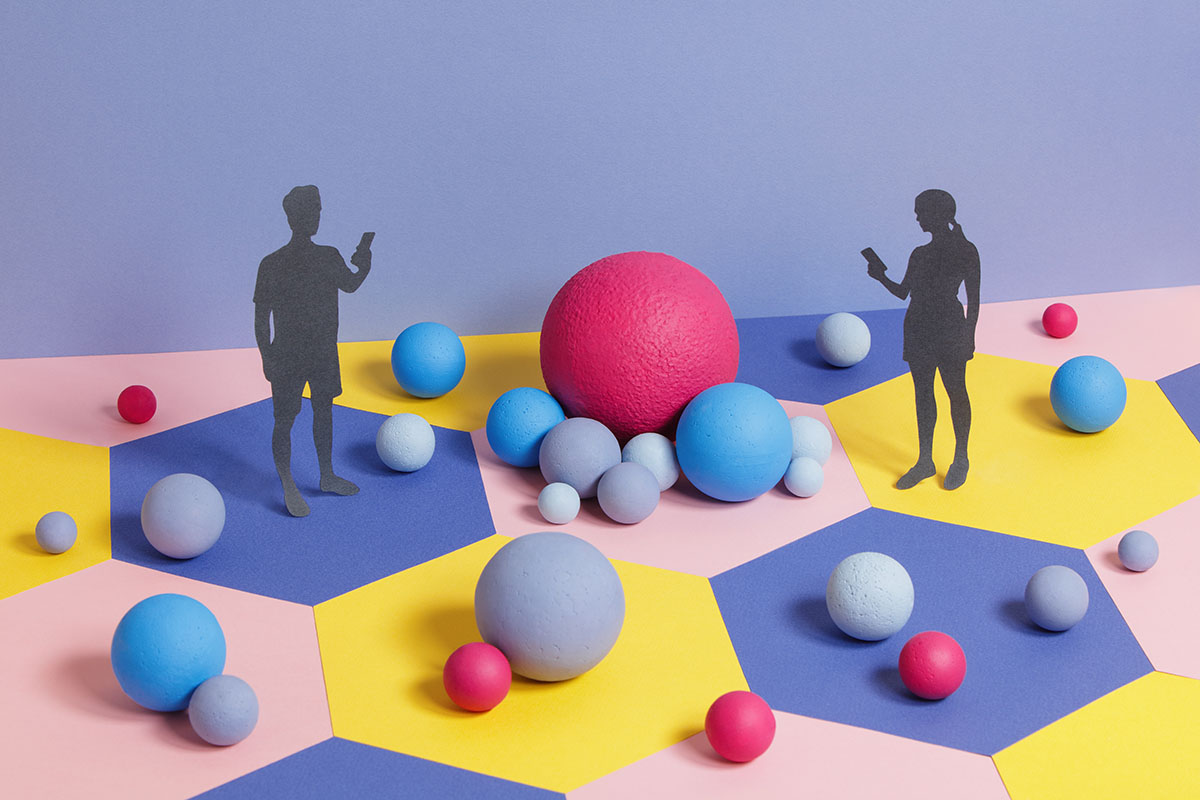
Does social media leave us feeling less connected?
It’s no secret that we’re addicted to our phones – eyes constantly drawn to the pocket-sized screen – chasing the cheap thrill of a new notification.
During the pandemic, we became more reliant on social media and technology than ever; our social and work lives literally orbited around our devices which became a lifeline for pandemic loneliness. This displacement of social spaces blurred social stimulation with homelife and left us dependent on a more muted version of interaction.
‘We’ve been socially conditioned to believe superficial interactions with strangers through screens are adequate social interaction,’ says Psychologist Dr. Candice O’Neil. ‘But key qualities of in-person interaction – active listening, mirroring, social cues and genuine empathic responding – are often lost online.’
The consequences are glaring. Teenagers – the most online generation – reported the highest rates of loneliness in a recent WHO survey.
Lynda Holt, Professor of Social Leadership and Founder of The Braver Group, says social media is eating away at our interpersonal skills. ‘Our nervous systems can’t keep up,’ she explains. ‘We are bombarded with information, deafened by digital noise, and drawn into comparison in a way that threatens our sense of self.
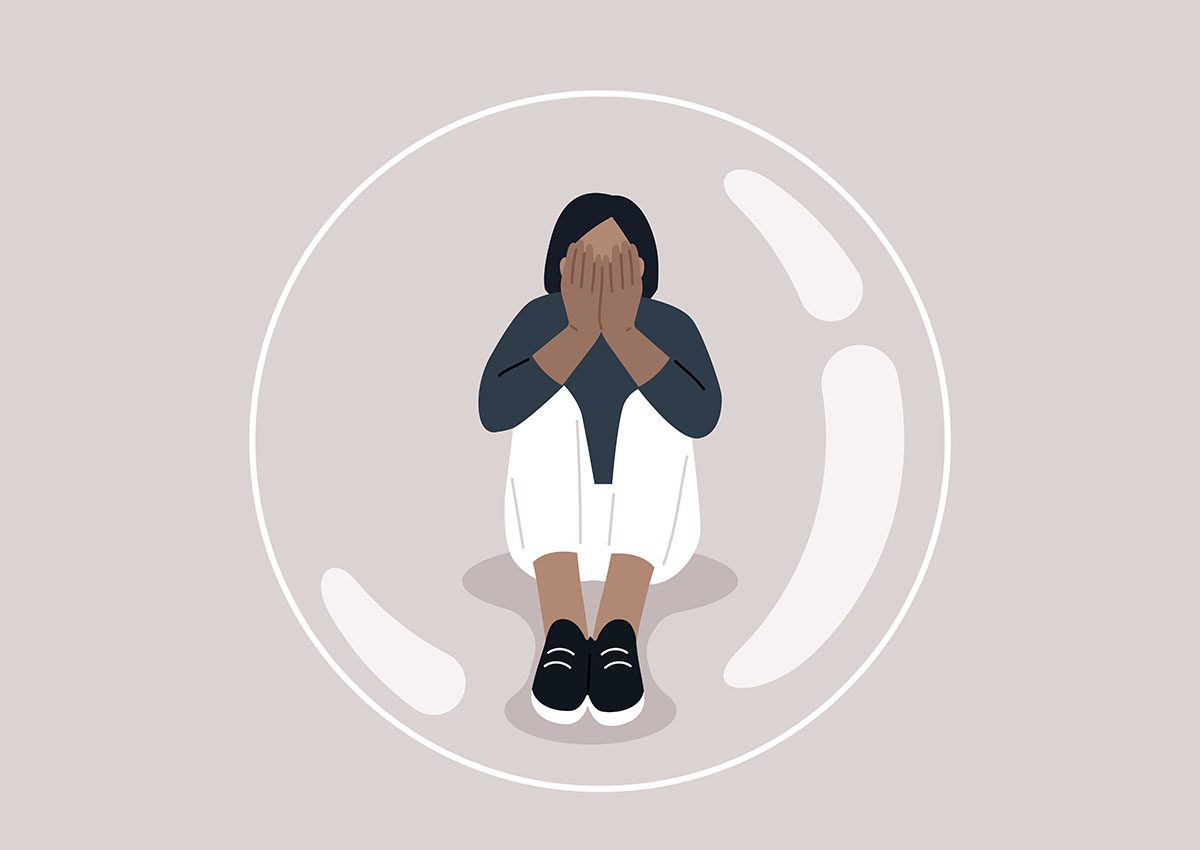
‘All of this conspires to make true connection scary, too time-consuming, and much riskier than simply masking up and fitting in. This low-level fear, or ‘always on’ feeling, creates a change in our neurochemistry – effectively keeping us in mild fight/flight most of the time, literally making it harder to trust, relate, and stay connected.’
‘A peculiar combination of feeling busy and isolated comes from the speed of digital communication,’ adds Candace Newton, Clinical Director at Seaside Wellness. ‘None of those messages allow for the rhythm and subtlety of genuine conversation, you can contact people all day and still feel lonely.’
Even well-meaning virtual rituals like ‘The Wednesday Waffle’ – a designated day to send friends a video update – can feel hollow. They turn connection into a bulletin board of life updates, masking isolation instead of sparking genuine conversation.
Fear of rejection, celebration of nonchalance
A fear of rejection is holding us back from meaningful social connections. Earlier this year, the nonchalant trend swept TikTok and Instagram, showing just how much younger generations romanticise composure and indifference.
‘We’ve learnt to be guarded, not honest,’ says Holt. ‘We’ve normalised surface-level interaction - scrolling for intimacy and curated vulnerability. When people say they’re finding it harder to connect, what they’re really saying is I’m scared to really connect because I might not measure up.’
Newton points out several barriers to genuine connection, including the fear of being misinterpreted and the pressure to project a flawless image.
There is also an empathy perception gap among Gen Z. The World Happiness Report found that many young adults underestimate their peers’ empathy – a finding that isn’t surprising in today’s hypercritical online environment. They often expect their self-expression to be met with judgment rather than understanding, which makes authentic interaction even harder.

Socialising improves our mental health
A decline in social connectedness correlates with a drop in well-being: The World Happiness Report 2024 found that the fall in the United States’ happiness ranking was largely due to a sharp decline in well-being among Americans under 30.
‘In a manner that nothing else can match, socialising promotes mental health,’ says Newton. ‘After a genuine conversation, I witness people's nervousness subsiding. Their thoughts become less dogmatic and their mood improves. Even a brief arm touch can help someone get out of a tense state, signalling to the nervous system that they’re not handling everything on their own.’
‘Social connection is like an internal tuning fork; it expands our humanity,’ explains Holt. ‘Positive social contact deepens our sense of belonging, strengthens our emotional agility, and gives us the courage we need to navigate uncertainty. We borrow strength, perspective, hope, and even playfulness from each other. We are more able to hold big feelings when they’re shared.
‘When we feel safe and connected, our body responds. We produce more ‘happy hormones’, such as oxytocin for connection, dopamine for reward, and serotonin to regulate us and reduce anxiety.’

Top tips for improving your social skills
‘Fulfilling social interactions don’t usually happen by accident,’ say Holt. ‘They are crafted with intention – they call you to be braver, be curious, and maybe a little wild. The truer to yourself and your values you can be, the more you are likely to find real connection.’
Think of your social skills like a muscle; they need exercise. Here’s how to flex them:
1. Be brave
Venturing outside your comfort zone is the first step. ‘Bring more of yourself to the table,’ explains Holt. ‘Meet people with energy and presence. Silence can be expansive; it helps conversations go deeper.’
Newton adds, ‘Little deeds make a big difference. Sharing more than the obvious or asking a sincere follow-up inquiry often fosters stronger connections.’
2. Look in the right places
Seek connection in places that genuinely align with your interests – whether a book club, games night or volunteering for a charity. ‘Choose activities that enrich you,’ says Newton. ‘People bond through stories, shared purpose or challenges, and common interest.’
3. Prioritise sincerity and honesty
‘Authenticity is significantly more appealing than a polished presentation,’ assures Newton. ‘When both parties are at ease with their imperfections, awkward conversations do not completely go away, but they do become softer.’
Holt adds that sincerity matters most – people see through fake interest. ‘Real conversation wakes you up, stretches you, and changes your neurochemistry for the better,’ she explains. ‘It helps you feel connected, safe, even loved.’

4. Switch off the ego, and switch on curiosity
Technology encourages ego-centric interactions, creating performance anxiety. To combat this, focus on others rather than obsessing over how you come across. ‘Reduce the emotional stakes,’ says Newton. ‘Instead of focusing on performance, I advise customers to approach talks with curiosity.’
5. Don’t fear the awkward silence
Holt reassures that an awkward pause is not the enemy: ‘They’re part of the social dance. Often this awkwardness is just two humans recalibrating, deciding how honest and open they can be.’
Lean into the pause; it can be a gateway to deeper connection. ‘Effort is frequently more important than the smoothness of the conversation,’ Newton explains. ‘A little awkward moment is typically just a sign of two people trying.’
Read more:
